Understand any stock in simple English
Enter a ticker to learn what the company does and how it makes money.
Jiangsu Deep Blue Aerospace Technology Co., Ltd.
Deep Blue Aerospace builds reusable rockets and rocket engines to launch satellites and other payloads into space for paying customers.
Deep Blue Aerospace is a Chinese rocket company building reusable launch vehicles and the engines that power them. Its customers are mostly commercial satellite operators and other space payload owners who need a ride to orbit — the company sells launches, not the satellites themselves. The whole bet is on reusability: bringing a rocket booster back down and flying it again is the difference between a throwaway ticket to space and something closer to an airline model, where the expensive hardware gets reused instead of dumped in the ocean.
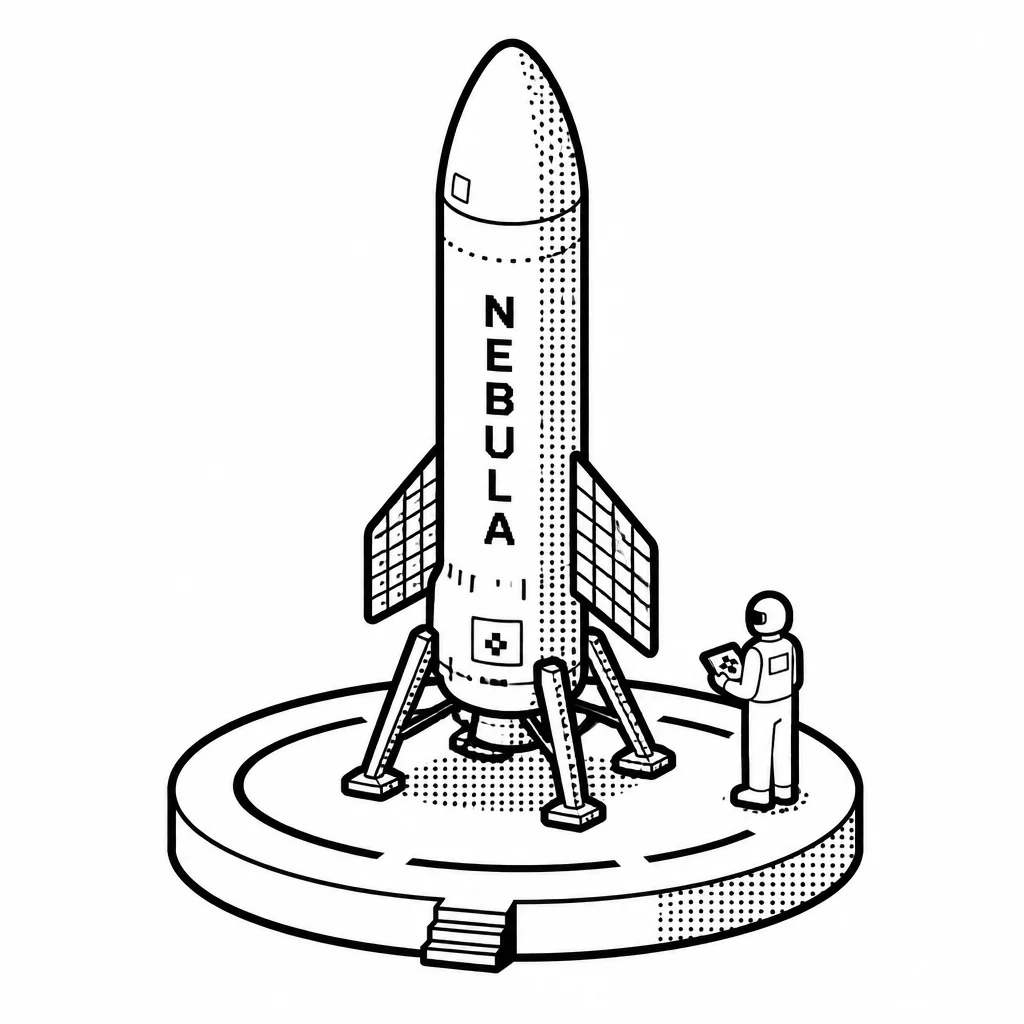
The company's flagship is the Nebula-1 rocket, a reusable liquid-fueled vehicle aimed at the small-to-medium satellite launch market. Deep Blue is one of a crowded field of Chinese private rocket startups chasing the same prize, competing on price, reliability, and how fast they can get to orbit. Reusability is technically hard — you need engines that can throttle down and relight, precise guidance to land a tall metal tube upright, and hardware tough enough to survive the trip. Getting a booster to land and fly again is the milestone that separates real launch businesses from prototypes. Like most private launch companies, Deep Blue is betting that falling launch costs will unlock demand — cheaper rides mean more satellites, more experiments, and eventually more people going to space. The risk is real: rocket development is capital-hungry, delays are routine, and the market rewards whoever reaches orbit reliably first. Chinese startups also operate in a policy environment where state support and regulation shape who gets access to launch sites and customers.
The appeal of a company like this is easy to grasp. Rockets are the delivery trucks of the space economy, and Deep Blue wants to own a fleet of trucks that come back and get used again. Whether it becomes a lasting player depends on execution — turning test flights into routine, profitable launches before the money runs out.
Saved answer · last researched 13 Nov 2026
Timeline
Huo Liang Starts Deep Blue Aerospace
Huo Liang had already worked for one of China's big space contractors, so he knew how the rocket business ran. He also saw something most people didn't: rockets that fly back and land could be reused, and that could turn a rare, expensive business into a real market. In 2016 he started Deep Blue Aerospace to chase that idea, betting the company on reusable rockets from day one.
A Series A for the Nebula-1
By 2021, investors were willing to put real money behind the idea. The company raised nearly 200 million yuan, led by Zhencheng Capital, DT Capital Partners, Galaxy Capital and ZY Capital. The money had a clear job: build the Nebula-1 rocket, test the reusable technology, and put together the teams needed to actually launch.
Nebula-1 Flies and Lands
In September 2024, the company sent Nebula-1 up in a high-altitude test over Ejina Banner in Inner Mongolia and brought it back down vertically. It was the company's first flight test of this kind, and it turned the reusable-rocket idea from a plan into something that had actually flown.
An IPO Target of 2028
With hardware flying, CEO Huo Liang set a bigger goal: the company expects to be ready for an IPO as soon as 2028. He was careful to say the timing depends on how the products develop and on China's capital markets, so it was a target, not a promise.
Nearly Two Billion More
In September 2026, Deep Blue raised close to 2 billion yuan across two financing rounds, B6 and B7, selling convertible preferred shares. Wuxi High-tech Zone Venture Capital came back for more, joined by many new investors. It was a large vote of confidence at a stage when rocket companies burn a lot of cash before they earn much.
Thunder-RS Passes a Long Burn
That same year, the company's 130-ton-class Thunder-RS engine ran for a full 100 seconds in a hot-fire test, holding steady at about 1,300 kilonewtons of thrust. That engine is meant to power Nebula-2, a big reusable rocket planned for its first flight and commercial service in 2027 with 25 tons of capacity to low Earth orbit. The test was a major step toward the reusable launch capability the whole company was built around.