Understand any stock in simple English
Enter a ticker to learn what the company does and how it makes money.
IHI Corporation
IHI builds heavy industrial equipment like jet engine parts, power plant boilers, bridges, and defense gear, and sells it to utilities, airlines, shipbuilders, and governments.
IHI is a Japanese heavy-industry company that makes the big, expensive, hard-to-build things that keep modern life running. It builds jet engine parts for aircraft, boilers and turbines for power plants, bridges, and the giant machines that load and unload ships at ports. It also makes rocket engines and defense equipment for governments. Its customers are not ordinary shoppers. They are airlines, power utilities, shipyards, factories, and national governments that need reliable machinery built to last decades.
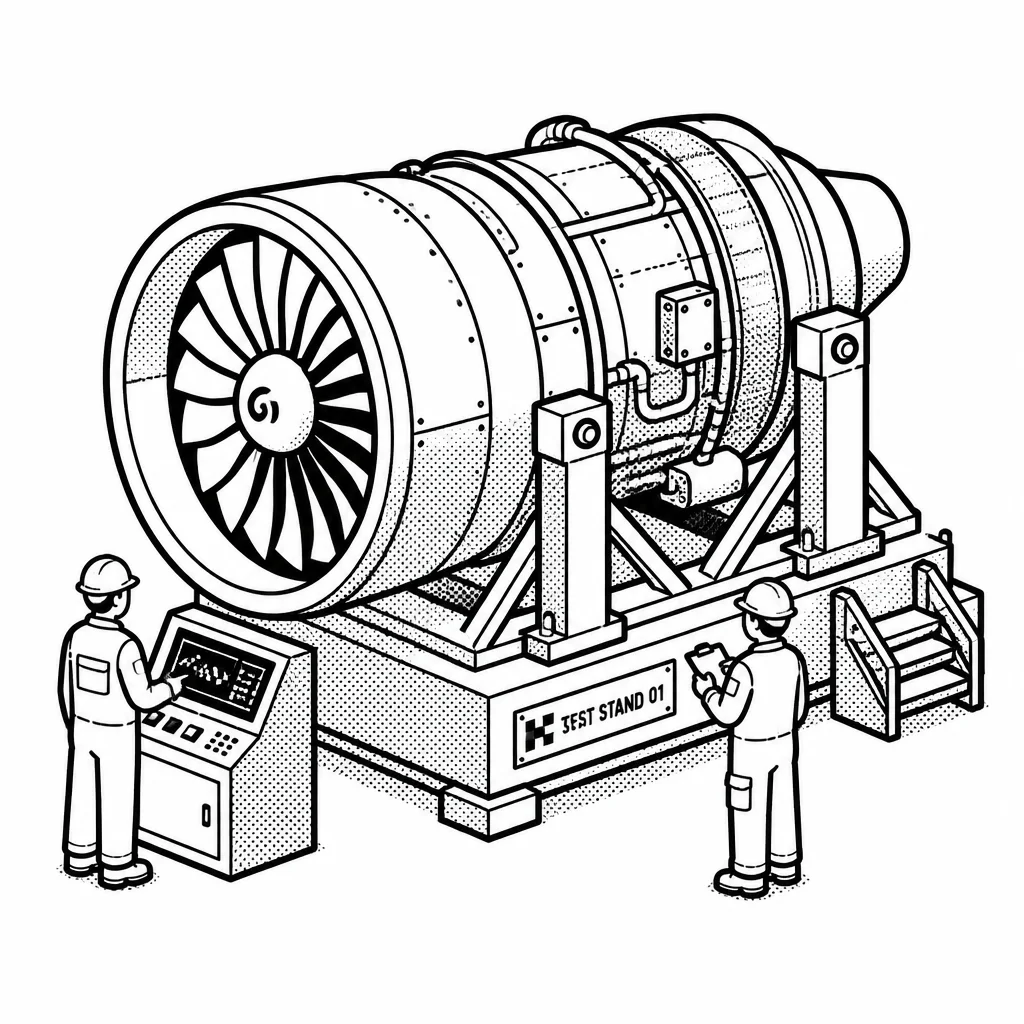
The company has four main areas. Its aero engine business makes parts and whole engines for jet aircraft, often working alongside the big global engine makers. Its energy business builds boilers and equipment for power plants, including nuclear and gas-fired ones. Its industrial machinery side covers things like bridges, marine structures, and material-handling gear. And its defense and space arm builds rocket engines and military equipment. A single gas turbine, jet engine, or boiler can cost millions and take years to deliver, so IHI deals in a small number of very large orders rather than lots of little ones. The business is a bit like selling factories and infrastructure rather than products. Each sale is a long project, paid over time, and the work often involves servicing and repairing equipment for years afterward. That service and maintenance work is less glamorous but steadier, because an airline or utility that buys an IHI engine wants IHI to keep it running. Competition is global and tough: GE Aerospace, Rolls-Royce, and Safran compete hard in aero engines, while big engineering firms chase the same power and infrastructure contracts.
IHI's roots go back to a shipyard in 1853, and it grew into one of Japan's older heavy-industrial names, formerly called Ishikawajima-Harima Heavy Industries. Its strengths are deep engineering skill and long relationships with Japanese industry and the government, including a role in the country's jet engine and rocket programs. Its weakness is that it depends on a few big customers, government budgets, and long contracts where costs can overrun. When orders and defense spending rise, it thrives; when they stall, so does the company.
Saved answer · last researched 12 Nov 2026
BIG PICTURE
IHI's jet engine and defense unit earns 73.5% of its segment profit
- 73.5% Aero Engine, Space and Defense
- 26.5% Energy, infrastructure and machinery segments
Of the profit IHI's four main businesses reported for the year to March 2026, 73.5 percent came from making jet engines, rockets and defense gear. That unit brought in 651.7 billion yen in sales while the other three businesses combined earned far less, even though they build power plant boilers, bridges and turbochargers. Airlines and governments, in other words, pay most of IHI's bills. Source: Yamashan note on IHI annual securities report (有報解剖), data from 2026
Timeline
Ishikawajima Shipyard Founded
In 1853, after American ships forced Japan to open up, the government needed a way to defend itself against Western powers, so it ordered a shipyard built at Ishikawajima. A few decades later, Hirano Tomiji turned that into Japan's first private Western-style shipyard. His idea was simple and ambitious: Japan should build its own ships and grow strong through its own technology. That belief still guides the company today.
Two Shipbuilders Merge Into IHI
By 1960, two old shipbuilding families, Ishikawajima Heavy Industries and Harima Shipbuilding, joined forces. The merger created a single heavy-industry group, Ishikawajima-Harima Heavy Industries, known as IHI. It brought the company's two roots together under one name.
The World's Biggest Tanker
A few years later, IHI built the Idemitsu Maru, the first tanker in the world to top 200,000 tons. It was a clear statement that the company could build on a scale few others could match.
A Seat at the Aero-Engine Table
In 1983, IHI joined partners from Japan, the UK, the US, Germany and Italy to form International Aero Engines and develop the V2500 civil aircraft engine. This bet planted IHI in the civil aero-engine business, a ground that would later become one of its biggest growth engines.
The Name Becomes IHI
In 2007, the company shortened its long name from Ishikawajima-Harima Heavy Industries to IHI Corporation. The simpler name was a signal: this was no longer just a shipbuilder, but a broad engineering group.
Shipbuilding Moves Into a Joint Venture
In 2013, IHI merged its marine business, IHI Marine United, with JFE's Universal Shipbuilding to create Japan Marine United. Instead of keeping shipbuilding wholly inside IHI, the company chose to share it in a combined entity.
Tidying Up the Business Units
In 2019, IHI regrouped its scattered operations into clearer companies: process plants went into IHI Plant Services, and power systems, including Diesel United and Niigata Power Systems, went into IHI Power Systems. The goal was a simpler, easier-to-run structure.
COVID Hits the Engine Business
Then came 2020. The pandemic crushed demand for civil aircraft engines almost overnight, and IHI's aero-engine business fell sharply. The company launched a program called Project Change to rebuild its profit base and get back to growth. The crisis pushed it to rethink what the company should be.
Record Results and a Big Cleanup
By 2025, that rethink paid off. IHI posted record orders, revenue and operating profit, helped by defense work, nuclear energy and asset sales, with net income at an all-time high. It also sold off businesses in materials handling, turf care, packaged boilers and construction materials, and gave up part of its stake in Japan Marine United. Even with all that, management called this only the starting line.
IHI Builds Satellites
Next, IHI took its space business a step further. At a new lab at its Toyosu headquarters, it began assembling and testing two radar satellites, working with Finland's ICEYE. The aim is a Japanese-owned constellation of up to two dozen such satellites, with two already in orbit sending data since April 2026. It is a push into domestic satellite making for security and disaster prevention.