Understand any stock in simple English
Enter a ticker to learn what the company does and how it makes money.
Blue Origin Enterprises, L.P.
Blue Origin builds and launches rockets and spacecraft for paying customers and for its own space ambitions.
Blue Origin is a private space company that sells rides to space. It builds rockets and rocket engines, then uses them to launch payloads and people for paying customers — and it also flies its own missions. The company runs two big launch vehicles: New Shepard, a small suborbital rocket that carries tourists and research payloads on a short up-and-down trip past the edge of space, and New Glenn, a much larger orbital rocket designed to carry satellites and other payloads all the way into orbit around Earth. It also builds the BE-4 rocket engine, which it sells to other rocket makers — notably United Launch Alliance-adjacent customers, though ULA itself is a private joint venture — and it is developing a lunar lander for NASA's Moon program.
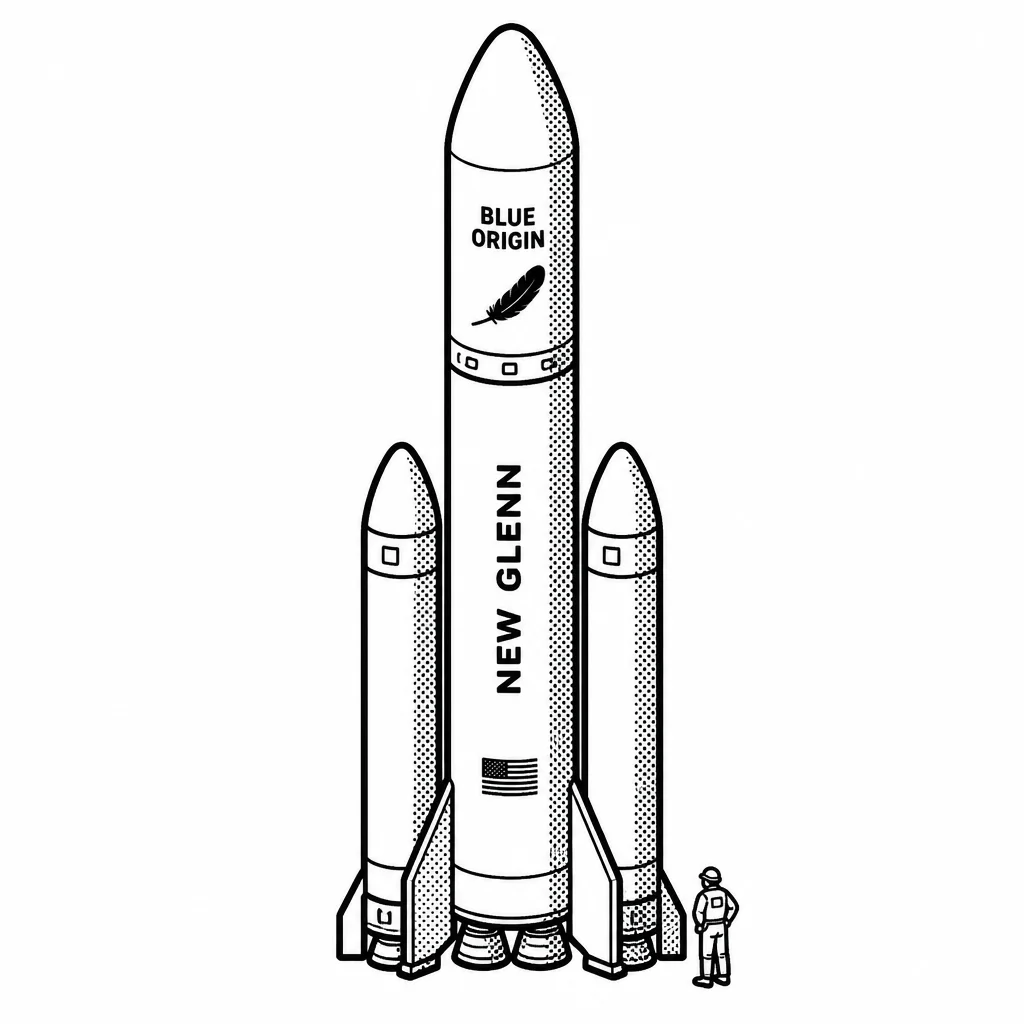
The money comes from several places. Tourists pay for seats on New Shepard, which has flown paying passengers on short hops since 2021. Satellite operators and government agencies pay to put their hardware on New Glenn, a far bigger prize because orbital launches are the real commercial market. Blue Origin also earns from selling BE-4 engines and from government contracts, including NASA work on the human landing system for Artemis. Its customers choose it because they want a second or third option besides SpaceX — the dominant launch provider — and because Blue Origin promises reusable rockets that can lower the cost of getting to space. That reusability is the heart of the pitch. New Shepard's booster lands vertically and flies again, and New Glenn is designed the same way, with a reusable first stage that comes back down and lands on a ship at sea. If a rocket's biggest expensive part can be reused instead of thrown away, each launch gets cheaper, and cheaper launches mean more customers can afford to go. The business is capital-hungry and slow: Blue Origin has spent years and billions of dollars developing New Glenn, and its first orbital launch came only in early 2025, years behind schedule. Founder Amazon's Jeff Bezos funds it partly himself and has said he sells Amazon stock to pour roughly a billion dollars a year into the company, which tells you how long the runway is and how patient the owner is. The competitive picture is brutal. SpaceX launches far more often, reuses rockets routinely, and has slashed prices, while Rocket Lab chases smaller dedicated launches. Blue Origin's answer is to compete on reliability and on a bigger rocket with a large fairing for heavy payloads, plus government and national-security contracts that reward having more than one American launch option. The vulnerability is simple: it must fly often enough to prove reusability works and to win commercial customers, because a rocket company that launches rarely cannot spread its fixed costs. Whether New Glenn becomes a true workhorse or stays a costly side project is the single question that determines how much this company is worth.
The ownership structure matters too. Blue Origin is not publicly traded, so there is no stock to buy, and Bezos controls it through Blue Origin Enterprises, L.P. That means no quarterly earnings pressure and no shareholder votes — just a billionaire's long bet that cheap, reusable access to space will eventually be a very large business. For now, the company is a builder and a launcher: it sells rockets, rides, and engines, and it spends heavily to get good at all three.
Saved answer · last researched 4 Nov 2026
BIG PICTURE
SpaceX flies over 80% of the commercial launch market; Blue Origin has flown three orbital missions ever
- 80% SpaceX's share of the global commercial launch market
- 20% All other launch providers, including Blue Origin
SpaceX flew more than 80 percent of the world's commercial launch business, according to the article. Blue Origin, which sells rocket launches to NASA, the military and satellite companies, has completed just three New Glenn orbital flights in its history. Customers want a second option, and Blue Origin is the best-funded candidate to become one. Source: Film Feels, data from 2025
Timeline
Bezos Starts Blue Origin
Jeff Bezos started Blue Origin in 2000 with an enormous, almost strange goal: move heavy, polluting industries off Earth so that millions of people could live and work in space. The idea came from a physicist's 1976 vision of giant space habitats, and the company's name points back to the planet we would be leaving. Bezos called it his most important work and paid for it himself, keeping it quiet at first. For years, almost nobody could see what his money was building.
ULA Taps Blue Origin for BE-4
In late 2014, the rocket company United Launch Alliance picked Blue Origin to build the BE-4 engine for its rockets, replacing Russian-made engines. It was a quiet but big shift: the hobby-like space project now had a real customer and a place in the orbital rocket business, as an engine supplier.
New Shepard Flies at Last
Blue Origin's first rocket launch came in 2015, an uncrewed test of the small suborbital New Shepard. After about fifteen years of low profile, here was the first visible sign that the company was actually building flying hardware.
Bezos Flies on New Shepard
In July 2021, Bezos himself rode New Shepard's first passenger flight, becoming the first billionaire to cross the line where space begins. He also stepped down as Amazon's CEO that year to focus on Blue Origin, a clear signal of how much the company mattered to him.
Blue Origin Wins the Moon Lander
In May 2023, NASA chose Blue Origin to land astronauts on the moon. Getting there was messy: Blue Origin had sued NASA over its first moon-lander award to SpaceX and lost. The win made its Blue Moon lander a second NASA human landing system, sitting right alongside its rival.
Dave Limp Takes Over as CEO
In September 2023, Blue Origin replaced CEO Bob Smith with Dave Limp. The change was aimed at a growing complaint: compared with SpaceX, Blue Origin was moving too slowly. Limp's job was to change that pace.
New Glenn Reaches Orbit
Blue Origin's huge New Glenn rocket launched for the first time in January 2025. It reached orbit, something no other rocket company had managed on its very first try, though the booster did not survive its landing. Blue Origin was now a real orbital rocket company.
First Military Launch Contract
In April 2025, Blue Origin won its first National Security Space Launch contract, covering seven missions. That put it inside the most valuable and sensitive part of the US military launch business, next to SpaceX and ULA.
ESCAPADE and a Booster Landing
In November 2025, New Glenn flew its first NASA mission, sending two Mars science satellites called ESCAPADE on their way. The same flight landed the booster on a barge, making Blue Origin only the second commercial company, after SpaceX, to recover an orbital-class booster.
New Glenn Explodes on the Pad
In May 2026, New Glenn exploded during a ground test, one of the largest launch-vehicle explosions ever, destroying the rocket and badly damaging its custom-built launch pad. The company traced the failure to a main oxygen valve on a BE-4 engine and pushed the return to flight to January 2027. It likely cost the program a year and shook confidence in the rocket just as NASA had picked Blue Origin for a lunar base role.
Blue Origin Raises Outside Money
Blue Origin then opened its doors to outside investors for the first time, raising $10 billion at a reported value of about $140 billion. Bezos said an IPO could come in several years, and the company is spending heavily in Florida to push New Glenn toward many flights a week.