Understand any stock in simple English
Enter a ticker to learn what the company does and how it makes money.
LandSpace Technology Corporation
LandSpace builds and launches liquid-fueled rockets and rocket engines for commercial satellite customers.
LandSpace is a Chinese rocket company that builds its own launch vehicles and the liquid-fueled engines that power them, then sells rides to space for commercial satellite operators. Instead of solid fuel, which is simpler but less controllable, its rockets run on liquid propellants like methane and oxygen — the same basic idea as a high-performance sports car engine versus a lawnmower, giving the operator the ability to throttle, shut down, and restart engines when precision matters.
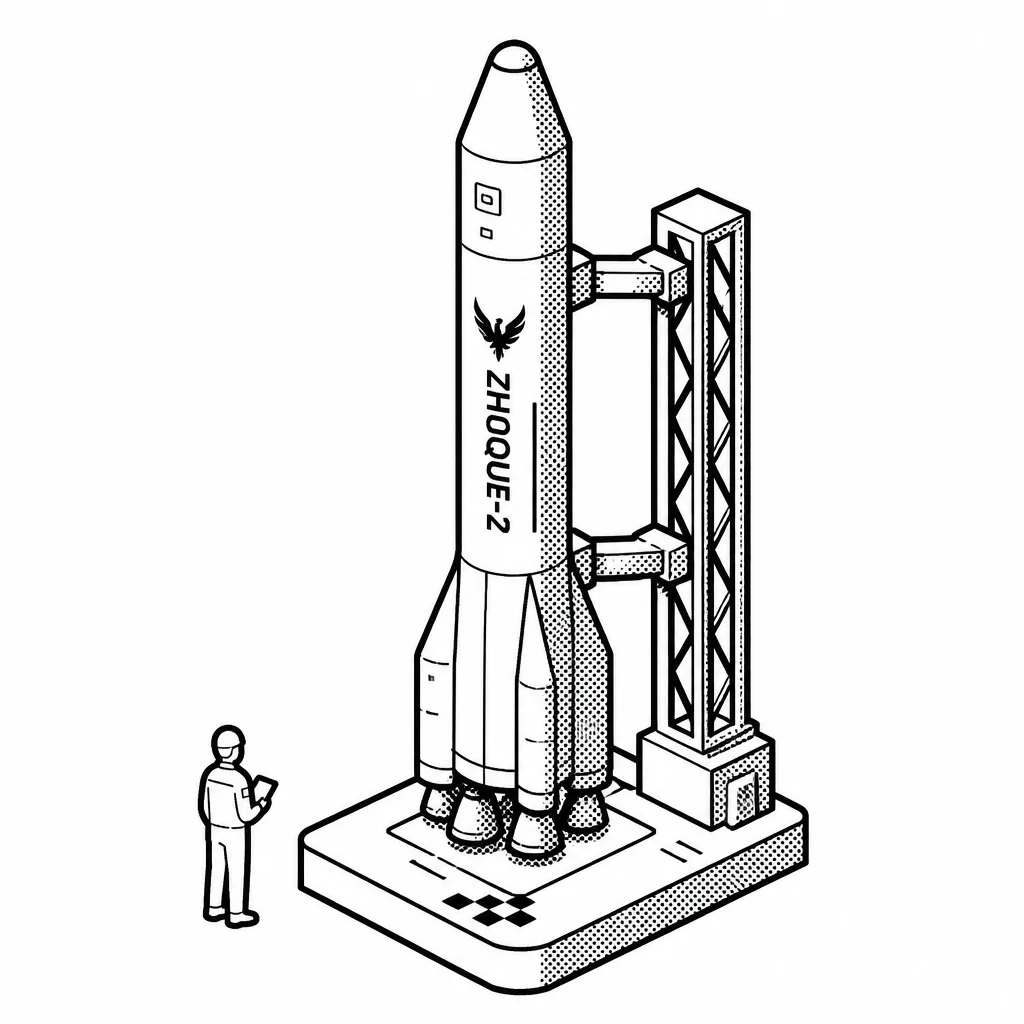
Its flagship is the Zhuque-2, a medium-lift rocket designed to carry satellites into orbit. In 2023 it became the first methane-fueled rocket in the world to reach orbit, a milestone that put a private Chinese firm ahead of better-funded Western rivals in that specific fuel category. Methane matters because it burns cleaner than older kerosene-based fuels, which makes engines easier to reuse and refurbish — the key to bringing launch costs down the way SpaceX has done with its reusable Falcon rockets. LandSpace makes money by charging satellite companies, research institutions, and government-linked customers for launch services. The commercial launch market is brutally competitive and price-sensitive, with customers choosing providers based on cost per kilogram to orbit, reliability, and schedule — and delays are common across the industry. LandSpace is also developing reusable rockets, betting that landing and re-flying boosters is the only path to competing on price at scale.
The company is privately held and backed by Chinese venture and state-linked investors, which matters because China's government has made commercial space a strategic priority, giving domestic players both tailwinds and political support. The honest risk: rocket development is capital-hungry, technically unforgiving, and prone to explosive setbacks, and LandSpace competes not just with Chinese rivals but with a global field where a single failed launch can erase years of momentum.
Saved answer · last researched 12 Nov 2026
BIG PICTURE
One customer paid for 98% of LandSpace's first-half 2025 sales
- 98% Sales to a single customer
- 2% Sales to all other customers
In the first half of 2025, sales to one customer made up 98% of LandSpace's revenue. The company brought in 35.69 million yuan while a single launch cost over 130 million yuan, so its rocket business currently depends on a handful of buyers whose needs can shift at any time. Source: EqualOcean, data from 2025
Timeline
A Banker Bets on Private Rockets
In 2014, China opened the space industry to private money for the first time. Zhang Changwu, a Tsinghua graduate who had worked at HSBC and Santander, saw the opening and started LandSpace in 2015. Most rocket startups begin with simple solid fuel, but he convinced investors to skip that step and go straight for a harder mix: liquid oxygen and methane. That choice would define the company for years.
Zhuque-1 Falls Short
LandSpace's first rocket, Zhuque-1, launched in 2018 but never reached orbit. Instead of patching up the solid-fuel design, the company dropped it and moved its future onto the liquid-fueled Zhuque-2.
The Methane Engine Works
The bet from the founding years paid off on the test stand. China's first big methane engine, the TQ 80-ton, fired successfully in 2019, proving the propulsion LandSpace had chosen could actually work.
Zhuque-2 Reaches Orbit
In mid-2023, Zhuque-2 made it to orbit, the first methane-fueled rocket in the world to do so, ahead of SpaceX and Blue Origin. It also became China's first liquid rocket built in mass production and used commercially.
Zhuque-3 Flies, Landing Fails
At the end of 2025, the bigger Zhuque-3 reached orbit on its first flight. The rocket's first stage then tried to land, a first for a Chinese rocket, and it did not make it.
An IPO Held Up by Losses
LandSpace applied to list on Shanghai's STAR Market, and the review began in early 2026. But the process kept stalling as its financial data expired, while losses grew to about 1.7 billion yuan for 2025. The money raised is meant to fund reusable rockets and more launches.
A Booster Comes Back Down
On the second try, in August 2026, LandSpace landed the first stage of Zhuque-3 upright on its legs. That made it one of only three private companies, alongside SpaceX and Blue Origin, to recover an orbital-class booster, and a first for China. The next goal is to fly a recovered booster again within six months, aiming for frequent, cheap launches.