Understand any stock in simple English
Enter a ticker to learn what the company does and how it makes money.
Galactic Energy (Beijing) Space Technology Co., LTD.
Galactic Energy builds and launches small rockets that carry satellites into space for paying customers.
Galactic Energy is a Chinese rocket company. It builds small launch vehicles — the rockets that carry satellites from Earth into orbit — and sells launches to satellite operators who need to get their hardware into space.
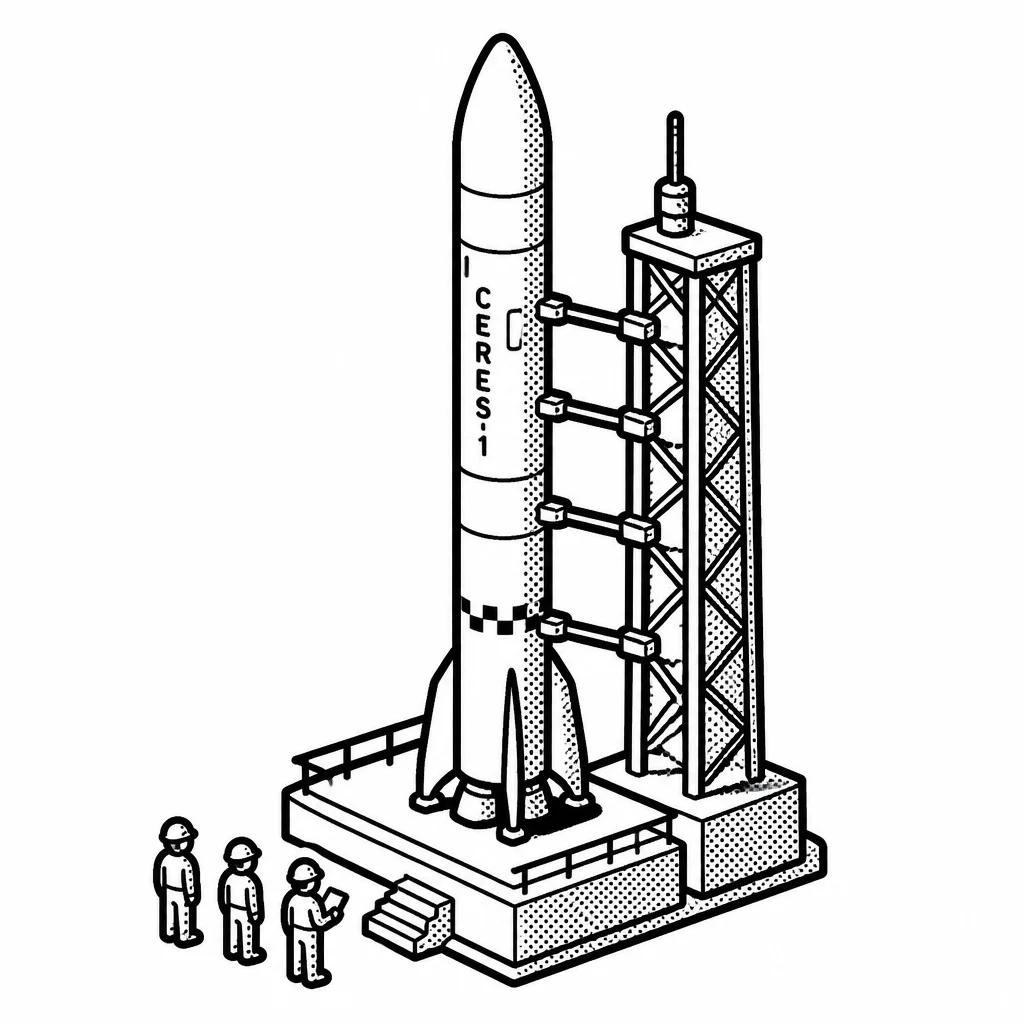
Its main rocket is called Ceres-1, a small solid-fuel rocket designed to lift lightweight satellites into low Earth orbit. Solid fuel means the rocket arrives basically ready to fire, which makes launches simpler and cheaper than the big liquid-fueled rockets used for heavier payloads. Customers are mostly companies and institutions that want a dedicated ride for a small satellite, or a rideshare slot alongside other satellites. They pick Galactic Energy because they need a launch on their schedule, and small rockets like Ceres-1 offer a faster, more flexible path than waiting for a spot on a giant rocket. The economics of this business are tough and honest. Rockets are expensive to build, and a launch either works or it doesn't. Galactic Energy has flown many Ceres-1 missions successfully, which matters because reliability is the whole game in launch services — one failure can spook customers. The company is also developing a larger, liquid-fueled rocket called Pallas-1, aimed at carrying bigger payloads and eventually reaching orbit with a reusable first stage. That is the harder, more ambitious bet, and it is where the real growth would come from if it works.
Galactic Energy is a private company, one of a wave of Chinese commercial space firms competing for a launch market that has historically been dominated by state-run programs. Its rivals include other private Chinese rocket makers and, indirectly, the established launch providers worldwide. The simple story: it sells rocket rides to space, wins on flexibility and price for small satellites, and is trying to move up to bigger rockets to stay relevant as the market grows.
Saved answer · last researched 13 Nov 2026
BIG PICTURE
Chinese rocket firms took 30.5% of the world's small-rocket revenue in 2025
- 30.5% Chinese operators
- 69.5% Operators outside China
China's private and state rocket companies together collected less than a third of what the world spent on small satellite launches in 2025. That leaves room for a single firm like Galactic Energy to grow at home before it ever wins a customer abroad. Access rules and launch approvals still shape where its rockets can fly. Source: Global Market Insights, data from 2025
Timeline
Liu Baiqi Starts Galactic Energy
Before founding the company in early 2018, Liu Baiqi did something unusual for a rocket dreamer: he ran the numbers on whether a private space company could actually make a modest profit in a market economy. Convinced it could, he and his team set up Galactic Energy with modest registered capital, aiming at low-Earth orbit satellite launches and internet services.
Ceres-1 Reaches Orbit
In late 2020, the company's small solid rocket Ceres-1 flew to orbit, making Galactic Energy only the second Chinese commercial space firm to get there. It was also the first Chinese private rocket to reach a 500km sun-synchronous orbit, the kind of path Earth-watching satellites like to use.
A Second Straight Success
A year later, the second Ceres-1 flight carried five satellites at once, and with that Galactic Energy became China's first private company to succeed in orbital launches back to back. Repetition, not one lucky shot, was the point.
The First Ceres-1 Failure
In September 2023, after nine clean flights, Ceres-1 failed for the first time, breaking the reliability record the company had been building its reputation on.
Launching From the Sea
Just over two weeks earlier, a sea-launch version of Ceres-1 had succeeded with four satellites, making Galactic Energy the first Chinese private commercial space company to reach orbit from a sea platform.
The Biggest Check Yet
In September 2025, the company raised 2.4 billion yuan, the largest disclosed funding for a Chinese launch startup at that point. The money was aimed at two new rockets: the reusable liquid-fueled Pallas series and the bigger Ceres-2 solid rocket, both close to their first flights.
Ceres-1 Fails Again
In November 2025, the nineteenth Ceres-1 flight lost all three satellites when its fourth stage shut down minutes into the mission. It was only the second failure in 22 flights, but the timing was bad: the company was preparing an IPO right after its big funding round.
Pallas 1 Flies
In September 2026, the Pallas 1 rocket, a reusable-design liquid launcher, made a successful first flight from Jiuquan and reached its planned orbit. It can carry up to seven tons to low-Earth orbit and is built to fly at least 25 times, exactly what is needed to serve big satellite constellations.
Ceres-2 Delivers
In November 2026, the second Ceres-2 flight put four satellites into a 535km sun-synchronous orbit, recovering from the first Ceres-2 mission's failure earlier that year. By then Galactic Energy had three rocket types flying and had carried out 27 missions delivering 94 commercial satellites.