Understand any stock in simple English
Enter a ticker to learn what the company does and how it makes money.
China Yuchai International Limited
China Yuchai makes diesel engines for trucks, buses, construction equipment, boats, farm machines, and power generators, mostly sold in China.
China Yuchai is one of the biggest makers of diesel engines in China. If you see a heavy truck rumbling down a Chinese highway, a city bus, a bulldozer on a construction site, a fishing boat, a tractor, or a backup generator keeping a factory running during a power cut, there is a decent chance the engine inside came from this company. Its main business is building the engines themselves, then selling them to the manufacturers who put them into vehicles and machines, and to dealers and repair shops who supply spare parts.
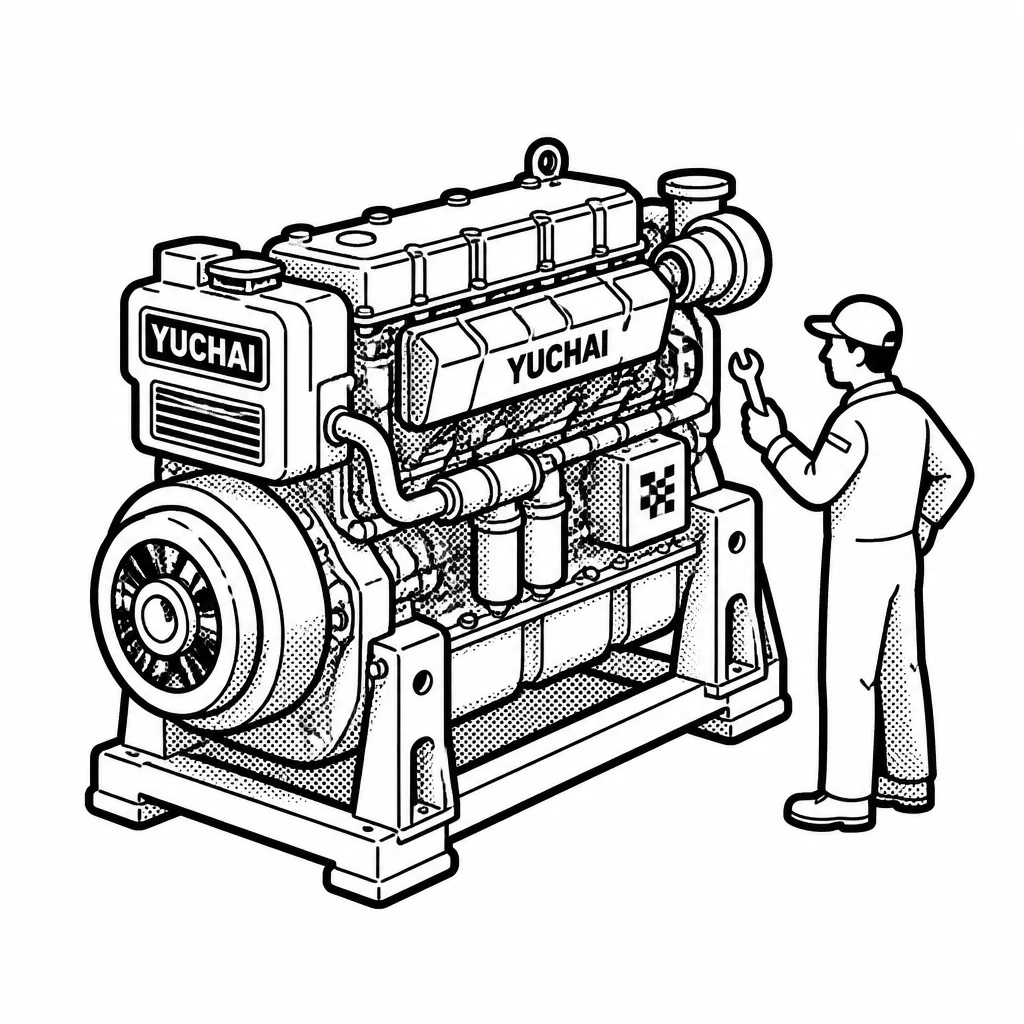
The company's heart sits in Yulin, a city in southern China's Guangxi region, where its main engine-making operation is based. But the company you can buy on the New York Stock Exchange is a holding company incorporated in Singapore, and it controls its Chinese engine business through a majority stake in Guangxi Yuchai Machinery. That structure matters: investors are buying a slice of a Chinese manufacturer through an offshore wrapper, which brings both opportunity and risk. Diesel engines are a tough, cyclical business. When construction booms and freight demand is strong, truck makers order more engines; when the economy slows, orders dry up fast. China Yuchai competes against large domestic engine makers and against global players, and it also faces a long-term squeeze: China is pushing electric vehicles, natural gas engines, and tighter emissions rules, especially in cities. That pressure hits diesel demand over time, even if heavy trucks and industrial machines still rely on it today.
The company also sells spare parts, which is a steadier business than new engines — every engine on the road eventually needs repairs. Beyond that, China Yuchai has invested in cleaner technologies, including natural gas engines and other lower-emission options, to keep up with government rules. For investors, the key questions are simple: how many engines can it sell in a slow Chinese economy, and can it adapt fast enough as the rules around diesel keep tightening?
Saved answer · last researched 11 Nov 2026
BIG PICTURE
Yuchai's truck-engine sales grew 20.4% while China's commercial vehicle market grew just 5.8%
- 5.8% China commercial vehicle market growth (excl. petrol and electric)
- 94.2% Yuchai truck-engine sales growth
In the first half of 2026, China's commercial vehicle market grew 5.8%, excluding petrol and electric models. Yuchai's truck-engine sales rose 20.4%, led by a 47.3% jump in heavy-duty engines. Selling engines for trucks and buses is the core of how this company makes money, and it is taking share from rivals in a slow-growing market. Source: China Yuchai International H1 2026 earnings call (Investing.com), data from 2026
Timeline
An Engine Base in Yulin
After the war, China needed to build things, and diesel engines were the muscle behind almost everything. A machinery company set up in Yulin City in Guangxi to make internal combustion engines, and over the following decades it grew into the country's largest engine production base. That factory, Guangxi Yuchai Machinery, became the industrial heart of everything that followed.
A Bermuda Shell Is Born
In 1993 a new company was created in Bermuda, far from any factory floor. Its only real job was to hold shares, and its prize possession was a controlling stake of about three-quarters of the Yulin engine maker. This holding company was named China Yuchai International.
Yuchai Goes to New York
A year later the holding company listed on the New York Stock Exchange at ten dollars a share. The money raised traveled back to Yulin to modernize the production base, and the listing locked in the company's role as majority owner of the factory. On paper, a Chinese engine maker now had a Wall Street address.
The Golden Share Fight
Then the trouble started. The Yulin city government bought a stake in the listed parent, and a fight broke out over something called the Golden Share, a special right that gave the locals a say. The factory stopped paying dividends owed to its New York parent, leaving the listed company a shell that owned a giant business it could not collect cash from. Beijing's commerce ministry said the ownership structure needed fixing, and for years the stock carried a discount because investors could not tell who was really in charge.
The Chairman Is Pushed Out
Chairman Wang Jianming found himself squeezed between the Hong Leong group and the local government. In October 2005 he was removed and replaced by Yan Ping. It marked the end of the company's most entrepreneurial stretch, as the fight over who controlled the factory finally cost the man at the top his job.
A New President, A New Engine Mix
Weng Ming Hoh took over as president in 2020 and began pushing the company toward cleaner powertrains, including engines that run on natural gas and hybrid-compliant designs. The bet was that the rules of the road were changing, and Yuchai needed to change with them.
The Short Seller Shows Up
The stock more than tripled in a year, and earnings climbed sharply, which made the company a sudden market favorite. Then short-seller J Capital Research published a report questioning whether that growth could last, and the shares fell about six percent. The episode showed how fast a quiet industrial name can become a battleground.
Engines for Data Centers
The next chapter was the strangest one yet. In the first half of 2026, Yuchai sold around 1,800 engines to AI data centers and raised its full-year target above 3,500 units. Revenue rose about fourteen percent and profit jumped more than half as heavy-duty truck engine sales climbed nearly fifty percent, while its marine and generator power arm renewed its bid to list in Hong Kong. The old Yulin factory had found a new customer in the AI boom.