Understand any stock in simple English
Enter a ticker to learn what the company does and how it makes money.
Votorantim S.A.
Votorantim is a Brazilian family-owned conglomerate that makes and sells cement, metals like zinc and aluminum, and orange juice, and also runs a big banking arm.
Votorantim is one of Brazil's oldest and biggest family business empires. The group makes and sells things the physical world runs on: cement for construction, metals like zinc and aluminum for industry, and orange juice concentrate that gets shipped around the globe. Alongside those industrial businesses, it owns a large chunk of a bank, so the family's money is spread across very different kinds of work.
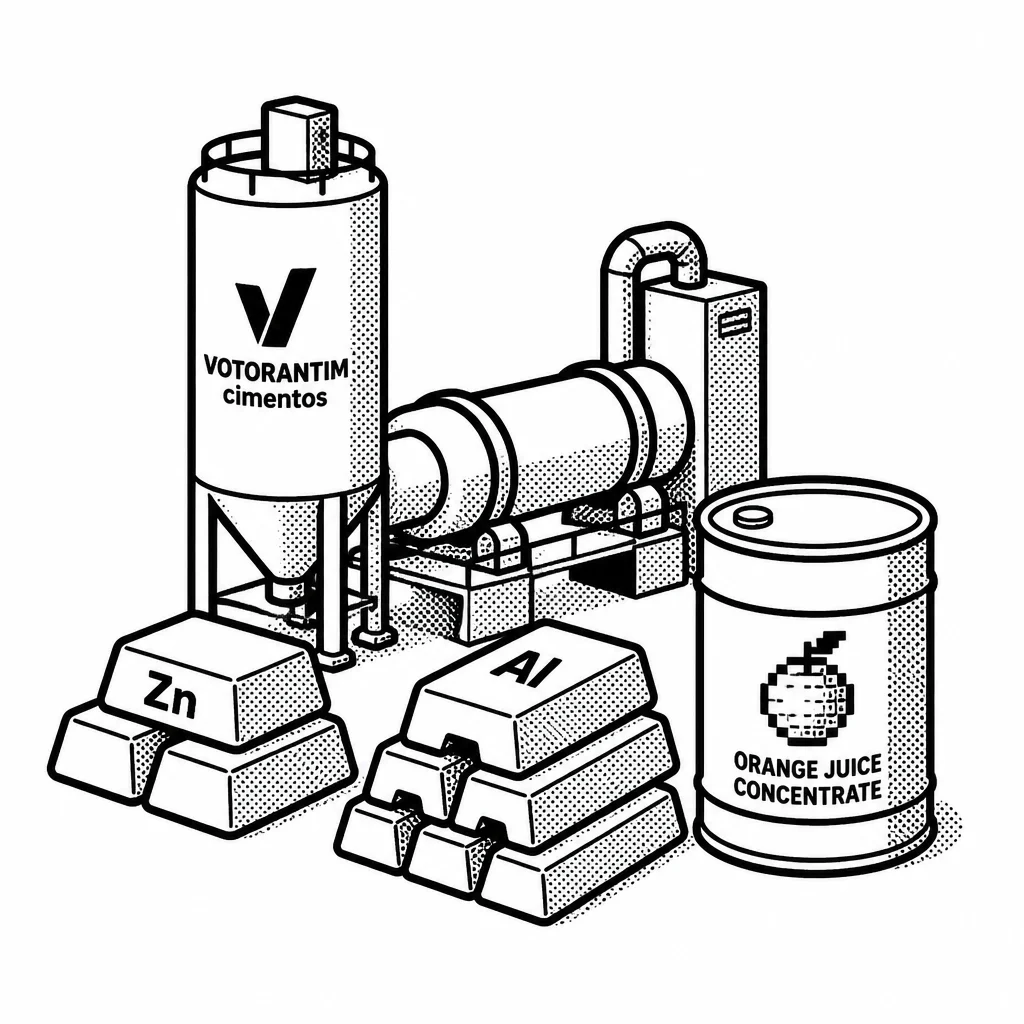
The cement business, Votorantim Cimentos, is the core of the empire and one of the largest cement producers in the world, with plants across the Americas, Europe, Africa, and Asia. Cement is a wonderfully simple business: it is heavy, cheap per ton, and expensive to ship far, so local plants enjoy a natural moat. Builders buy from whoever is nearby and reliable. When construction booms, the company prints money; when it stalls, the plants sit half-idle and profits sag. The metals arm, Nexa, digs up and refines zinc and other metals, and the orange juice operation, Citrosuco, is a global player in a product most people never think about but drink every morning. The quiet powerhouse is the banking stake. Votorantim owns a big slice of Banco Votorantim, and for years the financial arm contributed a large share of group profits — sometimes more than the industrial businesses combined. That is unusual for a family conglomerate, and it cuts both ways: banking profits can be enormous, but they also come with credit risk that a cement plant does not have. The group has restructured over time, folding the bank into a partnership with Banco do Brasil and reshuffling holdings to keep the balance sheet healthy.
Votorantim matters because it shows how a family dynasty can outlast generations by spreading bets. Founded in 1918 by Antonio Ermírio de Moraes as a textile mill, it grew by reinvesting profits into whatever Brazil needed next — metals, cement, chemicals, juice, finance. Today the family still controls it through a holding company, and it remains private, so outsiders cannot buy shares. The main risks are familiar to any commodity conglomerate: volatile prices for cement and metals, a Brazilian economy that swings hard, and the constant tension of keeping a sprawling empire focused. Its strength is patient family capital that can wait out bad years, something public companies obsessed with quarterly earnings often cannot.
Saved answer · last researched 10 Nov 2026