Understand any stock in simple English
Enter a ticker to learn what the company does and how it makes money.
Patek Philippe SA
Patek Philippe makes some of the world's most expensive and coveted luxury watches, almost all by hand, for wealthy collectors who often wait years to buy one.
Patek Philippe is a Swiss watchmaker that sells mechanical wristwatches costing anywhere from roughly $20,000 to well over $1 million. It makes a limited number of watches each year — on the order of 60,000 to 70,000 — which is tiny compared to mass-market brands. People don't buy a Patek to tell the time; phones do that. They buy it as a piece of craftsmanship, a status symbol, and increasingly as an investment that can hold or gain value.
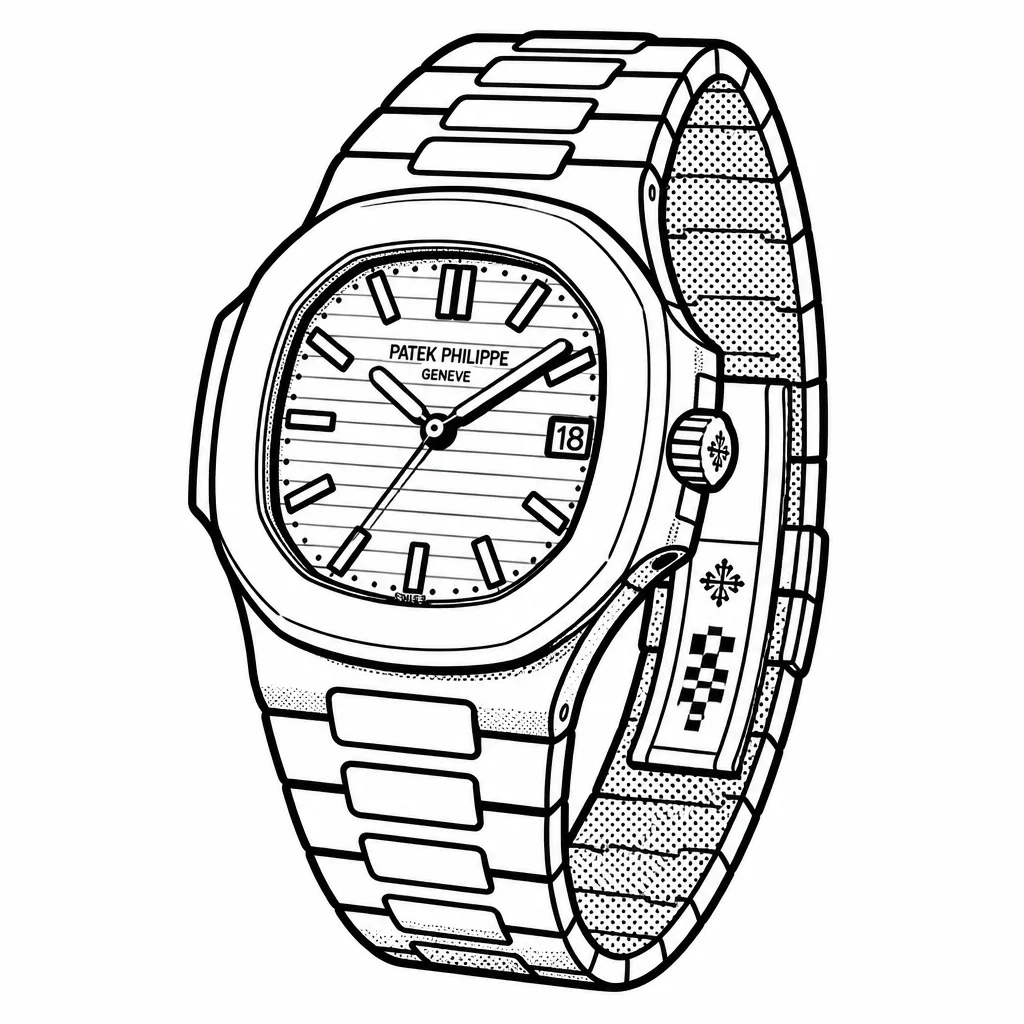
The company is owned by the Stern family, which took control in 1932 and has run it ever since. It is not publicly traded, so there is no ticker and no quarterly earnings calls. That structure lets Patek play a long game: keep supply scarce, protect prices, and resist the temptation to flood the market. The famous marketing line, "You never actually own a Patek Philippe. You merely look after it for the next generation," captures the pitch — these are heirlooms, not gadgets. The business runs on a deliberate scarcity machine. Certain models, especially the steel Nautilus and Aquanaut sports watches, became wildly popular in recent years, and waiting lists stretched for years while resale prices soared far above retail. That frenzy cooled somewhat after 2022 as the secondary market softened, but the core dynamic remains: demand for the most sought-after references still exceeds supply. Patek controls its own boutiques and a network of authorized dealers, which helps it manage who gets the rare pieces.
Its main rivals are other Swiss luxury houses: Rolex (privately held, so no ticker), Audemars Piguet (also private), and LVMH-owned brands like TAG Heuer and Hublot, though Patek sits at a higher price tier. The company's edge is craftsmanship and heritage — movements finished by hand, complications like perpetual calendars and minute repeaters — plus the discipline to stay small. Its weakness is the same thing: it depends on a wealthy, fashion-sensitive customer base and a reputation for quality that any misstep could dent.
Saved answer · last researched 10 Nov 2026
BIG PICTURE
Used Patek Philippes sell for 15.4% more than new ones, the biggest premium in watches
- 15.4% Patek Philippe resale premium above retail price
- 84.6% Resale premium of other brands or below retail
As of late June 2026, a used Patek Philippe was worth 15.4% more on average than a new one at retail. Only two rivals, Rolex at 9.8% and Audemars Piguet at 3%, were also above sticker price. Buyers pay extra because new watches are so hard to get, which keeps demand and prices unusually strong for a maker of about 72,000 watches a year. Source: Morgan Stanley report using WatchCharts data, via Kronos 360, data from 2026
Timeline
A Polish Entrepreneur Starts a Watch Firm
Antoine Norbert de Patek, a Polish entrepreneur who had settled in Geneva, started a watch company with Franciszek Czapek. The founding act dates from 1839. Like many young businesses, it began as a partnership between two people with a shared ambition.
Patek Meets Philippe
At the Paris Industrial Exposition, Patek came across Jean Adrien Philippe and his clever mechanism for winding a watch without a key. He invited Philippe to Geneva, and the two built a new firm together, pairing Patek's feel for business with Philippe's skill at the workbench.
Czapek Leaves and a New House Forms
Czapek departed, the old firm was dissolved, and Patek started a new house with Philippe and Wincenty Gostkowski. The partnership that would carry the name forward was now in place.
The Name Patek, Philippe & Cie
The firm settled on the name Patek, Philippe & Cie, which it kept for well over a century. Behind the name, Philippe won a series of patents, and the company has filed more than a hundred since. The message was simple: this was a house that liked to invent.
The Stern Family Rescues the Firm
After the Wall Street crash, orders dried up and Patek Philippe came close to collapse. Charles and Jean Stern, who owned the dial factory that had long supplied the company, bought shares step by step and pulled it back from the edge. Their descendants still own it today, which is why the rescue mattered far beyond that one crisis.
Genta Designs the Nautilus
Gérald Genta designed the Nautilus, a steel sports watch with an octagonal bezel and a bracelet built into the case. It broke the usual rules of high-end watchmaking, and it became a legend. Steel and sport had found a place at the very top of the market.
Philippe Stern Takes Over in the Quartz Crisis
Philippe Stern took charge of the family firm during the quartz crisis, when cheap electronic watches made mechanical ones look old-fashioned. He kept both kinds of watchmaking alive, and when vintage watches came back into fashion a few years later, the mechanical side of the business rode that wave. What looked like a defensive move turned into an advantage.
The 150th Anniversary Complication
For its 150th anniversary the manufacture made a watch regarded as the most complicated in the world. An anniversary auction then sent collector prices soaring, and Patek's reputation as the queen of complicated watches was sealed.
Thierry Stern Takes the Lead
Philippe Stern handed leadership to his son Thierry, the fourth generation of the family to run the company. Philippe had kept the firm out of the big luxury groups that were swallowing rivals, so it stayed independent and family-owned. That choice shaped everything that came next.
Scarcity Over Volume
Thierry Stern keeps production flat at about 75,000 watches a year, choosing scarcity and higher prices over selling more; analysts estimate revenue around a couple of billion Swiss francs. The company also bought Beyer Chronometrie, the world's oldest watch retailer, adding a fourth salon of its own, while Stern insists it is still a watchmaker and not a retailer. The top private Swiss watchmakers now hold about half the luxury watch market, and Stern expects many smaller players to disappear.