Understand any stock in simple English
Enter a ticker to learn what the company does and how it makes money.
Seiko Group Corporation
Seiko makes and sells watches, clocks, electronic devices, and semiconductor parts to customers around the world.
Seiko is best known for watches. It sells them under names like Seiko, Grand Seiko, and Credor, ranging from cheap everyday quartz watches to luxury pieces that cost as much as a small car. The company also makes clocks, and it sells electronic devices and semiconductor components to businesses. So it's a mix of a consumer brand and an industrial parts supplier, with headquarters in Tokyo.
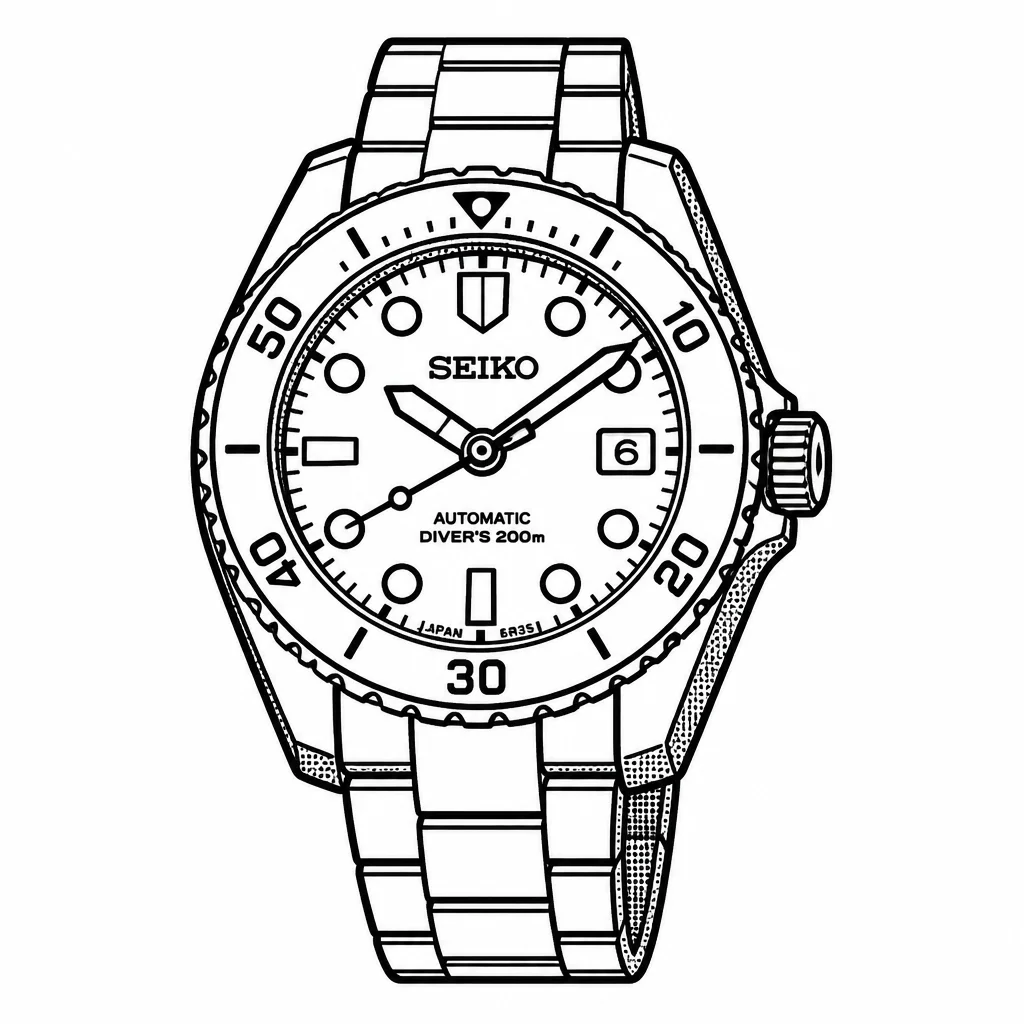
The watch business is the heart of the company. Seiko earned its reputation by making reliable watches at prices ordinary people could afford, and it famously launched the first quartz wristwatch, the Astron, in 1969. That move helped push the whole industry toward quartz and nearly killed off many mechanical watchmakers. Today Seiko competes with giants like Swatch Group and Citizen Watch in the mass market, while Grand Seiko fights for space against luxury names like Rolex—though Rolex is private, so no ticker there. The other side of Seiko is less glamorous but important: it makes precision components, including semiconductor parts and electronic devices, sold to other businesses. These products don't carry the Seiko name on a store shelf, but they use the same skills in tiny, precise manufacturing. That mix matters because watch sales rise and fall with fashion and the economy, while component sales depend on the health of the electronics industry.
Seiko is a steady, old-fashioned Japanese manufacturer rather than a fast-growing tech star. Its brands give it pricing power at the high end, but the mass watch market is crowded and price-sensitive. The company pays attention to its balance sheet and has bought back shares over the years to support its stock. Investors mostly get a dependable industrial brand with a famous name, not explosive growth.
Saved answer · last researched 14 Nov 2026
BIG PICTURE
Seiko wants 75% of its watch sales to come from its premium brands
- 75% Seiko Global Brands plus Grand Seiko and Credor
- 25% Other watch sales
Seiko's own target is for its named brands, from the affordable Seiko 5 Sports up to the luxury Grand Seiko and Credor, to make up 75% of the watches it sells. The rest are unbranded or other lines. That push toward named, higher-priced watches is where the money is heading: the watch division's operating margin in the spring quarter reached 20.8%. Source: Seiko Group FY2025 consolidated results presentation, data from 2026
Timeline
Kintaro Hattori Opens a Watch Shop
In 1881, a young man named Kintaro Hattori opened a small shop in Tokyo that sold and repaired watches. He built trust with foreign trading houses, and the business grew far beyond what a repair bench might suggest.
From Selling to Making
The retail success gave Hattori the money and confidence to do something bigger: in 1892 he set up Seikosha to manufacture wall clocks. The company was no longer just a shop; it had become a maker.
The Laurel Wristwatch
Hattori saw that people would soon move from pocket watches to watches strapped to the wrist. Seiko's answer was the Laurel, Japan's first wristwatch made at home.
The Earthquake and the Free Watches
The Great Kanto Earthquake of 1923 destroyed all of the company's factories and stores. Instead of walking away, Seiko gave free new watches to customers who had lost theirs in the fires, a move that bought something no factory could: deep trust.
Seiko Goes Public
In 1949 the company listed on the Tokyo Stock Exchange, opening the door to outside investors and a new stage of growth.
The Quartz Astron Shakes the World
In 1969 Seiko launched the Quartz Astron, the world's first quartz watch. A quartz watch kept time with a vibrating crystal instead of a wound spring, making it far more accurate, and this little invention set off the Quartz Revolution that shook the Swiss watch industry to its core.
The Hattori Seiko Name
In 1983 the company changed its name to Hattori Seiko, putting the founder's family name alongside the brand the world already knew.
A Holding Company Named Seiko
The name changed again in 2007, this time to SEIKO HOLDINGS CORPORATION, as the group reorganized itself around the brand.
Seiko Instruments Joins the Group
In 2009 Seiko Instruments became a wholly owned subsidiary, a quiet but important step that pulled the company's instrument-making side fully into the group.
Grand Seiko Stands Alone
Grand Seiko had first appeared back in 1960 as a line of especially fine watches. In 2017 it was made an independent brand, a deliberate push to aim for higher prestige and higher prices.
A New Name and a Ginza Home
In 2022 the company became Seiko Group Corporation and moved to the Prime Market. That same year it reopened the Ginza site where it all began as SEIKO HOUSE GINZA, tying its future to its origin.
The Most Accurate Spring Drive
In 2025 Seiko announced the Grand Seiko SLGB001 and SLGB003, the most accurate mainspring-driven watches in history. Their Spring Drive movement showed that a mechanical watch, the old kind powered by a wound spring, could still set new records.
Record Results and a Luxury Shift
By 2026 the payoff had arrived: first-half sales jumped over 22% and operating profit rose 86.5%, the best results in the company's history. The full-year forecast was raised to ¥390 billion on the strength of Grand Seiko and premium Seiko ranges, and the share price had climbed 120% since the start of the year as the company shifted from mass-market to luxury watches.