Understand any stock in simple English
Enter a ticker to learn what the company does and how it makes money.
Hub Group, Inc.
Hub Group arranges and manages freight shipments for companies across North America, moving goods by rail, truck, and warehouse.
Hub Group is a freight middleman. It doesn't own the factories or the products inside the boxes. Instead, it figures out how to get customers' stuff from one place to another and handles the messy logistics of doing so. Its customers are shippers across North America—retailers, manufacturers, and consumer goods companies—that need goods moved reliably without running their own transportation departments.
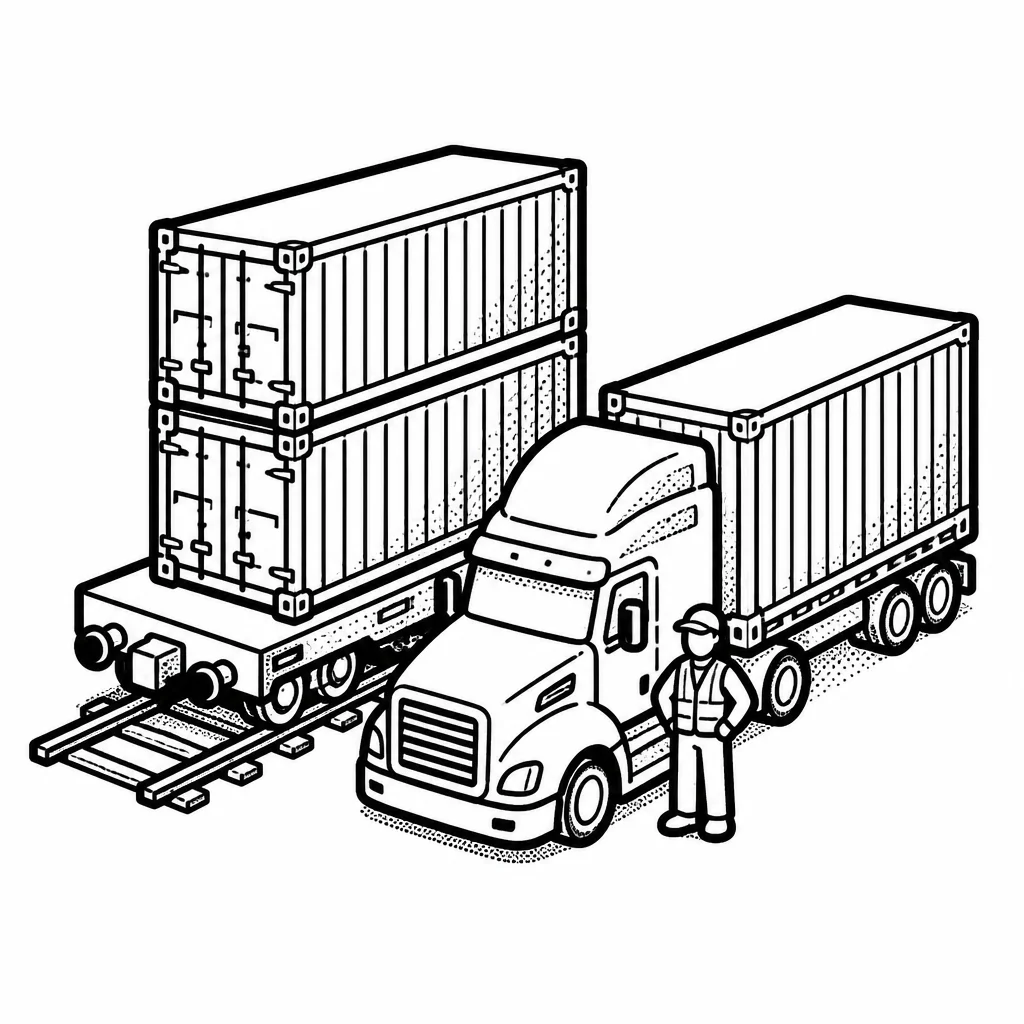
The core of the business is intermodal: putting freight containers on trains for the long haul and trucks for the short legs at each end. Trains are cheap over long distances, trucks are flexible over short ones, and Hub Group stitches the two together. It also runs a large truck brokerage, which matches shippers with independent truckers, and a warehousing and fulfillment arm that stores and handles goods closer to customers. So it sells three things: rail-based long-haul moves, truckload capacity it doesn't own, and warehouse space and labor. The money works like this. Shippers pay Hub Group for moving and storing their freight. Hub Group pays the railroads, the truckers, and the warehouse landlords, and keeps the spread. Because it owns relatively few of the physical assets—the containers and some trucks, but not most of the engines and wheels—it can grow without pouring billions into equipment. That's the appeal of the model. The catch is that margins are thin and the spread gets squeezed when freight demand is weak and too many trucks are chasing too few loads.
Hub Group sits in a crowded field. It competes with other intermodal and brokerage players like J.B. Hunt, C.H. Robinson, and XPO, plus the railroads themselves and countless smaller brokers. Its edge is scale and a long relationship with the big railroads, especially Union Pacific and Norfolk Southern, whose tracks carry its containers. The freight market is cyclical and brutally price-competitive, so results swing with the economy. Recent years brought a downturn in freight demand that hit pricing and volumes, and Hub Group has been pushing to grow its higher-margin logistics and warehousing pieces to smooth out the ride.
Saved answer · last researched 14 Nov 2026