Understand any stock in simple English
Enter a ticker to learn what the company does and how it makes money.
Rolex SA
Rolex makes and sells expensive luxury wristwatches that people buy as status symbols and as stores of value.
Rolex is a luxury watchmaker. It sells mechanical wristwatches — no batteries, no smart features, just tiny gears and springs wound by the movement of your wrist — that cost anywhere from roughly $6,000 to well over $100,000. People buy them as status symbols, as heirlooms, and increasingly as things that hold value. A steel Rolex Submariner bought at retail is often worth more on the used market the day you walk out of the store, which tells you most of what you need to know about demand.
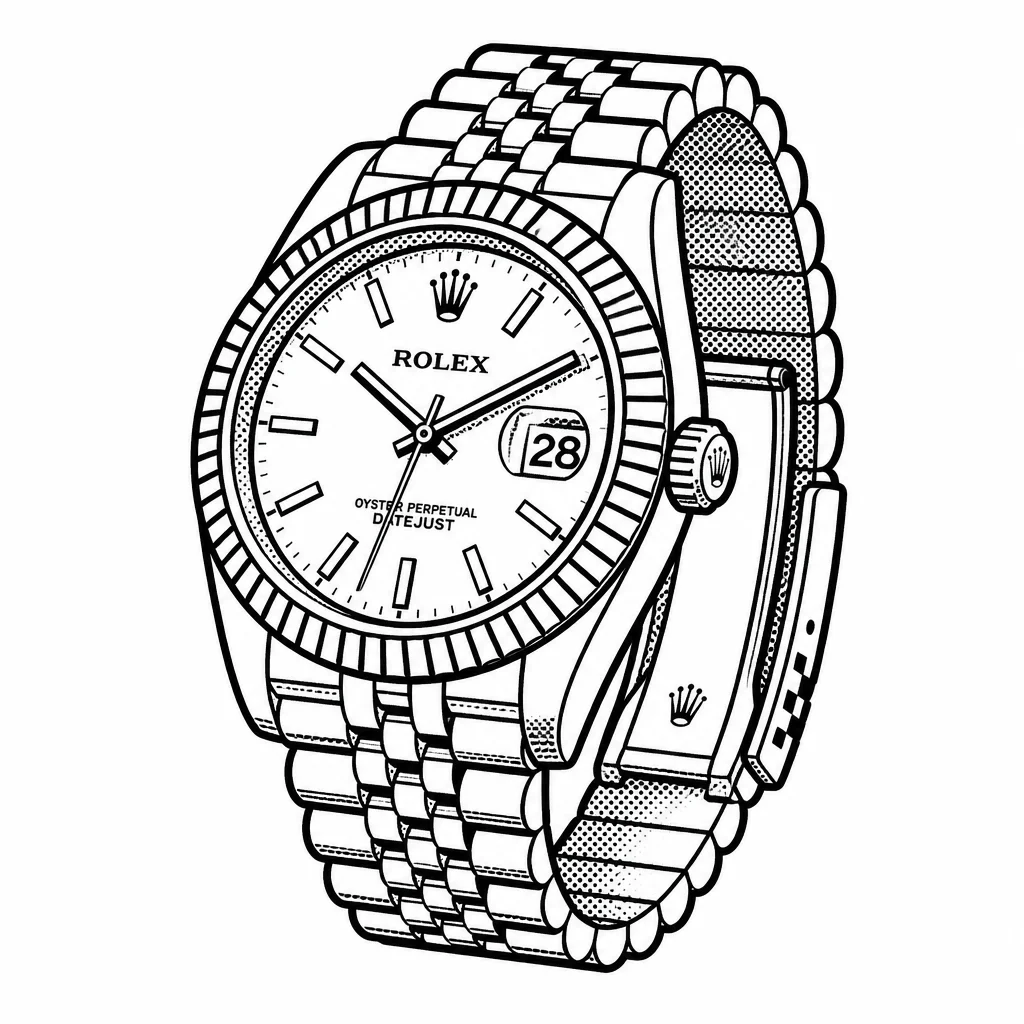
The company is owned by a private Swiss foundation, not shareholders, which is unusual and important. That structure lets Rolex think in decades rather than quarters. It builds almost everything in-house, from the movements to the cases, and it deliberately produces fewer watches than the market wants. Scarcity is the business model: waiting lists at authorized dealers are years long, and that shortage keeps prices firm and the brand's mystique intact. Rolex sells only through authorized dealers, never directly to customers, and it has kept that discipline for generations. The money comes from selling watches, plain and simple, at very high margins. A Rolex is a manufactured object made of steel, gold, and labor, sold for a large multiple of its cost. The brand, built over a century and reinforced by famous owners — Everest climbers, racing drivers, presidents — is the asset. Competitors like LVMH (which owns Hublot and TAG Heuer), Compagnie Financière Richemont (which owns Cartier and IWC), and Swatch Group chase the same customers, but Rolex sits at the top of the market by volume and reputation.
One verified detail worth knowing: the company is secretive, releases almost no financials, and in recent years built a new factory in Bulle, Switzerland, to expand production modestly — a rare admission that it plans to make more watches. It also launched a certified pre-owned program, letting dealers sell used Rolexes with a Rolex-backed warranty, a quiet move to capture some of the booming resale market that has grown up around its own scarcity.
Saved answer · last researched 6 Nov 2026
BIG PICTURE
One watchmaker makes a third of all Swiss watch industry revenue
- 31% Rolex's share of the Swiss watch industry
- 69% All other Swiss watch brands
Rolex reportedly brings in about 31% of the entire Swiss watch industry's revenue, with wholesale sales above 11 billion francs. Switzerland is home to around 450 watch brands. So one company, selling roughly 1.15 million watches a year at about 14,000 francs each, takes in nearly a third of the money the whole country's watch business collects. Source: Traders Union, data from 2026
Timeline
Two Men Start a Watch Business
In London, Hans Wilsdorf and Alfred Davis began importing Swiss watch movements and selling them as finished watches. Jewellers put their own names on the dials, so the watches had no brand of their own. Wilsdorf was a salesman with a big idea: the wristwatch, then seen as a fragile novelty, could be made reliable enough for everyone.
The Name Rolex Is Born
Wilsdorf wanted a brand name that was short enough to fit on a watch face and easy to say in any language, so he registered the trademark Rolex. It was a made-up word, which meant it carried no baggage and could mean whatever he built it to mean.
Rolex Moves to Switzerland
Heavy taxes at home in Britain and steep import duties pushed the company to move its operations to Switzerland, setting up an office in La Chaux-de-Fonds. The move put Rolex right in the middle of the world's best watchmaking.
A New Company in Geneva
Wilsdorf registered Montres Rolex SA in Geneva, a company that handled casing, assembly and sales. It bought its movements only from one supplier, Aegler, a tight relationship that would matter for a long time.
The Waterproof Oyster
Dust and moisture were killing watch movements, so Rolex built the Oyster, a watch with a sealed case that kept them out. To prove it, the company dropped Oyster models into fish tanks for people to see. Then a swimmer named Mercedes Gleitze crossed the English Channel wearing one, and Rolex advertised the feat on the front page of a newspaper for a month, turning a clever product into a famous one.
The Perpetual Rotor
Rolex patented a small half-circle plate that used gravity to wind the watch as the wearer moved, so nobody had to wind it by hand. This was a genuine revolution in self-winding watches, and the Oyster became the Oyster Perpetual.
The Foundation Takes the Shares
After his wife died, Wilsdorf set up the Hans Wilsdorf Foundation and left his Rolex shares to it. The foundation meant part of the company's income would go to charity, an unusual move that shaped who would own Rolex next.
A Company With No Shareholders
When Wilsdorf died, the Hans Wilsdorf Foundation became the owner of Rolex, and it has run the company ever since. That kept Rolex privately held, with no public shareholders to please, which let it play a long game.
Rolex Buys Its Movement Maker
Rolex had long bought its movements from Aegler, and now it bought the supplier outright to become a vertically integrated manufacturer. That gave it more control over parts and technology from the inside. At the time the group had thousands of employees and made hundreds of thousands of watches a year.
Rolex Buys Its Retail Partner
Rolex agreed to acquire Bucherer, a longtime retail partner, adding its own retail exposure to a business that otherwise relied on authorized dealers. It was a striking move from a company that usually stayed behind the counter.
A Clock for Trump
The CEO of Rolex joined Swiss business leaders in Washington and gave Trump a gold desk clock. Ten days later, the US said tariffs on Swiss imports would fall sharply, and Rolex's charm offensive was credited with helping win that relief for Swiss watchmakers.