Understand any stock in simple English
Enter a ticker to learn what the company does and how it makes money.
The Swatch Group AG
Swatch Group makes and sells watches, jewelry, and the parts that go into them, from cheap colorful plastic watches to luxury timepieces.
Swatch Group is a Swiss watchmaking giant that owns a whole ladder of brands, from the playful plastic Swatch watch to luxury names like Omega, Longines, Tissot, and Breguet. It sells to everyday shoppers buying a fun affordable watch and to wealthy collectors spending serious money on a mechanical masterpiece.
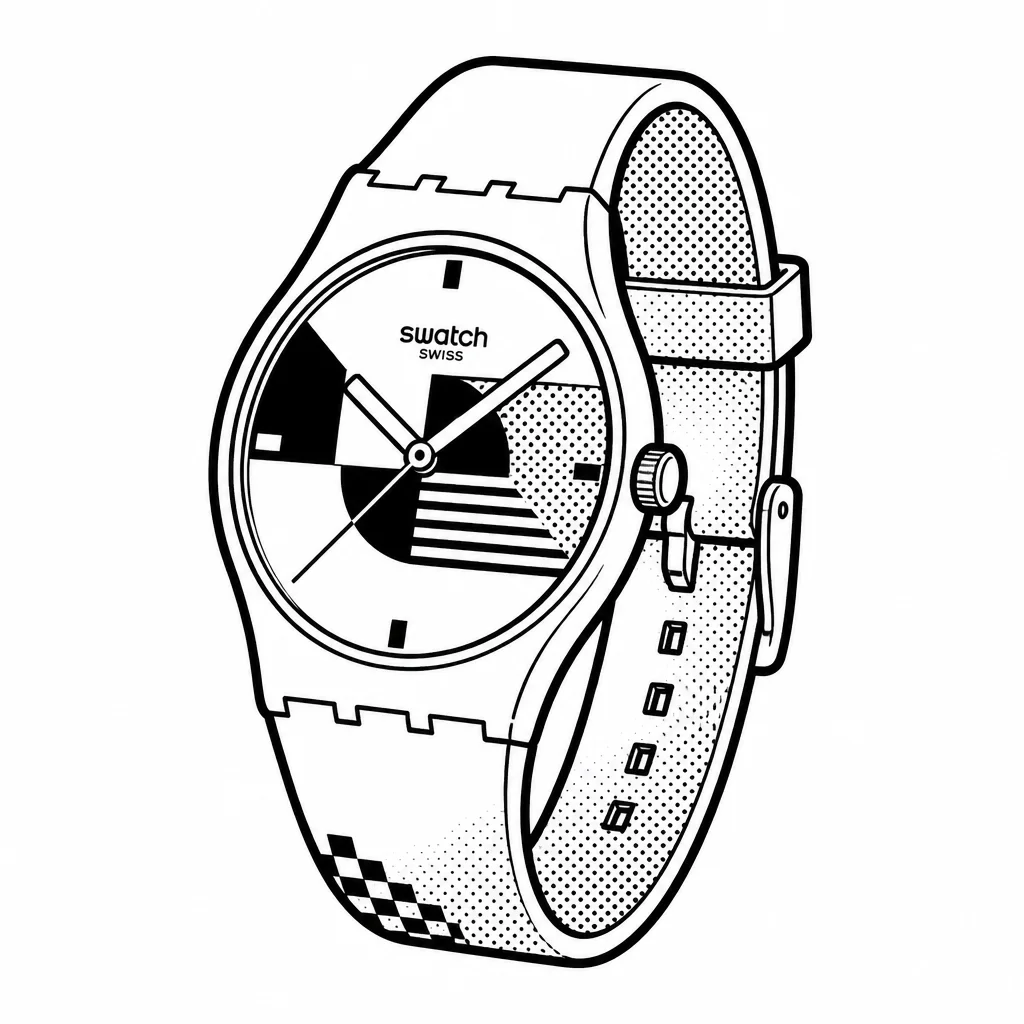
The really clever part is that Swatch Group doesn't just assemble watches — it makes many of its own components. It produces watch movements (the tiny engines inside a watch) and other parts, and it even supplies these to other watchmakers. That makes it a bit like a car company that also owns the engine factory, the dashboard supplier, and the leather workshop. This vertical integration gives it control over quality and costs, and it earns money both from selling its own branded watches and from selling components to others. The group is based in Biel, Switzerland, and it is controlled by the Hayek family, who rescued the Swiss watch industry in the 1980s with the original cheap Swatch watch. That plastic watch was a turning point: it showed Swiss watches could compete with cheap quartz watches from Asia and brought a new generation of customers into the fold.
Swatch Group's fortunes rise and fall with global demand for watches, especially in China, which has been a huge market for luxury timepieces. Its brands give it reach across price points, but that also means it feels the pinch when shoppers pull back on spending. The company pays dividends and has long been a steady, cash-generating business, though growth has slowed in recent years as the luxury watch boom cooled.
Saved answer · last researched 14 Nov 2026
BIG PICTURE
Swatch Group's share of the Swiss watch market has fallen from 26.4% to 16.1%
- 16.1% Swatch Group's share of the Swiss watch market
- 83.9% Everything else sold in the Swiss watch market
Morgan Stanley and LuxeConsult put Swatch Group's share of the Swiss watch market at 16.1% in 2025, down from 26.4% in 2019. That is a company whose home turf is Switzerland and whose name is nearly synonymous with Swiss watches, now holding less than a fifth of it. Rivals like Cartier and Patek Philippe have taken ground while Omega and Longines lose it. Swatch still makes money selling volume across price tiers, so a smaller slice of the market means fewer buyers walking into its own stores. Source: Luxurynsight, citing Morgan Stanley and LuxeConsult, data from 2025
Timeline
Two Rivals Merge to Survive
By the early 1980s, cheap quartz watches from Japan had nearly killed the Swiss watch industry. Two struggling Swiss watch groups, SSIH and ASUAG, agreed to merge, and the man who audited the deal, Nicolas Hayek, saw a way out: a cheap plastic Swiss watch packed with clever technology. The Swatch launched and sold ten million units within two years. That rescue became the foundation of everything that followed.
Hayek Takes Control
Hayek and a group of investors bought a majority stake in the merged company, and he became CEO. The company took a new name, SMH, and now had a leader with a plan to rebuild Swiss watchmaking.
Moving Upmarket with Blancpain
SMH bought Blancpain, a luxury brand, along with its movement maker Frédéric Piguet. The cheap Swatch had saved the company; now it was reaching for the expensive end of the market too.
A Fashion Name Joins
The group added the Pierre Balmain watch brand, giving it a fashion-house label to produce and distribute worldwide. It was another step in building a portfolio that could sell watches at many different price points.
A New Name: The Swatch Group
SMH renamed itself The Swatch Group Ltd., putting its most famous product on the front door. The new logo was meant to signal energy, high technology and Swiss Made quality.
Rescuing Breguet
The group bought Breguet, one of the oldest watchmakers in the world, and Hayek personally set out to bring the faded brand back to its former glory. Owning a piece of watch history gave the group a new kind of prestige.
The Son Steps Up
Nicolas Hayek stepped back from day-to-day management, and his son Nick became CEO and president of the executive board. The family was still firmly in charge.
A Family Succession
When founder Nicolas Hayek died, his daughter Nayla was appointed Chairwoman of the Board. The company stayed under family leadership, with the founder's children now running the empire he had built.
Harry Winston's Jewelry Bet
The group acquired Harry Winston, a fine jewelry and watch brand, marrying its watchmaking skill with high-end jewelry. It would turn out to be the group's last major acquisition.
The MoonSwatch Moment
Swatch teamed up with its own Omega brand on the Bioceramic MoonSwatch, a playful, affordable watch inspired by the solar system. It was called arguably the most successful Swiss watch launch in decades.
Buzz, Then Pressure
A collaboration with Audemars Piguet, the Royal Pop collection, drew huge crowds to boutiques and lifted the stock about ten percent. But the bigger picture was harder: falling profits, lost market share, activist pressure over strategy and governance, and a market value down to roughly a third of its 2013 peak. Even so, the group chose to keep its production capacity and jobs rather than cut, and comparable sales rose in the first half of the year, though operating profit missed forecasts.