Understand any stock in simple English
Enter a ticker to learn what the company does and how it makes money.
Isar Aerospace SE
Isar Aerospace builds and launches small rockets that carry satellites into orbit for companies and space agencies.
Isar Aerospace is a German rocket company that builds its own launch vehicles and sells rides to space for small satellites. Its flagship rocket is called Spectrum, a two-stage vehicle designed to loft roughly a tonne of payload into low Earth orbit — the kind of capacity that fits the small-to-medium satellites that phone, imaging, and research companies increasingly want to fly.
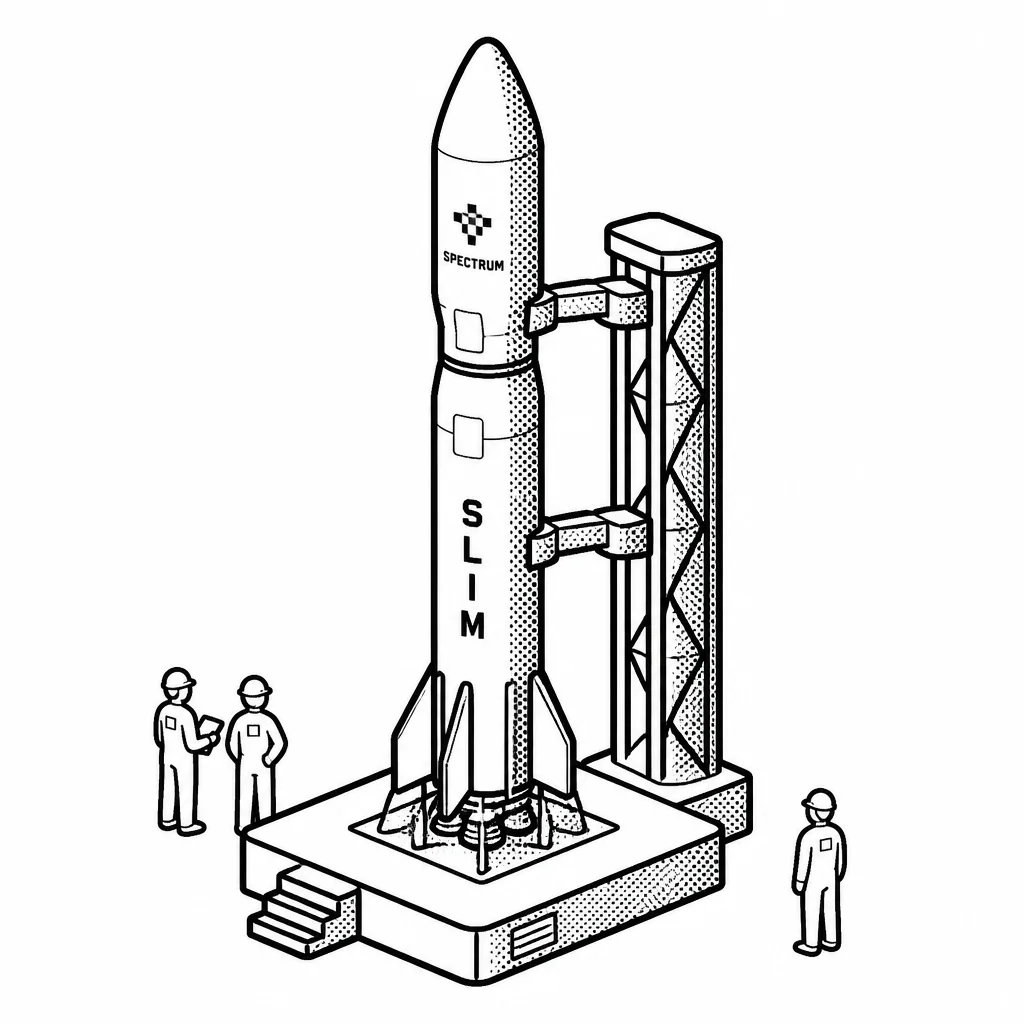
The business works like a space taxi service. Customers — satellite operators, research institutions, and government space agencies — pay Isar to carry their hardware from the ground into orbit. Isar designs and manufactures the rocket, runs the launch site, and handles the mission. It even builds most of its own engines and key components in-house, which gives it more control over cost and schedule than a company assembling parts from many suppliers. The core pitch is flexibility and responsiveness: dedicated launches from Europe, on the customer's timeline, without waiting in a crowded queue for a ride on a giant rocket. That puts Isar in direct competition with the big rideshare players, most notably SpaceX, whose Falcon 9 regularly carries dozens of small satellites at once, and with other small-launch startups such as Rocket Lab. Isar's edge is geography: launching from European soil, at Andøya in Norway, gives European governments and companies a home-grown path to orbit rather than depending on foreign providers. That matters more as space is treated as strategic infrastructure, and it helps explain why investors backed Isar heavily — it has raised well over €300 million, including a round of more than €150 million in 2024, making it one of Europe's best-funded space startups.
Isar is still a young, pre-revenue company in the commercial sense. Its first Spectrum rocket lifted off in March 2025 from Andøya in a test flight that ended early, as first flights often do; the goal was to gather data, not to reach orbit. The company's future depends on turning test flights into a reliable, repeatable launch cadence and converting a backlog of customer contracts into paying missions. Until it does, the money it has raised is going into rocket development, manufacturing capacity, and launch infrastructure — the expensive, slow groundwork that every launch company must lay before the revenue arrives.
Saved answer · last researched 10 Nov 2026
Timeline
Three Students Found Isar
Daniel Metzler, Josef Fleischmann and Markus Brandl had spent their student years building rocket engines in a university research group, and in 2018 they turned that hobby into a company. They built their first prototypes in a startup workshop in Munich, backed by an incubator, with one big idea: make it much cheaper and easier to get to space by designing and building almost the whole rocket themselves.
HV Capital Backs the Rocket
Two years in, the German investor HV Capital put money into Isar to fund its growth. That early bet helped the founders keep hiring and building at a stage when they had no rocket flying yet.
First Spectrum Flight Falls Short
The first Spectrum rocket lifted off from Andøya in March 2025, but the flight was aborted after about half a minute and fell into the sea without reaching orbit. It was not a win, yet it was not a disaster either: the launch pad survived, the safety system that destroys a failing rocket worked, and the team got real flight data. Two more rockets were already being built.
A Billion-Euro Bond and Unicorn Status
A few months later, Isar agreed a 150 million euro convertible bond with Eldridge Industries, money meant to expand launch capacity and rocket production near Munich. The deal valued the company like a unicorn even though no Isar rocket had yet reached orbit. It was a bet by investors on what was coming.
ESA Picks Isar for Rocket Challenge
In August 2026, the European Space Agency signed Isar up for its European Launcher Challenge, with commitments of around 200 million euros for the next generation of rockets, infrastructure and future missions. Europe's space establishment was now putting real money behind the young company.
Spectrum Reaches Orbit
On September 5, 2026, the second Spectrum rocket, on a mission called "Onward and Upward," lifted off from Andøya, reached Earth orbit and released its payloads. Isar became the first commercial space company from Europe to deliver satellites into orbit. Years of development suddenly became a proven way to move things to space, and a much easier story to sell to investors and customers.
Defence Becomes the Main Customer
That same year, Isar hired Andronike Amponsah to lead defence and government programs, and the numbers showed why: defence was now around 60% of the company's pipeline, and announcements started putting NATO and sovereign access to space ahead of commercial customers. European governments wanted European rockets for their defence satellites, and Isar moved to serve them.
Fleischmann Steps Down as CTO
Shortly after the successful launch, co-founder Josef Fleischmann stepped down as chief technology officer to focus on his new company, Bavaria Instruments, with Can Araz taking over the technical role. Fleischmann stayed on as a shareholder, so he kept a piece of the company he helped start.
A Two-Billion-Euro Round
In June 2026, Isar closed a Series D round of roughly 270 million euros led by Island Green Capital and Molten Ventures, valuing the company at about 2 billion euros. Total disclosed funding reached around a billion dollars, turning the student project into one of Europe's best-funded space startups.
Demand Outruns the Rockets
By November 2026, Isar was 15 times oversubscribed for 2028 launches, with far more customers than rockets to carry them. About 18 months earlier, most inquiries had been commercial and only a small share military; that ratio had flipped. CEO Daniel Metzler said capacity, not demand, was now the bottleneck, and the company was working on reusable rockets to catch up with SpaceX.