Understand any stock in simple English
Enter a ticker to learn what the company does and how it makes money.
NEXTDC Limited
NEXTDC builds and runs data centres where companies rent space, power, and connections to keep their computer systems running.
NEXTDC is a landlord for the internet. It builds big, secure buildings filled with racks of servers, then rents out space, electricity, and network connections to businesses and government agencies that need somewhere safe and reliable to run their computer systems. That service is called colocation: you bring your own servers, and NEXTDC gives you the building, the power, the cooling, and the cables.
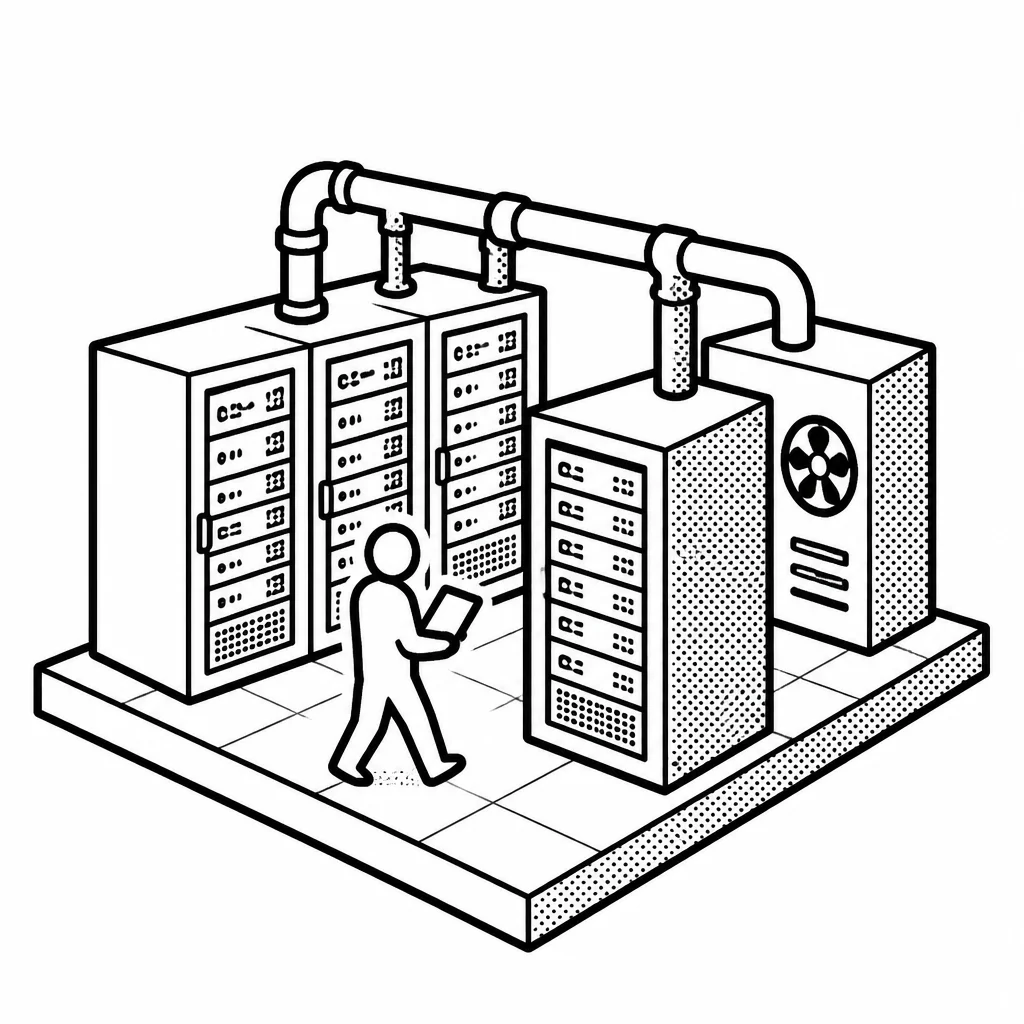
The business has grown far beyond simple floor space. NEXTDC's centres are "carrier-neutral," meaning many different telecom and cloud providers plug into the same building, so customers can connect to several networks and cloud platforms without being locked into one. That connectivity is the real hook: once a company's systems and partners are wired into a NEXTDC facility, moving out is painful, and that stickiness keeps customers around for years. Its customers span large enterprises, government, and cloud and software companies, mostly across Australia and increasingly in Asia. The big rivals in its home market are other data centre operators such as Equinix. Data centres are a heavy, capital-hungry business. NEXTDC spends enormous sums up front buying land, constructing buildings, and securing power, then fills them with customers over time until the cash flows. It has been expanding aggressively — new campuses in Sydney, Melbourne, and other cities, plus a push into Asia through its OneDC joint venture. This buildout is why the company has raised capital repeatedly rather than paying dividends; profits get ploughed back into more concrete and more racks. A useful way to see it: NEXTDC is less a tech company than a toll-road operator for data, collecting rent from the traffic that flows through its buildings.
The demand story has become urgent because of artificial intelligence. AI models need huge amounts of computing power, and that power has to live somewhere with reliable electricity and cooling — exactly what data centres sell. NEXTDC has been signing large pre-lease deals with hyperscale cloud customers before buildings are even finished. The flip side is real risk: power availability, construction delays, rising interest costs on all that debt and capital spending, and the danger of overbuilding if demand cools. NEXTDC is betting billions that the world's appetite for computing keeps climbing, and so far the customers keep signing up.
Saved answer · last researched 12 Nov 2026
BIG PICTURE
The cloud giants pay for more than 70% of NEXTDC's rented data centre power
- 70% Hyperscale cloud customers
- 30% Other customers, including enterprises, government and IT providers
NEXTDC rents out space and power in its data centres, and the biggest cloud providers take the lion's share. Hyperscalers like AWS and Microsoft account for more than 70% of the megawatts billed today. Once future contracts are counted, AI and cloud customers make up 95% of the business. That concentration is the company's strength and its weak spot: a handful of giant tenants can fill new sites fast, but their choices move the whole business. Source: Stake, data from 2026
Timeline
Bevan Slattery Starts NEXTDC
Bevan Slattery had just sold his network company, Pipe Networks, and he had a bet to place: that cloud computing would push businesses off their own server rooms and into shared, professionally run data centres. So he started NEXTDC to build those data centres in Australia and New Zealand, with one key twist — they would be neutral, selling space and power to any customer rather than favouring one telecom or one vendor. The idea was simple: own the building everyone needs, and stay out of the fights between the companies inside it.
NEXTDC Lists on the ASX
Less than a year after starting, NEXTDC went public, having bought properties in Brisbane and Melbourne to build on. Going public that fast sounds strange for a young company, but data centres eat capital — you need hundreds of millions to build them, not tens of millions. The stock market was how the company could raise the money to grow.
Craig Scroggie Takes Over
Craig Scroggie became CEO, while founder Slattery stepped back to deputy chairman. That handover mattered more than it looked: Scroggie would run the company for over a decade, through its long stretch of growth.
Sydney's S1 Opens
The S1 data centre in Sydney went live, giving the company a major site in Australia's biggest market, and big-name customers like Optus and Australia Post started signing up. Those wins began building the base of large businesses and government buyers the company would lean on. Slattery also retired from the board that year.
First Profit and AXON Launch
NEXTDC posted its first profit, and Deloitte named it Australia's fastest-growing technology company. It also launched AXON, a platform that let customers connect directly to each other and to cloud providers like Microsoft — a move beyond simply renting space. Instead of just being a landlord, it was becoming a meeting point.
Capital Raise and a $10 Billion Value
The company raised over a billion dollars to speed up expansion in Sydney and Melbourne, and its market value passed ten billion. It had become the largest listed data centre developer in Australia — a long way from the startup that went public to afford its first buildings.
OpenAI Partnership
NEXTDC signed an agreement with OpenAI to build sovereign AI infrastructure in Australia, including a GPU supercluster at its Sydney site. The deal marked the company's turn toward large-scale AI workloads as the next engine of growth.
KL1 Kuala Lumpur Opens
The company opened its first data centre outside Australia, in Kuala Lumpur, starting its Asia-Pacific expansion.
Melbourne Power Fight and a Share Price Crash
Plans to expand the M3 Melbourne site hit a wall: after residents protested against giant 22-metre power poles, the power works were suspended and the site's energisation pushed out to FY28. NEXTDC cut its revenue guidance, pulled out around $140 million of contracted revenue, and paused projects that had no signed customers. Shares fell about 42 per cent in a single session, wiping roughly $3 billion off the company's value.
Goodman and Digital Realty Buy In
After the crash, Goodman Group and Digital Realty bought a combined stake of nearly 10 per cent at a 45 per cent premium, putting the company in play. CEO Scroggie said he would be 'mortified' to sell strategic assets, and the board turned its focus to fixing the Melbourne mess before chasing more growth.