Understand any stock in simple English
Enter a ticker to learn what the company does and how it makes money.
Megaport Limited
Megaport sells software that lets businesses connect their private networks to cloud providers and data centers quickly, without waiting weeks for physical cables.
Megaport is a software company that acts like a switchboard for the internet's back roads. When a business wants a fast, private, reliable connection between its own computers and a cloud provider like Amazon Web Services or Microsoft Azure, it usually has to call a telecom company and wait weeks for a physical cable to be installed. Megaport lets that same business open a connection in minutes through a web portal, choosing from a menu of cloud providers and data centers the way you'd pick a show on a streaming service.
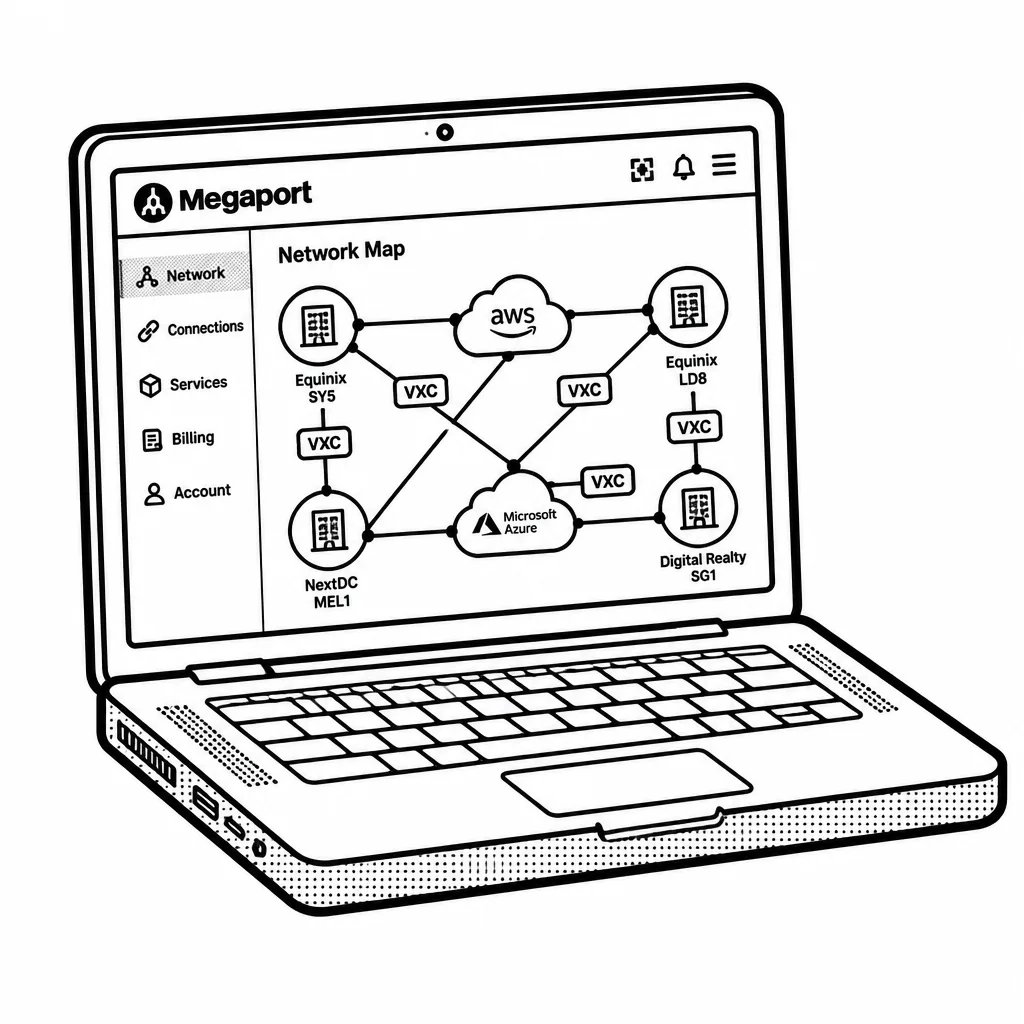
The core product is a virtual cross-connect: software that ties a customer's network to a cloud or another network inside a shared data center. Megaport doesn't own most of the underlying fiber. It partners with data center operators and network providers, then layers its own software on top to orchestrate and bill those connections. Customers pay recurring monthly fees based on how much bandwidth they use and how many ports they need, and the contracts tend to stick because rewiring a company's network is a hassle nobody wants to repeat. The business has grown fast as more companies moved to multi-cloud setups, but it has also been a money-loser for much of its life, burning cash to expand into new markets. It operates across dozens of data centers in North America, Europe, and Asia-Pacific, which gives it a head start over smaller rivals but puts it up against deep-pocketed telecom incumbents and cloud providers' own direct-connect offerings. Megaport's bet is that being neutral — connecting to everyone rather than favoring one cloud — keeps it useful to customers who don't want to be locked in.
Headquartered in Brisbane, Australia, the company listed on the ASX in 2015 and has since become one of the more closely watched small-cap tech names there. Investors value it on growth and cash flow rather than profits, and the stock has swung wildly with sentiment about cloud spending. It's a classic picks-and-shovels play: it doesn't sell cloud computing itself, it sells the plumbing that makes cloud computing usable.
Saved answer · last researched 12 Nov 2026