Understand any stock in simple English
Enter a ticker to learn what the company does and how it makes money.
Equinix, Inc.
Equinix owns and runs data centers where companies rent space, power, and network connections to link their computer systems directly to each other and to the internet.
Equinix is a real estate company for the internet age. It owns buildings full of servers, cables, and cooling equipment, and rents out small slices of them to companies that need their computers to sit close to other companies' computers. Customers pay for space in a cage or cabinet, for the electricity to run their machines, and — most importantly — for the cross-connections that let them plug directly into each other's networks. A bank might rent a spot next to a stock exchange's trading systems; a cloud provider might rent a spot next to dozens of corporate networks. Those physical wires between customers are the heart of the business.
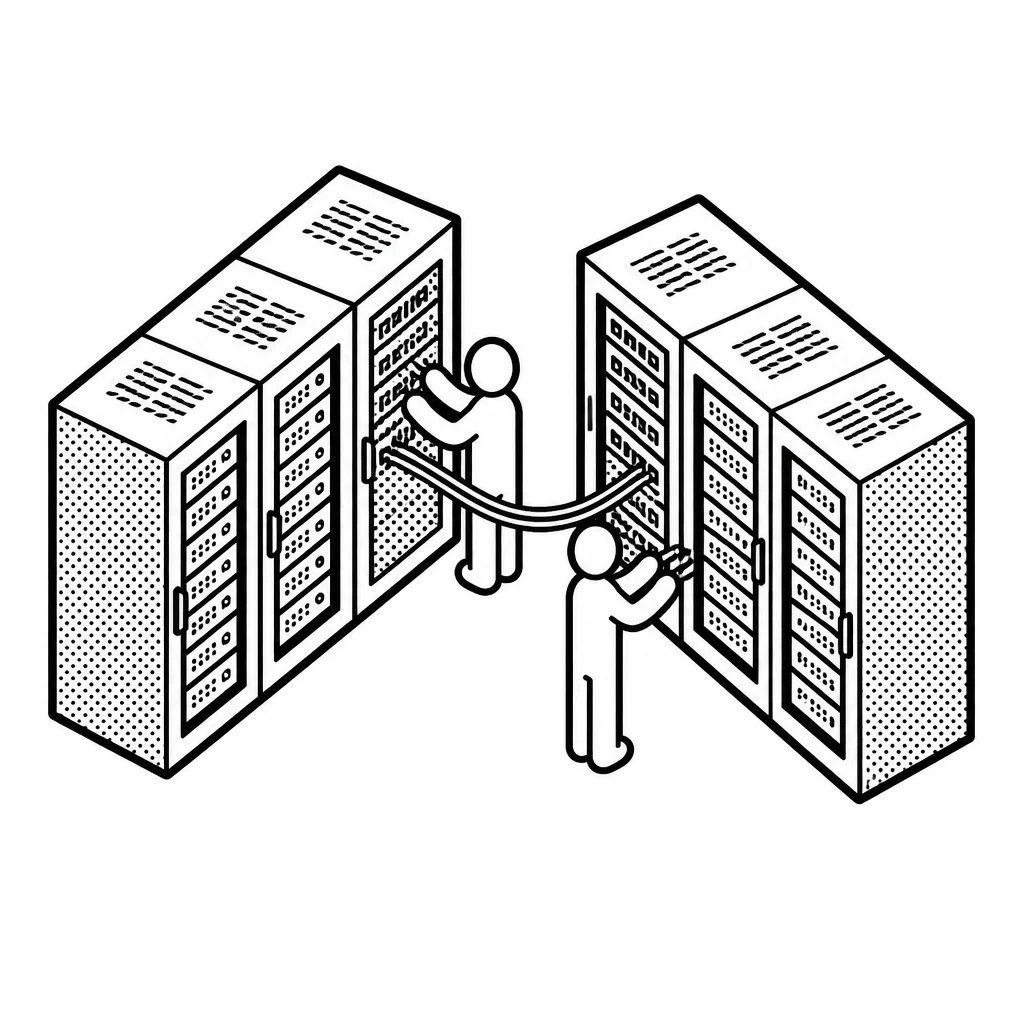
The key idea is that the internet is not one magic cloud. It is a giant web of private networks that have to physically meet somewhere, and Equinix sells the meeting places. Its data centers are "carrier-neutral," meaning every telecom and network provider can plug in on equal terms, so a customer in one Equinix building can reach hundreds of networks without signing separate deals. That neutrality and the sheer density of networks in each building create a moat: once a company has wired itself into a campus and its partners are there too, moving out means re-plugging dozens of connections. Equinix calls this its "ecosystem," and it is why customers tend to stay for years. Equinix makes money from recurring rent and interconnection fees rather than one-time sales, and it keeps expanding by building new data centers and buying rivals. It has grown into a giant through acquisitions — most notably the 2020 purchase of 13 data centers from Bell Canada for about $750 million, and its earlier buys of TelecityGroup and Verizon's data centers. More recently it has pushed into the AI boom, since AI workloads need dense, power-hungry facilities close to networks, and it has expanded aggressively into markets like India and Latin America. CEO Adaire Fox-Martin took over in 2024, and the company has been navigating high interest rates that make its heavy building program more expensive.
The honest flip side is that Equinix is a capital-hungry landlord. It must spend billions each year on new data centers and upgrades just to keep growing, and that spending is funded partly by debt, so rising rates hurt. It also faces competition from other data center landlords like Digital Realty and from cloud providers building their own facilities. Still, its cash flow is steady and predictable, it pays a modest dividend, and the network-density advantage is hard to copy. In short: it sells the physical intersections where the internet's private roads meet, and it collects rent every month for keeping the lights on.
Saved answer · last researched 12 Nov 2026