Understand any stock in simple English
Enter a ticker to learn what the company does and how it makes money.
PT Indofood Sukses Makmur Tbk
Indofood makes and sells everyday food and drinks in Indonesia, from instant noodles to flour and cooking oil, and delivers them to shops across the country.
Indofood is the company behind a lot of what lands on Indonesian tables. Its most famous product is Indomie, the instant noodle brand that has become a daily staple for millions of people across Indonesia and is exported to dozens of countries. But noodles are only the most visible piece. The company also makes wheat flour, cooking oil and margarine, snack foods, dairy products, and a range of other branded groceries that fill supermarket shelves.
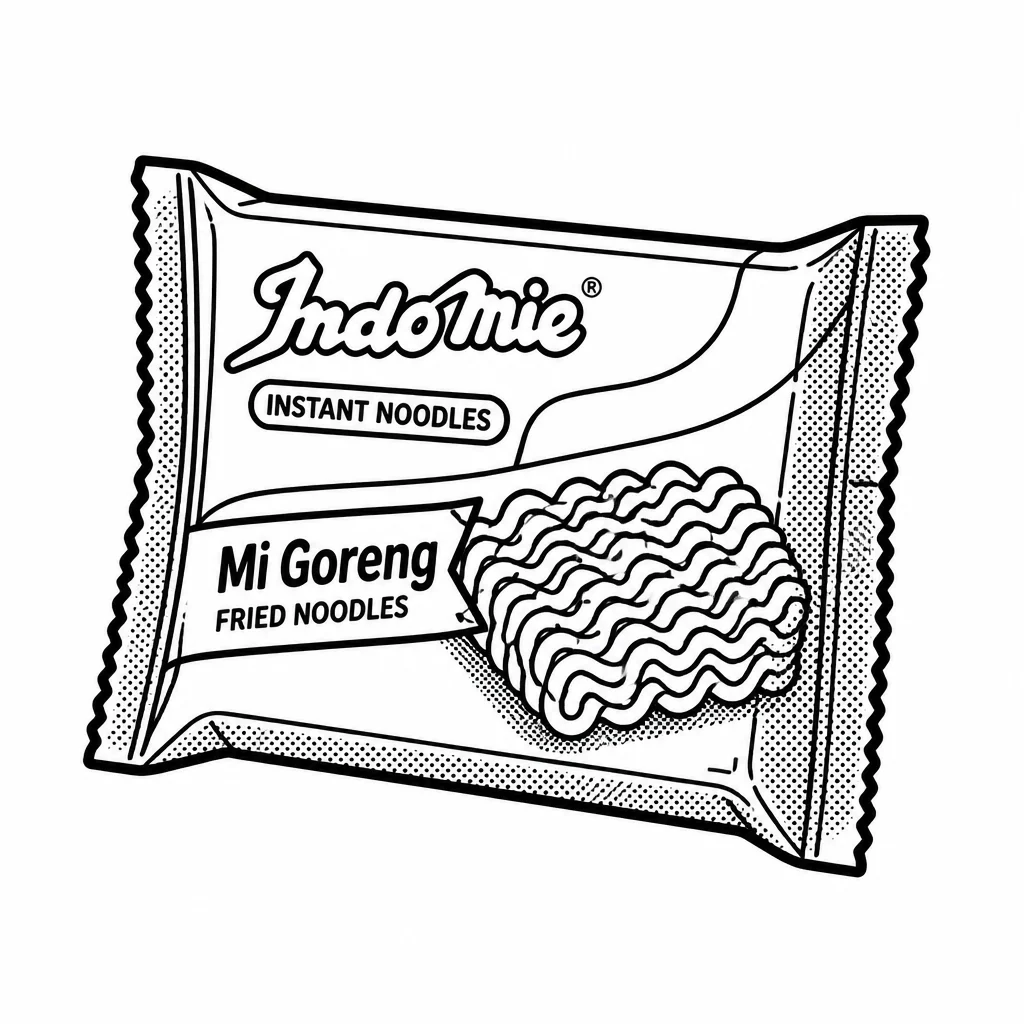
The business is split into a few clear parts. The consumer branded foods division makes and sells the packaged products people recognize by name. A flour division mills wheat into the flour that goes into noodles, bread, and biscuits, and it sells that flour both to outside customers and to its own factories. An agribusiness arm runs large plantations, mainly oil palm, which feed the cooking oil and margarine side of the business. And a distribution network moves all these products to shops, from big supermarket chains down to tiny neighborhood stores, which matters enormously in a country spread across thousands of islands. Who pays? Ordinary shoppers buy the noodles and snacks, while the flour business sells to bakeries, food makers, and other manufacturers. The company earns its money by making these everyday items cheaply and reliably at huge scale, then getting them onto shelves everywhere. Its size gives it bargaining power on raw materials and a distribution reach that smaller rivals struggle to match. Competition comes from other big Indonesian food groups, such as Wings Group and Mayora Indah, along with global players like Nestlé, but Indofood's sheer scale and brand loyalty keep it at the center of the market. The company has had a busy recent history. Its parent is the Salim Group, one of Indonesia's largest conglomerates, and Indofood has spun off pieces of itself over the years, including its flour and agribusiness units, while keeping control. It also holds a major stake in Indofood CBP Sukses Makmur, the subsidiary that runs the branded consumer foods business. That structure means investors in Indofood get exposure to a whole web of food-related companies rather than a single product line.
Like any food giant, Indofood faces real risks. Wheat and palm oil prices swing with global markets, and because Indonesia is such a huge market, government rules on food pricing, imports, and subsidies can hit the business. Currency moves matter too, since some raw materials are bought in dollars. Still, the core proposition is simple and durable: feed a lot of people, often, at prices they can afford. That is a business that tends to keep humming even when economies wobble.
Saved answer · last researched 12 Nov 2026
BIG PICTURE
Indofood makes more instant noodles than any other company on Earth
- 1% Indofood's share of the global instant noodle market
- 99% Every other instant noodle maker worldwide
Indofood is the world's number one instant noodle maker, according to a Japanese analysis of the sector. Its noodles, sold mostly at home in Indonesia under the Indomie name, are the everyday staple that brings in much of the company's money, alongside flour and cooking oil. Staying on top means fending off rival noodle makers everywhere. Source: Infoseek / トウシル, data from 2026
Timeline
A Food Business Takes Shape
In 1990, a company called PT Panganjaya Intikusuma was set up and started doing business that same year. But the real work behind it had been going on since the early 1980s, building food businesses that would eventually grow into something much bigger: a company that aimed to offer total food solutions, meaning food for just about every part of daily life.
The Indofood Name Arrives
In early 1994, the company took the name PT Indofood Sukses Makmur. And it did not start small: a group of 18 companies from the Salim Group, mostly food producers including the factories behind Indomie, Sarimi and Supermi noodles, were folded into it. In one move, Indofood became a serious noodle powerhouse.
Indofood Goes Public
That same year, Indofood listed its shares on the Indonesia Stock Exchange. Going public meant the company could raise money from ordinary investors, and it gave the business a public face and a war chest for what came next.
Buying the Flour Mill
Next came a smart move: Indofood bought the Bogasari flour mill. Why does a noodle maker want a flour mill? Because noodles are made from flour. Owning the mill meant controlling a key ingredient instead of just buying it, a strategy known as backward integration.
Into Dairy and Sugar
Indofood pushed beyond noodles. Its consumer brands group entered dairy by acquiring PT Indolakto, one of Indonesia's leading dairy producers, while its agribusiness arm got into sugar by acquiring PT Lajuperdana Indah. The company was now spreading across more of the food chain.
The Consumer Brands Arm Lists
In 2010, Indofood listed its consumer brands business, PT Indofood CBP Sukses Makmur, on the Indonesia Stock Exchange. This put the noodles, dairy, snacks and other everyday products into their own public company, giving that side of the business its own access to capital.
Noodles Go Global
A decade later, the consumer brands group made a bold leap by acquiring Pinehill Company Limited, an instant noodle producer with operations in Africa, the Middle East and Southeastern Europe. The noodle business that started in Indonesia was now reaching far beyond it.
The Snack Breakup With PepsiCo
Then came a tricky split. Indofood CBP bought out PepsiCo's stake in their snack joint venture, and production of Lay's, Cheetos and Doritos stopped. The venture was renamed PT Indofood Fortuna Makmur and the brands were rebranded as Chitato Lite, Chiki Twist and Maxicorn. PepsiCo agreed not to sell competing snacks in Indonesia for three years, so Indofood kept the snack shelf to itself, at least for a while.
Agribusiness Drives Growth
By 2026, the numbers told a story of a company firing on several cylinders. Revenue grew nearly 7% to about IDR 123.5 trillion, with agribusiness the star, surging 32% on higher palm oil prices. Net profit jumped 24% to roughly IDR 10.7 trillion, helped by a turnaround in income from associates and joint ventures. Agribusiness was expected to keep leading the way, offsetting slower growth in consumer brands and flour.