Understand any stock in simple English
Enter a ticker to learn what the company does and how it makes money.
Wings Group Indonesia (PT Sayap Mas Utama / Wings Food)
Wings Group makes everyday household products like instant noodles, laundry soap, and toothpaste, selling them cheaply to millions of families across Indonesia and beyond.
Wings Group is a household goods giant that most Indonesian families touch every single day without ever thinking about the company behind it. It makes the instant noodles people cook when they are hungry and in a hurry, the laundry soap that gets school uniforms clean, and the toothpaste in the bathroom. The company is private, founded and still run by the Katuari family, and it is headquartered in Surabaya, Indonesia's second-largest city. It rarely talks to the press, which is why it is far less famous than it is large.
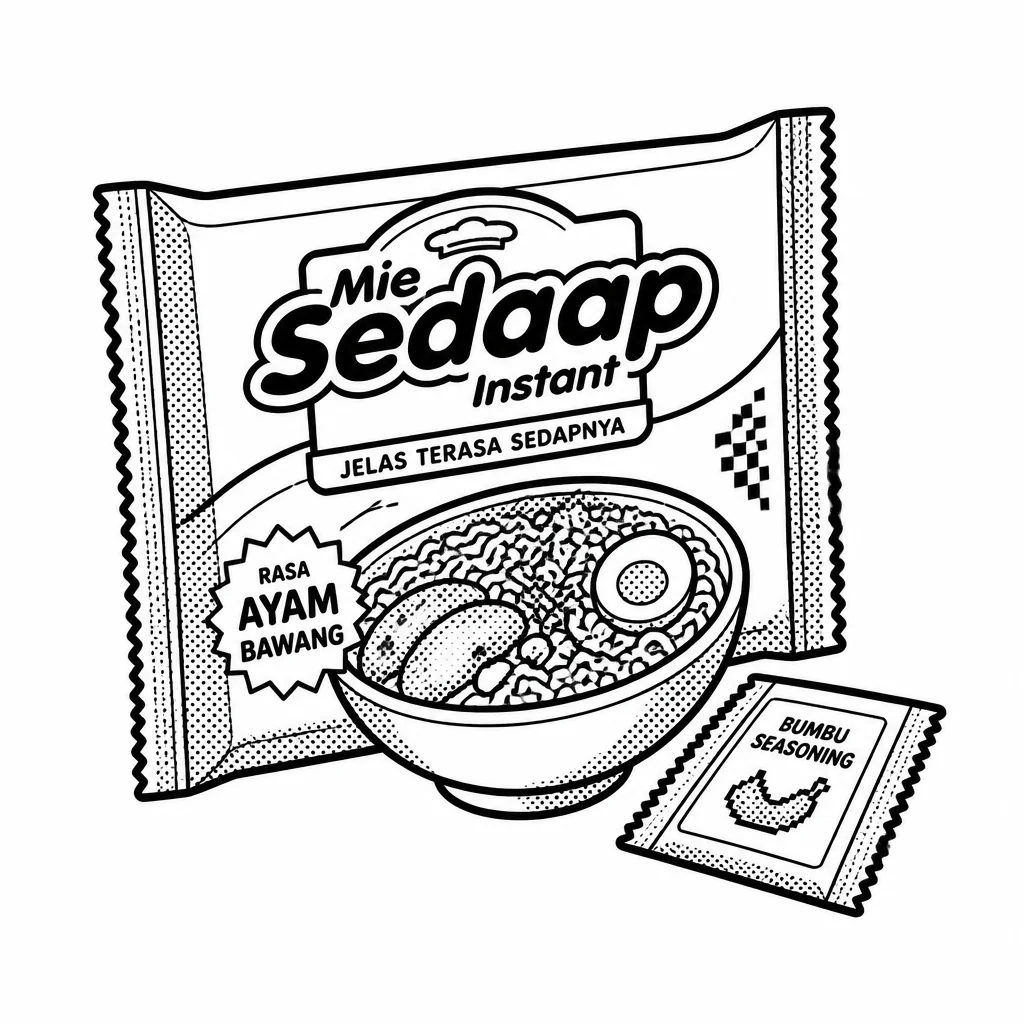
Its best-known brand is Mie Sedaap, one of Indonesia's top instant noodle brands and a direct rival to Indofood's Indomie. But noodles are only one slice. Wings sells laundry detergent under SoKlin, toothpaste under Formula, and a long list of other home-care and personal-care products. The genius of the business is simple: it makes cheap things that everyone needs and builds brands so familiar that they feel like the default choice on the shelf. Indonesia's huge population, growing middle class, and love of instant noodles give it a massive, reliable base of customers. The real money comes from volume and distribution. Wings pushes its products through thousands of small shops, supermarkets, and kiosks across the sprawling Indonesian archipelago, which is a logistical nightmare that it has spent decades mastering. It also exports Mie Sedaap to places with large Indonesian communities and sells it in countries like Malaysia, Saudi Arabia, and Nigeria, where cheap, filling noodles are a growing business. Its factories run at massive scale, driving down cost per packet — a few cents saved on every noodle packet adds up to serious money when you sell billions of them. Wings stays quietly powerful by keeping prices low and staying out of the spotlight. Competitors like Unilever and Indofood are far more visible, but Wings has carved out a durable place by being the cheaper, dependable option for ordinary families. Because it is private, there are no public shareholders or quarterly earnings calls — the family decides how to reinvest its profits. That freedom lets it expand into new categories and new countries on its own timetable, without explaining itself to anyone.
It is a reminder that some of the most important companies in a country's daily life are the ones you never hear about. Wings doesn't chase headlines. It just makes sure the noodles, soap, and toothpaste are on the shelf, priced so that almost anyone can afford them, and it collects a small profit on each one, billions of times over.
Saved answer · last researched 10 Nov 2026
BIG PICTURE
Mie Sedaap holds about 14% of Indonesia's instant noodle market, far behind Indomie's roughly 71%
- 14% Mie Sedaap (Wings Food)
- 86% Other brands, mostly Indomie
Indonesia's instant noodle shelves are close to a two-brand race. Mie Sedaap takes roughly 14% of the domestic market while Indomie takes about 71%. Together the pair control around 87% to 90%, leaving little room for anyone else. Wings makes its money selling cheap noodles at enormous volume, so even a distant second place in the world's second-biggest noodle market is a serious business. Source: Trenasia/Balinesia (via lyfebengkulu.com), data from 2026
Timeline
Two Founders and a Pair of Wings
In 1948, two men named Johannes Ferdinand Katuari and Harjo Sutanto started making soap at home in Surabaya with just six workers. They couldn't compete with big brands on price, so they went the other way: cheap 'Wings' bars sold by bicycle, door to door, to people who couldn't afford Sunlight. The name said it all — the founders saw the business as a pair of wings carrying them toward the sky.
Cheap Soap Goes Modern
By 1971 the little soap makers had a new brand called Ekonomi, and they started doing something unusual for a budget operation: advertising, and building their own transport to move goods. Ekonomi cream soap cost less to make than powdered detergent, so the low price was real, and buyers flocked to it.
A Factory Arm in Jakarta
The business kept growing, so in 1976 the founders set up PT Sayap Mas Utama to make bath soap, laundry soap and packaging. It became the manufacturing engine of the Wings business in Jakarta — the place where the selling idea turned into actual bars and boxes.
Wings Gets a New Name
In 1991, Fa. Wings became PT Wings Surya, and the company poured money into expanding its soap and detergent plants. It was a statement: this was no longer a home industry, it was a serious manufacturer betting on its own capacity.
Daia and the Crisis
When the late-1990s economic crisis hit Indonesia, many companies ran to the government for help. Wings didn't — it relied on its own capital and a careful, conservative style, and stayed standing. Then its Daia detergent, launched in 1998 right in the middle of the mess, did something remarkable: it overtook Unilever to become the market leader, a rivalry that would shape both companies for decades.
Mie Sedaap Takes On Indomie
In 2003, Wings jumped into instant noodles with Mie Sedaap, and it immediately became a strong challenger to Indomie, the brand everyone assumed was untouchable. Why enter such a crowded fight? Co-founder Johannes's son Eddy William Katuari gave a plain answer: they did it simply because consumers were asking for it.
Wings Goes Abroad
The push overseas that began back in 1991 paid off: by 2004, Wings products had reached 90 countries and exports made up about 30 percent of revenue. Brands like So Klin and Mie Sedaap became known far beyond Indonesia — the home soap maker now had a global reach.
Back Into Banking
In 2013, Wings bought a majority stake in Bank Multiarta Sentosa, a small bank owned by the Winoto family. It was a return to banking for the company — it had sold its Bank Ekonomi Raharja shares to HSBC back in 2008, so this was a deliberate step back into a world it already knew.
The Mie Sedaap Recall
In 2022, Mie Sedaap noodles were recalled in several countries after a chemical called ethylene oxide was detected. Wings pushed back firmly: it said no ethylene oxide was used on any production line, that the noodles met BPOM, halal and ISO food-safety standards, and that it was working with authorities at home and abroad to get to the bottom of it.
Wings Tells Its Own Story
In 2026, Wings launched a revamped official website laying out its journey, its social programs and how far its products travel around the world. That same year, PT Sayap Mas Utama was officially certified as a Great Place to Work — a quiet nod to the workers who had carried the business since six people made soap by hand.