Understand any stock in simple English
Enter a ticker to learn what the company does and how it makes money.
Veriff OÜ
Veriff sells software that checks whether people are who they claim to be online, by scanning their ID documents and faces.
Veriff is an identity verification company. When you sign up for a new bank account, a crypto exchange, or a ride-hailing app, you sometimes have to hold up your passport and take a selfie. Veriff's software does that check: it reads the document, compares your face to the photo, and decides in seconds whether you're a real person using real ID. Its customers are businesses that need to know who their users are — mostly banks, fintechs, crypto platforms, and marketplaces — and they pay Veriff per verification.
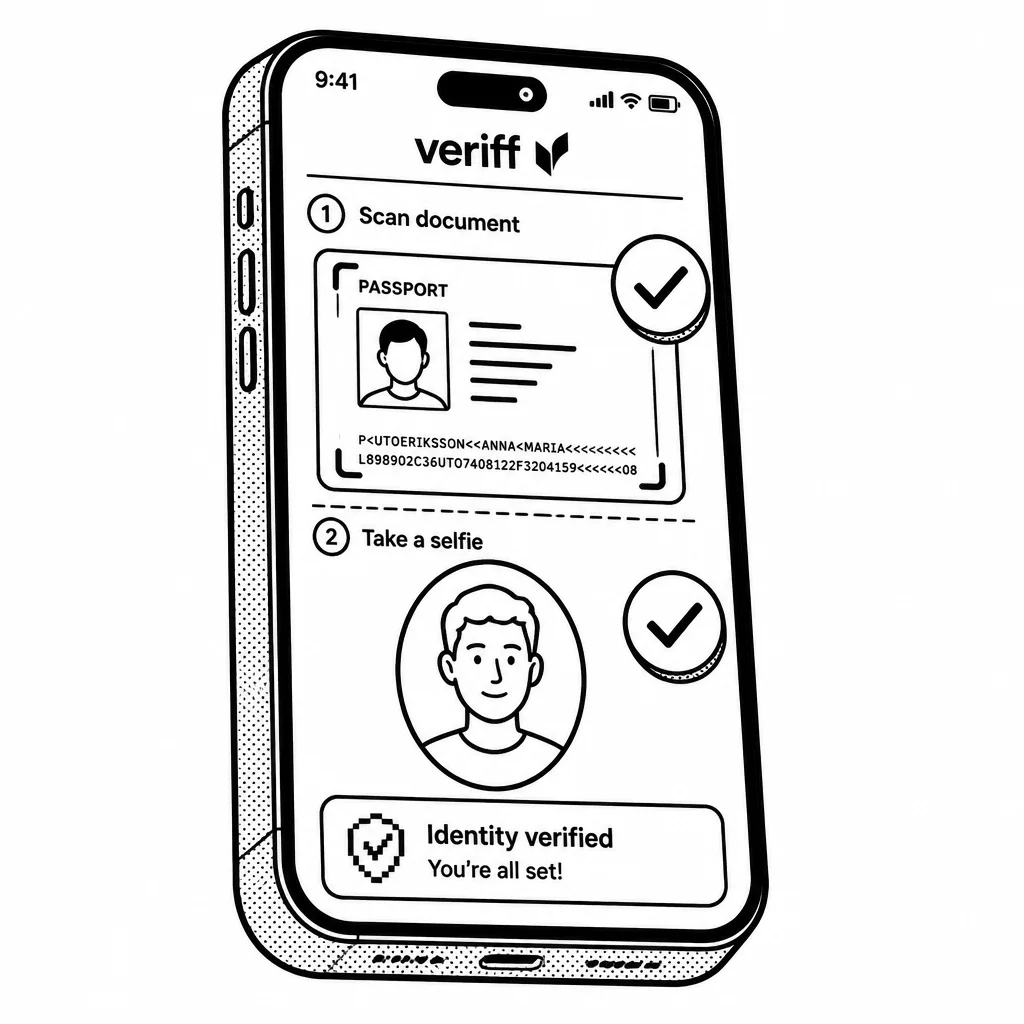
The hard part isn't reading the ID; it's catching fraud. Forged documents, stolen identities, and people wearing masks or holding up photos to fool the camera are the real threat, and Veriff's pitch is that its system spots these tricks better than the cheap alternatives. Although Veriff is headquartered in Tallinn, Estonia — a small country that has become a hub for digital identity and online government services — most of its customers are international, and it competes with several bigger identity-checking firms including Jumio (private) and Onfido (owned by Entrust). Veriff has raised hundreds of millions of dollars from investors over the years and has been valued at over a billion dollars, though it remains a private, venture-backed company. One of its founders, Kaarel Kotkas, started the company as a student after running into the problem himself: he was trying to sell a farm online and found there was no easy way to confirm that the buyer on the other end was a real person. That small annoyance turned into a business built on a much bigger idea — that as more of life moves online, proving you are who you say you are becomes a bottleneck for everyone.
The business is a toll booth on the internet's front door. Every time a company onboards a new user, it pays Veriff a small fee, and the volume of those checks grows as more services require identity proof. The risk is competition and price pressure, since rivals offer similar checks and some bundle them into broader security software. Veriff's bet is that accuracy and speed on the fraud side keep customers paying.
Saved answer · last researched 10 Nov 2026