Understand any stock in simple English
Enter a ticker to learn what the company does and how it makes money.
Snappfood (Snapp! Food)
Snappfood is Iran's biggest food delivery app, connecting customers with restaurants and couriers who bring the food to their door.
Snappfood is Iran's largest online food delivery service. You open the app, scroll through thousands of restaurants in your city, tap what you want, and a courier shows up at your door with the order. It is the go-to way millions of Iranians order takeout, and for many restaurants it is now a main channel for reaching customers.
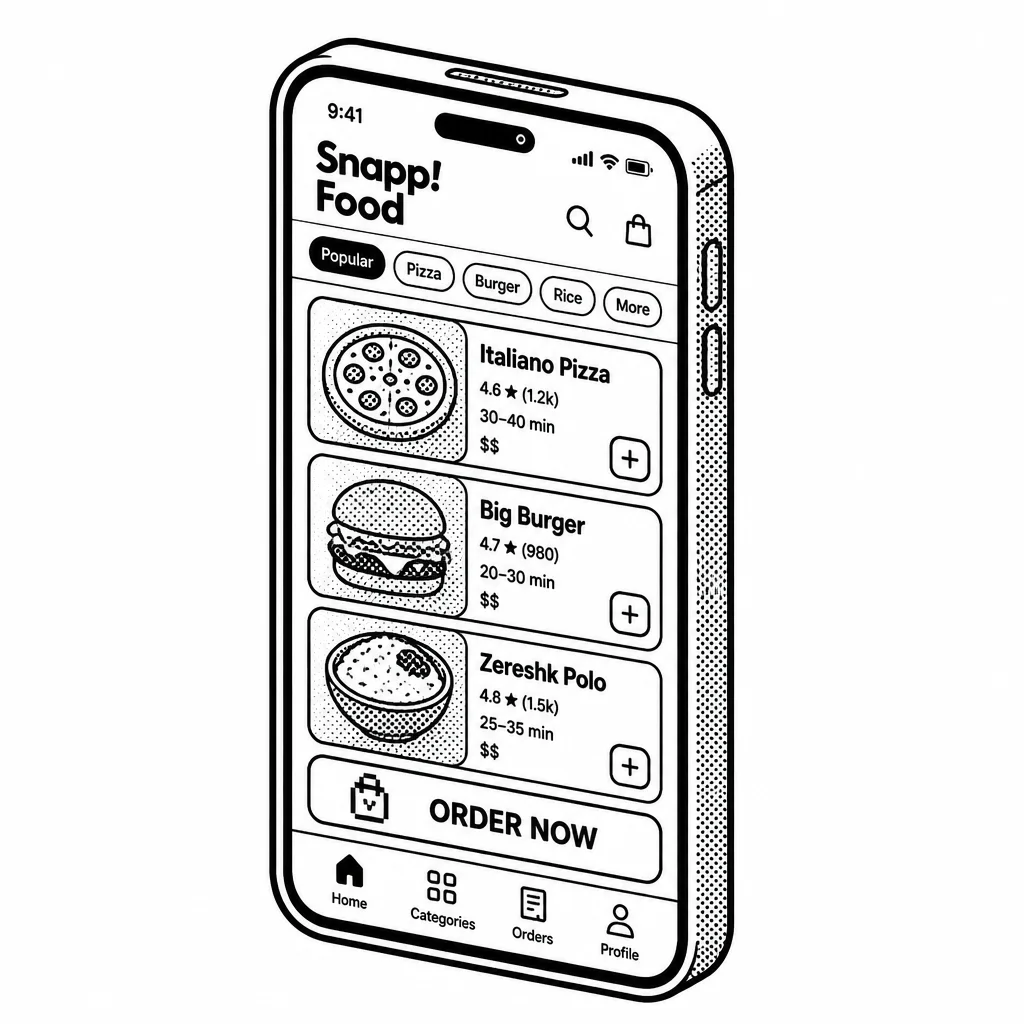
The company makes money by taking a commission on each order and by charging restaurants and shops for prominent placement and advertising inside the app. It also offers a subscription-style membership that gives customers discounts and free delivery, which keeps them coming back and ordering more often. Couriers earn per delivery, so the app ties together three groups at once: hungry customers, restaurants that want more orders, and riders looking for work. Snappfood belongs to the larger Snapp group, which grew out of Iran's biggest ride-hailing app and expanded into food delivery and other on-demand services. That connection matters: the same kind of dispatch logistics that moves cars can move sandwiches, and the group's existing user base gave food delivery a head start.
The business is a two-sided network, and that is its real strength. The more restaurants it signs up, the more reasons customers have to open the app; the more customers it has, the more restaurants want to be listed. Rivals have tried to break in, but scale and habit are hard to dislodge. The catch is that food delivery is a thin-margin, logistics-heavy business — every order depends on a rider, a working kitchen, and a payment system that functions under sanctions and inflation, so the company's fortunes are tied closely to Iran's economy and internet access.
Saved answer · last researched 10 Nov 2026
BIG PICTURE
Snappfood handles about 85% of Iran's online food orders
- 85% Snappfood's share of online food orders
- 15% Other food delivery apps
In a country where food apps compete hard, one player takes roughly 85 out of every 100 online food orders. That near-monopoly position means restaurants and couriers mostly reach customers through Snappfood, so it earns its money from a base of orders its rivals can barely touch. Snappfood's grip on the market is the core of its business. Source: Tehran Index (citing bne IntelliNews and Snapp Group reports), data from 2026
Timeline
Zoodfood Starts Inside a Venture Builder
In 2014, a food-delivery startup called Zoodfood launched inside Iran Internet Group, a venture builder backed by Rocket Internet and the telecom company MTN. It was one of several young companies the group was growing at the same time. The basic problem was simple: people wanted restaurant food brought to their door, and someone had to build the pipes to do it.
MTN Bets Big on Snapp
Two years later, MTN put in serious money and became the largest outside owner of the group, with a stake of around 43%. That same year the group's ride-hailing app, TaxiYaab, renamed itself Snapp, and food delivery became the second big leg of the business.
Zoodfood Becomes SnappFood
A year later, the group renamed Zoodfood to SnappFood and lined up its other brands under the same Snapp name. The idea was simple: one brand people already trusted, stamped on everything the group did.
Saeed Lotfi Takes the Top Job
Saeed Lotfi, who had helped found Zoodfood, had been running it as managing director since the end of 2014. In the middle of 2017 he became CEO, and he would lead the company as it grew into Iran's biggest online food-ordering platform.
SnappFood Takes Over Food Delivery
By 2020, SnappFood was the clear leader, handling roughly 85% of online food orders in Iran. That year it hit a record of half a million deliveries in a single day, a sign of how deeply ordering food online had become normal.
Hackers Breach SnappFood
At the end of 2023, a hacker group called IR Leaks broke into SnappFood's database and stole the information of about 20 million users. The company admitted the breach and said it had reached a deal with the hackers so the data would not be sold or leaked. It was a hard reminder that a business built on millions of customers also sits on a mountain of their personal data.
SnappFood Moves Money for the Group
In 2025, meetings approved large cash injections into Snapp, SnappFood and SnappPay. Then in June 2026 the group pulled a big chunk of that money back out of Snapp and SnappFood, with SnappFood paying nearly 6 trillion rial back to the holding. The moves showed SnappFood playing a second role inside the group: not just a food business, but a place where the parent company parks and moves cash.