Understand any stock in simple English
Enter a ticker to learn what the company does and how it makes money.
Eternal Limited
Eternal runs food delivery and quick commerce apps that bring meals and groceries to Indian homes in minutes, and sells supplies to restaurants.
Eternal runs the apps that feed urban India. Its biggest service is food delivery, where people order meals from local restaurants through its app and couriers on motorbikes bring it to their door. That same app also does dining-out bookings and sells supplies to restaurants. And its fast-growing arm is quick commerce — tiny warehouses stacked with groceries and everyday items, promising delivery in about ten minutes.
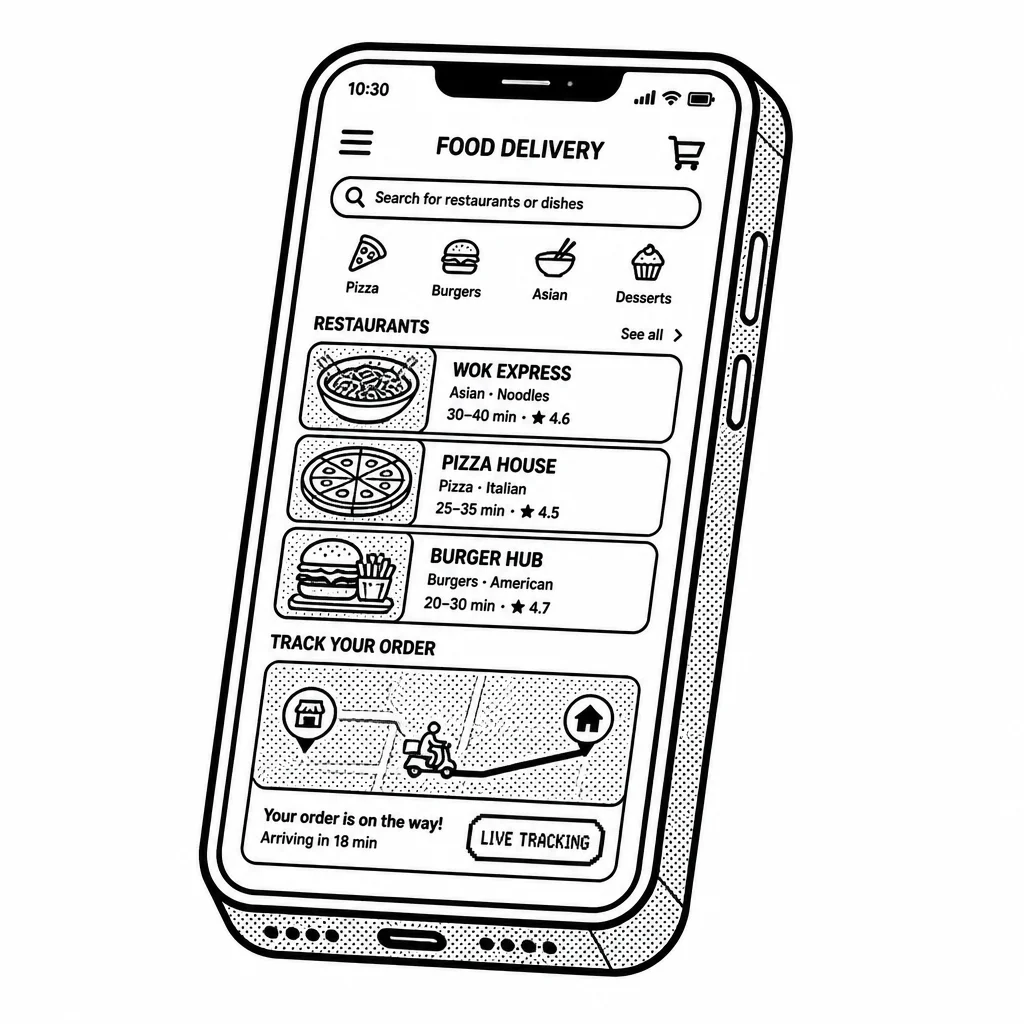
The quick commerce piece, called Blinkit, is the part to watch. Instead of picking groceries off a big supermarket shelf, Blinkit keeps small "dark stores" dotted across neighborhoods, packed with the few thousand items people want most. When you order, a picker grabs it and a rider zips over. That speed is the whole selling point — and the big risk, because each store is a warehouse, a lease, and a bunch of riders whose wages and rents pile up before a single order arrives. Restaurants and consumers both pay Eternal. Customers pay for delivery and for a membership that waves delivery fees on orders over a minimum; restaurants pay a commission for each order the app brings them; and the B2B arm sells ingredients and supplies to restaurant kitchens. Eternal's pitch to restaurants is simple: we bring you hungry customers you wouldn't otherwise reach. The pitch to shoppers is speed and habit — once your groceries appear in ten minutes, the old trip to the store starts to feel silly. The competition in India is fierce. Food delivery rival Swiggy also runs quick commerce, and both are burning cash to grab the market. That's why Eternal matters: it grew from a scrappy startup into one of India's best-known internet companies, and its bet is that owning the pipe from kitchen or warehouse to your door is worth more than the thin margins on any single order. The company is headquartered in Gurugram, near Delhi, and its stock trades on India's National Stock Exchange.
The honest catch is that all this speed is expensive. Dark stores and riders cost real money upfront, and profits depend on cramming enough orders through each neighborhood store to cover those costs. It's a scale game: whoever builds the densest network and wins the most repeat customers gets to keep the economics. Eternal's food delivery business is the reliable engine funding the quick commerce land grab — a bit like using a steady paycheck to bet big on the next thing.
Saved answer · last researched 12 Nov 2026
Timeline
Two Founders Start Foodiebay
In 2008, Deepinder Goyal and Pankaj Chaddah started Foodiebay, a simple online guide to restaurant menus. It began as a way to help people decide where to eat, but it grew into something bigger: a platform that delivered food to their doors.
Foodiebay Becomes Zomato
Two years later, the company renamed itself Zomato. The new name became the face of the app people used to find restaurants and order food, and it stuck.
Grofers Takes On Grocery Shopping
In 2013, Albinder Dhindsa and Saurabh Kumar started Grofers to sell groceries online in a country where most people still bought vegetables and staples from small corner shops. It was a hard business. Over the next decade the company kept changing its approach and burned through more than 700 million dollars in funding before it finally found its footing in quick commerce.
Zomato Goes Public
Zomato listed its shares on the stock market in July 2021 at 76 rupees each. Investors jumped in, and the stock opened more than 50 percent higher on its first day. It was a huge moment for the company and for Indian tech.
Grofers Rebrands as Blinkit
That same year, Grofers changed its name to Blinkit and went all in on a wild idea: delivering groceries in ten minutes. It was a bet-the-company move, and it changed what Indian shoppers expected from delivery apps.
Zomato Buys Blinkit
In 2022, Zomato bought Blinkit in an all-stock deal worth about 568 million dollars. Dhindsa, Blinkit's founder, faced heavy pressure after the deal and was twice asked to step down, but he stayed and set out to rebuild the business.
Zomato Renames Itself Eternal
By early 2025, Zomato had grown beyond food delivery. The board approved a new name, Eternal Limited, to reflect a company now running several businesses at once: Zomato, Blinkit, Hyperpure, and District, each with its own CEO. Goyal said the change marked the point where something beyond Zomato had become a big driver of the company's future.
Dhindsa Becomes Group CEO
In 2026, Deepinder Goyal stepped down as group CEO and handed the job to Albinder Dhindsa, the man who had turned Blinkit from a money-losing acquisition into Eternal's biggest growth engine. Goyal stayed on as vice chairman, saying he wanted to chase higher-risk ideas outside what Eternal does.
Blinkit Turns Its First Profit
Blinkit posted its first adjusted operating profit: a small 4 crore rupees, compared with a 156 crore loss the quarter before. The turnaround came from running its small warehouses more tightly, keeping shelves stocked, packing more stores into each city, and owning its inventory. Blinkit now brought in three-quarters of Eternal's revenue, bigger than food delivery.
Eternal Shares Hit a Record
Eternal's stock reached a record 372 rupees in late 2026, up about 375 percent from its 76-rupee IPO price. It had climbed 71 percent from its March low, the biggest bounce of any large Indian stock that year. Strong Blinkit results and improving profits, even as quick-commerce competition stayed fierce, drove the rally.