Understand any stock in simple English
Enter a ticker to learn what the company does and how it makes money.
Roppen Transportation Services Private Limited
Rapido is an Indian ride-hailing app that lets people book cheap motorbike, auto-rickshaw, and cab rides, and also delivers packages.
Rapido is India's biggest bike-taxi app. If you stand on a street corner in Bengaluru or Hyderabad and want to get across town without paying for a full cab, you open Rapido, tap a few buttons, and a guy on a motorbike shows up in a couple of minutes to take you where you're going. The company also lets you book auto-rickshaws and regular cars, and it runs a delivery service that moves small packages around cities.
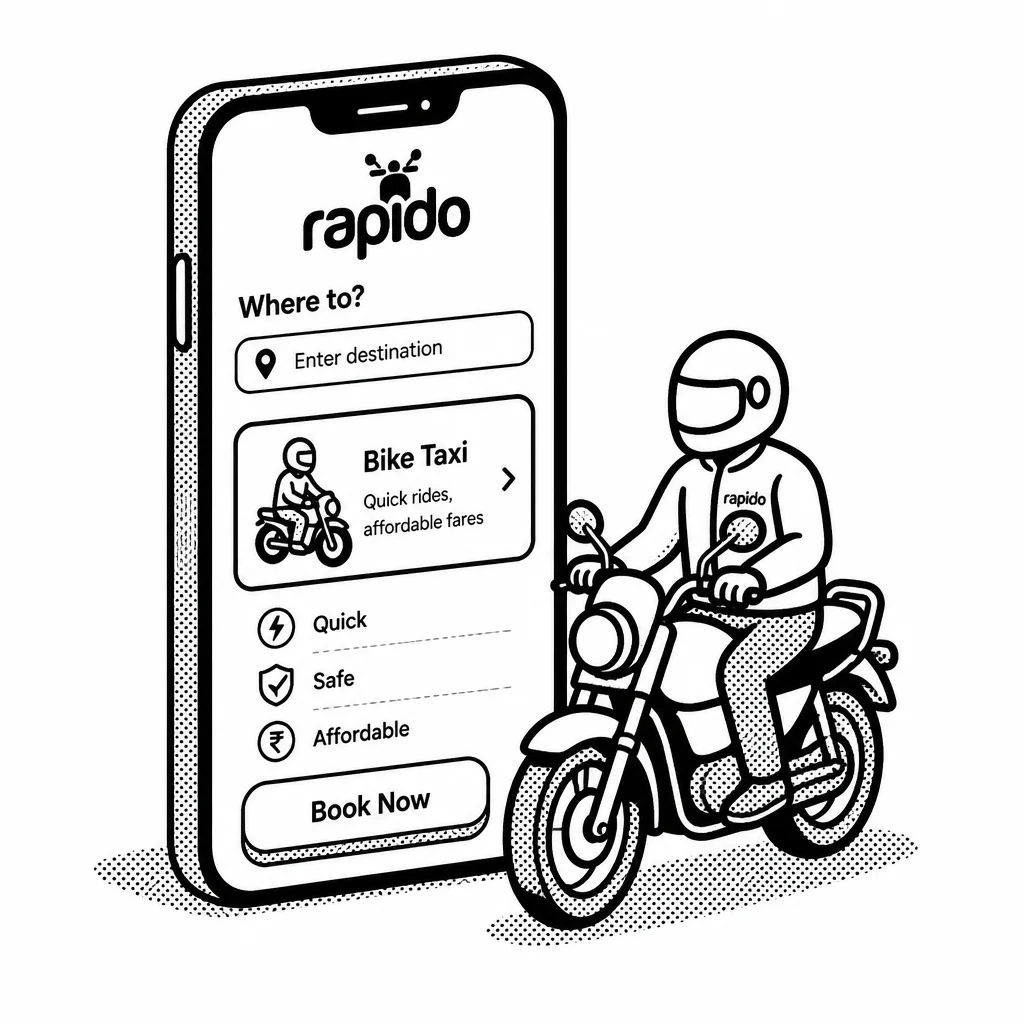
The core insight is that most city trips are short and most cars carry one person. A motorbike costs a fraction of a car to buy and run, so a bike ride can be much cheaper for the passenger while still leaving money for the driver. Rapido doesn't own the bikes or employ most of the drivers as salaried staff — it connects independent riders who use their own vehicles with people who need a lift, and takes a commission on each trip. That makes it a marketplace: it earns money when rides happen, not from owning a fleet. That model has scaled fast. Rapido says it completes millions of rides a week across hundreds of Indian cities and has grown into one of the country's largest ride-hailing platforms by ride volume, a rare case of an Indian startup holding its own against Uber and Ola. It has also pushed into food and package delivery through its own service, betting that the same network of bike riders can carry more than just people. The obvious risks: driver pay and safety rules are a constant regulatory headache in India, and bike taxis have been banned or restricted in some states, which can switch off a big chunk of the business overnight.
Rapido is private and backed by venture capital and strategic investors, so it doesn't publish the tidy quarterly numbers a listed company would. It has raised large funding rounds to expand into new cities and fight for driver supply, and reports have pointed to heavy losses as it spends to grow — the classic ride-hailing trade-off of buying market share now and hoping to profit later. The whole bet rests on whether cheap two-wheeler rides become a permanent habit for Indian city dwellers, and whether Rapido can eventually charge enough, or sell enough extra services, to turn all those trips into real profit.
Saved answer · last researched 10 Nov 2026