Understand any stock in simple English
Enter a ticker to learn what the company does and how it makes money.
Paga Group Ltd
Paga runs a mobile money service that lets people in Nigeria and a few other countries send cash, pay bills, and save using their phones.
Paga is a mobile money company in Nigeria. Millions of people there have a phone but no bank account, and Paga gives them a way to send money to a relative, pay for electricity, buy airtime, or save a little — all from a basic handset, often with the help of an agent down the street.
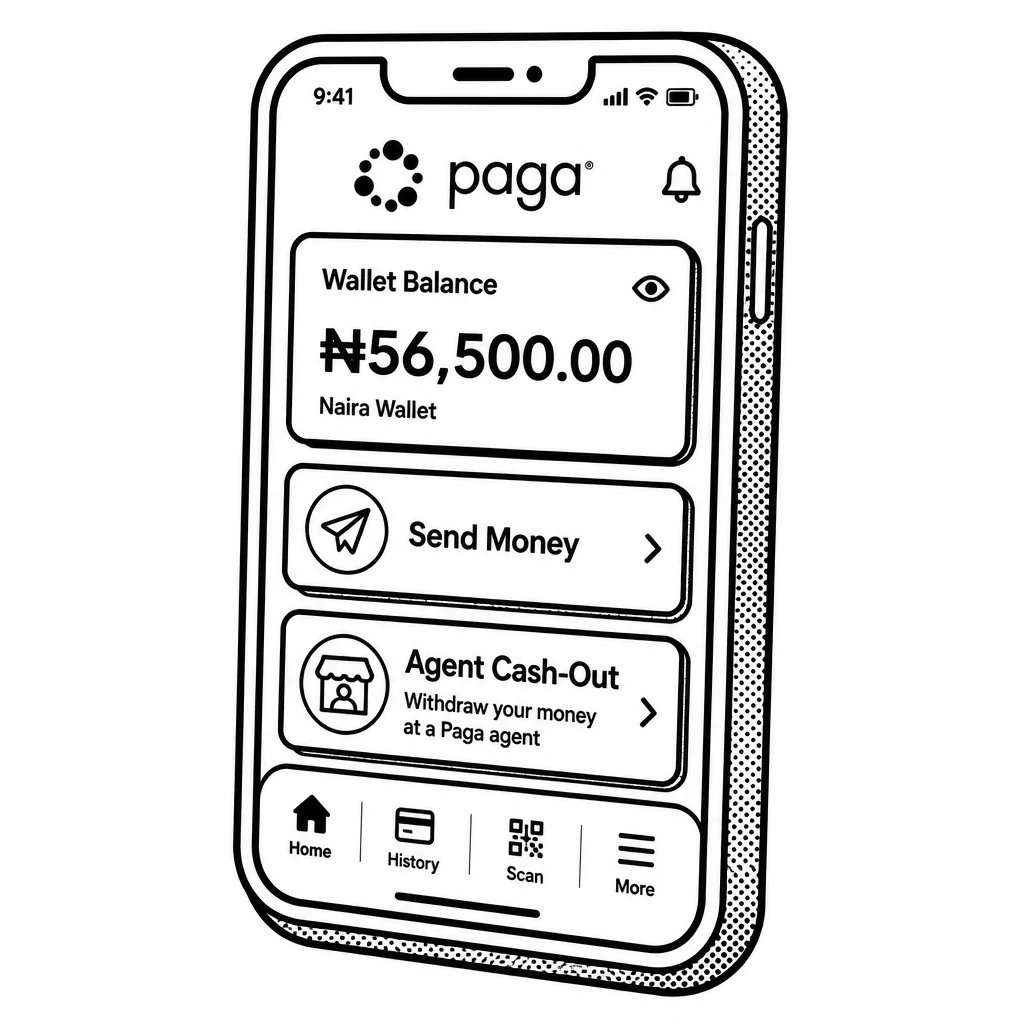
Here's how it works. You walk up to a Paga agent, hand over cash, and the agent credits your Paga wallet. From there you can send money to someone else's phone, pay a bill, or cash out at another agent. The agents earn a commission on each transaction, and Paga takes a small slice. The company also holds customer deposits, so it makes money on the float, and it earns fees on the transactions flowing through its network. It's the classic "picks and shovels" model: Paga doesn't take big credit risks, it earns a tiny toll on lots of small movements of money. The company was founded in 2009 by Tayo Oviosu, who left a career in Silicon Valley to build a payments network for the millions of Nigerians outside the formal banking system. It grew a big agent network and eventually got its own mobile money license from the Central Bank of Nigeria. Today Paga operates in Nigeria, Mexico, Ethiopia, and the Philippines, and it also runs a business-to-business arm that sells its payment rails to other companies.
The hard part is the competition. Nigeria's fintech scene is crowded, with OPay and Moniepoint fighting for the same customers, and telecoms like MTN Group pushing mobile money too. Paga's strength is its early start and its agent network; its vulnerability is that the wallet business is easy to copy and thin on margins. It's a bet on Nigeria's cash-to-digital shift, not on a customer relationship as sticky as a bank's.
Saved answer · last researched 10 Nov 2026