Understand any stock in simple English
Enter a ticker to learn what the company does and how it makes money.
Wise Group plc
Wise moves money across borders and holds it in multiple currencies for people and businesses, charging small transparent fees instead of hiding costs in bad exchange rates.
Wise is a money-transfer and multi-currency account company. Millions of people and businesses use it to send money to another country, hold cash in several currencies at once, and get paid like a local in places they don't live.
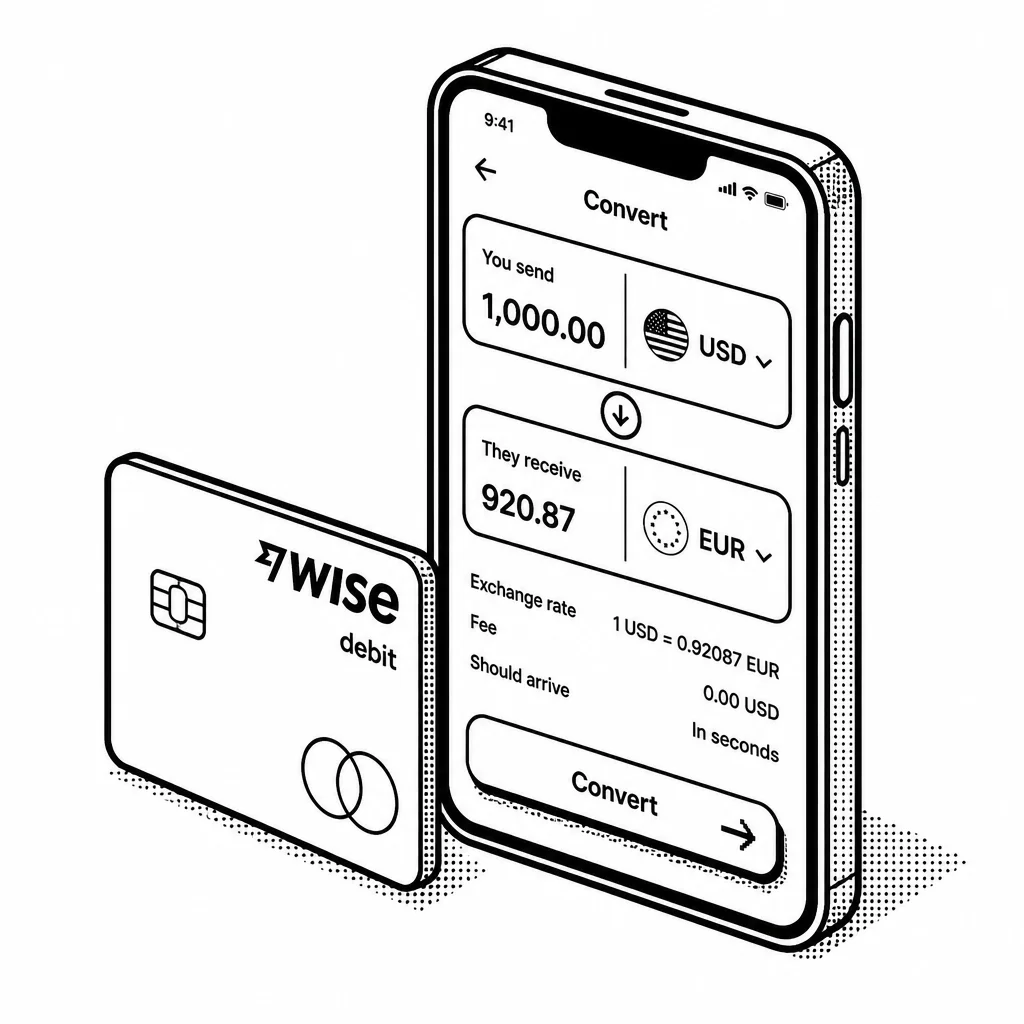
The core trick is simple and a bit radical. Banks historically made a fortune by giving you a terrible exchange rate and calling the difference a "free" transfer. Wise instead uses the real mid-market rate — the one you see on Google — and charges a small, visible fee. It moves most money by matching customers who want to send euros to people who want to receive euros, rather than shipping cash across borders, which keeps costs low. That transparency is why customers trust it and keep coming back. Today Wise offers multi-currency accounts with local bank details in several countries, a debit card, and payment tools businesses use to pay staff and suppliers abroad. A growing chunk of its business is infrastructure: banks and fintechs plug into Wise's rails to move money themselves, which deepens the moat because competitors end up using its plumbing. It lists on the London Stock Exchange and faces competition from big banks, PayPal, and a crowd of money-transfer apps.
The interesting turn in the story is the name. The company started life as TransferWise in 2011, founded by two Estonians frustrated by hidden bank fees. It renamed itself Wise in 2021 to signal it was more than transfers. One quirky fact: Wise was an early adopter of a "mission-driven" ownership structure, and it has been profitable while growing fast, which is rare for a fintech — most burn cash to grow. The risk is regulation and crowded competition, but the simple promise — real rates, small fees — keeps it sticky.
Saved answer · last researched 13 Nov 2026
BIG PICTURE
Wise handles less than 1% of the world's $43 trillion cross-border money market
- 1% Share of global cross-border market held by Wise
- 99% Share held by banks and other providers
The world moves about $43 trillion across borders each year, and Wise handles less than 1% of it. That tiny slice still makes Wise a big business, because it earns a small fee on every dollar it moves. The size of the market is also the opportunity: if Wise can win a few more points of share, its revenue could grow many times over without needing new customers to spend more. Source: trauminc.com, data from 2026
Timeline
Two Friends Cut Out the Banks
Two Estonian friends living in London kept losing money whenever they sent money across borders. Banks charged high fees and gave lousy exchange rates. Then they noticed something clever: one of them earned in euros, the other in pounds, so they simply swapped currencies between their own accounts at the fair mid-market rate and skipped the bank entirely. That trick became TransferWise, a company built to make sending money between countries cheap and honest.
The Name Becomes TransferWise
The young company settled on a name that said exactly what it did, and set up offices in London and in Tallinn, Estonia. Simple, but it told customers the whole pitch in one word.
Richard Branson Invests
A big funding round brought in the famous investor Richard Branson, a signal that outsiders believed this small money-transfer outfit could take on the banks. By then the company had around a hundred employees.
A Billion-Dollar Unicorn
Another funding round valued the company at over a billion dollars, putting it in the rare club investors call unicorns. The cheap-transfer idea was now worth serious money on paper.
TransferWise Turns a Profit
Six years after starting, the company made a profit, which is harder than it sounds for a fast-growing business. It also raised a huge round of cash to keep expanding.
TransferWise Becomes Wise
The company shortened its name to Wise. The change wasn't just cosmetic: it now offered more than international transfers, so the old name had become too small for what it did.
Wise Goes Public in London
Wise listed its shares on the London Stock Exchange at a value of several billion euros. The float made its two co-founders, Kristo Käärmann and Taavet Hinrikus, Estonia's first billionaires. Hinrikus stepped down as chair and David Wells took his place.
Regulators Come Knocking
US state regulators ordered Wise's American arm to pay a multi-million-dollar penalty over weak money-laundering controls. Earlier that year the company also agreed to pay about two and a half million dollars over ads that misled customers about fees and hidden exchange-rate costs. The cheap-and-honest pitch was starting to face questions about whether it was always honest.
A New Parent Company and a Nasdaq Listing
Wise Group plc became the group's ultimate holding company through a legal restructuring. Days later its shares began trading on Nasdaq, with the primary listing moving from London to the US while keeping a secondary listing back in London. The company was now playing on America's biggest stage.
US Troubles Pile Up
The American push ran into trouble fast. A Belgian probe into hundreds of millions of euros of suspicious transactions through Wise accounts knocked shares down more than ten percent. Then a US regulator denied Wise's application for a national trust bank charter, pointing to money-laundering weaknesses, and the stock fell again. A lawsuit from shareholders claims the company downplayed these risks before its Nasdaq debut.
Wise Settles Belgium but Loses the Charter
Wise closed the Belgian money-laundering inquiry in November with no admission of wrongdoing. Business was still growing well: revenue rose sharply, active customers climbed past sixteen million, and the company raised its own growth forecast. But the US bank charter denial stood, so its American banking dream wasn't dead, just delayed.