Understand any stock in simple English
Enter a ticker to learn what the company does and how it makes money.
Moniepoint Inc.
Moniepoint runs the payments and banking plumbing that millions of small businesses in Nigeria use to get paid and manage their money.
Moniepoint is a Nigerian financial technology company that gives small businesses the tools to take payments and run a bank account. Walk into a tiny shop in Lagos or a market stall in Kano and there is a good chance the owner pulls out a Moniepoint card reader or a small terminal to charge your card or phone. That little device is the front door to a much bigger machine: behind it sits a full banking back end that the shopkeeper uses to collect money, pay suppliers, and keep track of the day's takings.
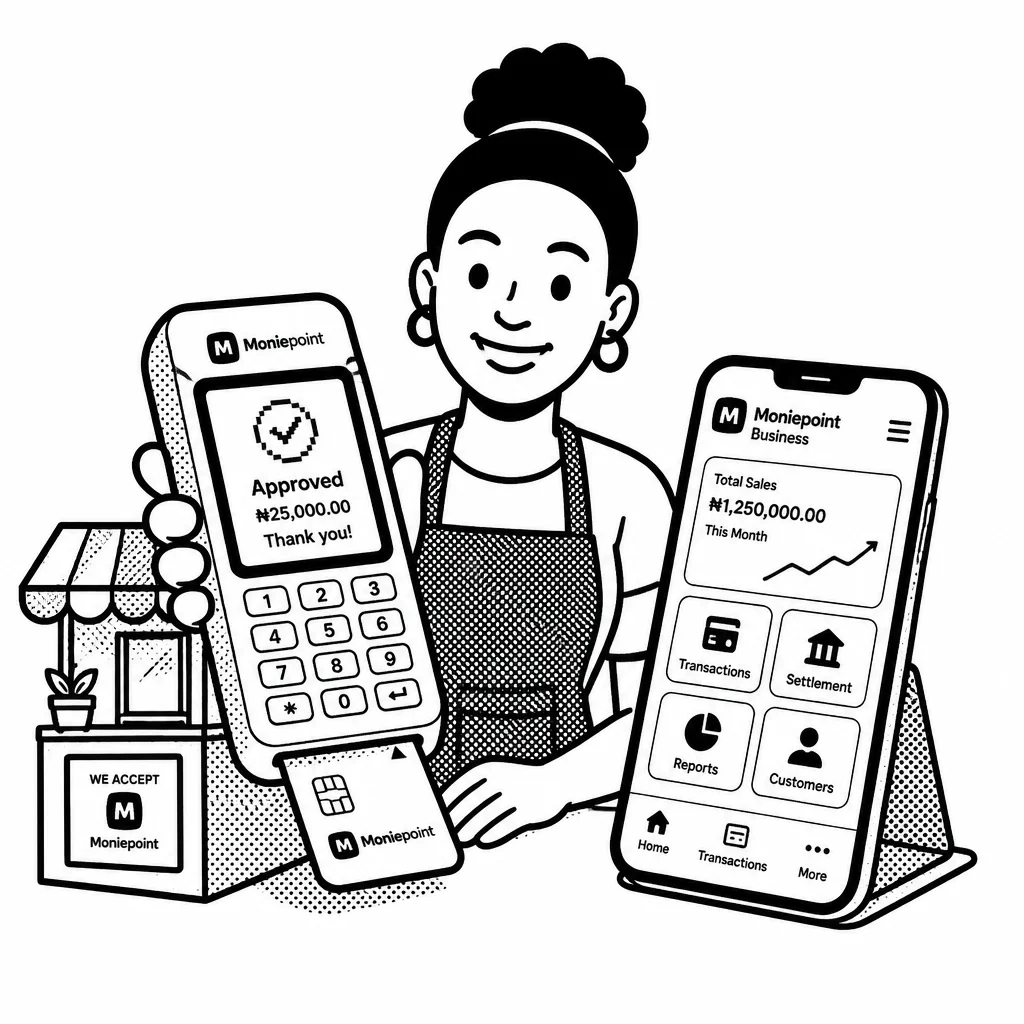
The business model is straightforward. Moniepoint makes money from the fees on card payments and transfers it processes, and from the services attached to the accounts it holds for these businesses. It started out in 2015 as TeamApt, building software for banks, then switched to serving the little guys directly with point-of-sale terminals and agency banking — the corner-shop model where a local agent acts as a mini bank branch for people in areas with few real branches. That pivot turned it into one of the fastest-growing fintechs in Africa. It now processes billions of dollars in transactions a month and serves millions of businesses, and in 2024 it raised money at a valuation north of $1 billion, making it a rare African "unicorn." What makes Moniepoint interesting is that it is really two things stacked on top of each other. The first is a payments company: it sells and rents out the card readers and terminals that merchants use to accept money. The second is a bank: in 2024 it won a microfinance banking licence from Nigeria's central bank, which let it hold customer deposits and lend to the small businesses on its network. That second piece matters because it turns a thin payments fee into a deeper relationship — a shop that keeps its money with Moniepoint and borrows from it is far stickier than one that just swipes cards.
The big risk is regulation and competition. Nigeria's central bank has tightened rules on agency banking and has been cracking down on lenders and fintechs that mishandle customer funds or charge opaque fees, and Moniepoint operates right in the middle of that scrutiny. It also competes with other Nigerian payment players and with the country's big banks, all chasing the same small merchants. Whether it can keep growing depends on turning its huge transaction volume into a durable, profitable banking business without tripping over the rules — and on whether those millions of small shops keep trusting it with their money.
Saved answer · last researched 10 Nov 2026