Understand any stock in simple English
Enter a ticker to learn what the company does and how it makes money.
Huawei Technologies Co., Ltd.
Huawei builds telecom network equipment, phones, and the chips, software, and cloud services that power them.
Huawei is the company that builds the invisible plumbing of the world's phone and internet networks — the radio towers, switches, and routers that carriers use to connect calls and move data. It also makes the phones and watches people carry in their pockets, and, more recently, the chips and software that go inside them. For most of its life it sold two very different things to two very different customers: big telecom operators bought its network gear, and ordinary people bought its handsets.
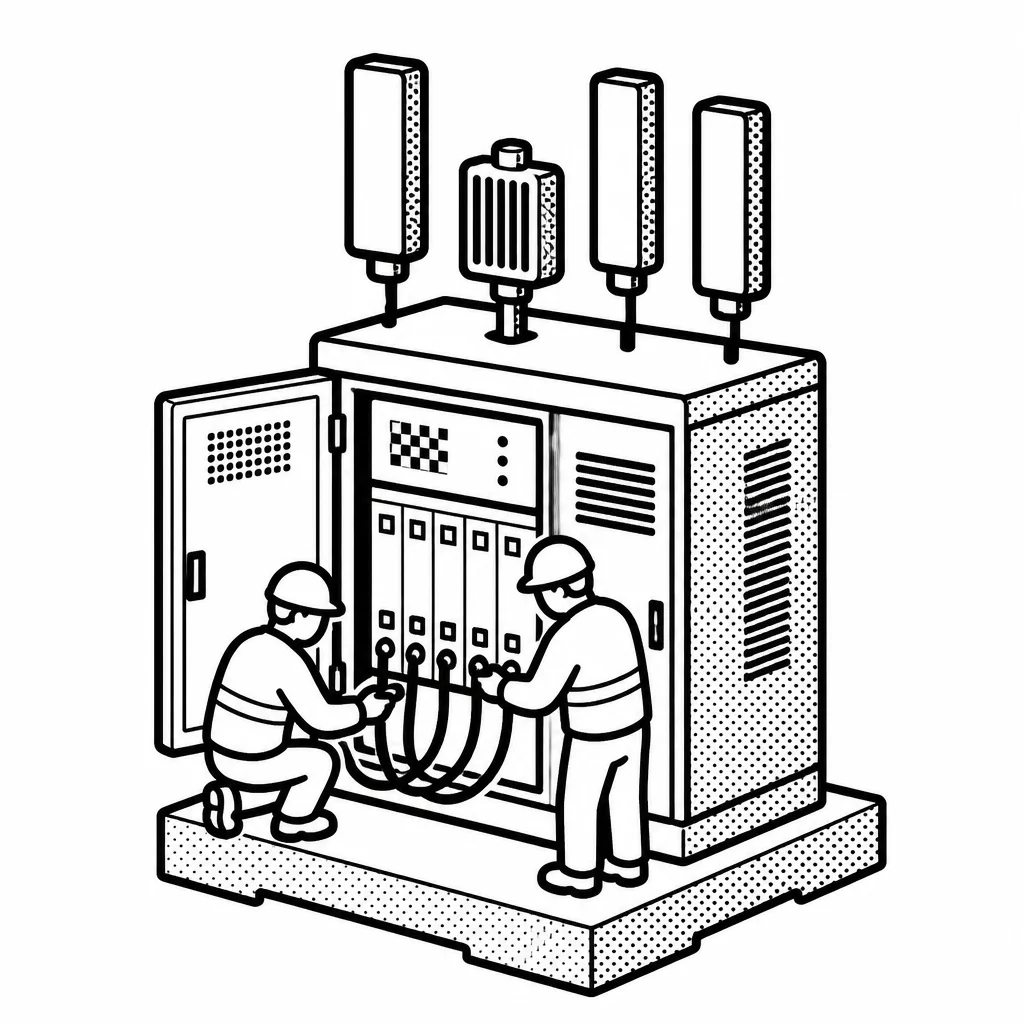
The network equipment business is the old core. Phone companies like Vodafone and Deutsche Telekom pay Huawei to supply and install the gear that carries traffic from the cell tower to the internet backbone. Huawei wins a lot of this work on price and engineering speed, and it became the world's largest supplier of telecom equipment. The consumer business exploded with smartphones, especially in China and Europe, and Huawei briefly climbed to number two in global phone sales. Then the chips became the story. In 2019 the U.S. government put Huawei on a trade blacklist, cutting it off from American chips, software, and Google's Android services. The phone business outside China collapsed almost overnight. Huawei responded by pouring money into its own silicon and operating system, and in 2023 it surprised the industry by shipping a phone with a homegrown advanced chip, the Mate 60. The company has also pushed hard into cloud computing, electric-car software, and enterprise hardware — anywhere it can sell to customers who don't depend on U.S. supply chains.
Huawei is private, owned through an employee shareholding scheme, with founder Ren Zhengfei holding a small stake. That ownership structure lets it spend and plan for the long haul without Wall Street watching every quarter. It remains the world's biggest telecom equipment maker, a serious cloud and chip challenger at home, and a company whose fortunes are now shaped as much by geopolitics as by engineering.
Saved answer · last researched 10 Nov 2026
BIG PICTURE
Huawei Is Back on Top in China's Phone Market, Beating Apple
- 21.3% Huawei
- 19.5% Apple
- 59.2% Vivo, Oppo, Xiaomi, Honor and others
Six years after US sanctions forced Huawei to sell off its budget Honor brand, its phones are again the top sellers in China. Counterpoint Research puts Huawei at 21.3% of the market in the third quarter of 2026, ahead of Apple's 19.5%. For a company that makes money mostly by selling phones at home, that lead is the clearest sign its comeback has real weight. Source: Counterpoint Research via South China Morning Post, data from 2026
Timeline
Ren Starts Huawei in Shenzhen
In 1987, a former engineer named Ren Zhengfei started a tiny company in Shenzhen to resell phone switches made in Hong Kong. The name he chose, Huawei, roughly means "China has achievement" — a nod to his dream of building a Chinese technology champion. Reselling other people's gear was a thin business, so within a few years he pushed the company to design its own switches instead. That leap from middleman to maker is the seed of everything that follows.
The C&C08 Switch
Huawei's own big switch, the C&C08, was far more powerful than anything else available in China at the time. Instead of fighting for big-city contracts, the company sold it to small cities and rural areas, where it competed on service and customization. That unglamorous foothold gave it a real home market to grow from.
Overseas Sales Take the Lead
By 2005, Huawei was selling more abroad than at home — the moment it stopped being just a domestic vendor and became a global player. A few years later, three-quarters of its sales came from international markets. The company that started by reselling Hong Kong switches was now competing worldwide.
Huawei Passes Ericsson
In 2012, Huawei overtook Ericsson to become the world's largest maker of telecom equipment. Years of cheap but solid 4G network gear and relentless global expansion had paid off. The challenger was now the champion.
The U.S. Entity List
In May 2019, the U.S. Commerce Department put Huawei on the Entity List, banning it from buying American chips, software, and Google services without a license. It was a body blow aimed at the company's core. But Huawei had spent years quietly building backup chips it called its "spare tires," and those backups kept it from collapsing overnight. The fight over chips was only beginning.
Huawei Sells Honor
With U.S. sanctions tightening, Huawei sold its Honor phone brand to a group of its own agents and dealers for an estimated 15 billion dollars. Huawei kept no shares and no management control. The sale brought in badly needed cash and let Honor live on outside the Entity List — a painful retreat, but a smart one.
The Mate 60 Pro Surprise
Then, in 2023, Huawei quietly launched the Mate 60 Pro with no press conference at all. Teardowns revealed a 7-nanometer chip made by China's SMIC without American extreme-ultraviolet machines — something many thought impossible under the sanctions. It was a loud signal that U.S. efforts to freeze China's chip progress had failed, and that Huawei's phones were back.
Beyond Phones and Networks
From there, Huawei kept changing shape, becoming less a telecom and phone maker and more an all-around technology company — AI chips, computing gear, cloud, its own HarmonyOS operating system, and energy. In the first half of 2026 it shipped over half a million AI chips in China, taking about 28 percent of the market against Nvidia's 34 percent. HarmonyOS was expected on over 100 million devices by year's end. The reseller from Shenzhen had become something much bigger.