Understand any stock in simple English
Enter a ticker to learn what the company does and how it makes money.
Go1 Pty Ltd
Go1 sells companies a giant online library of training courses that they can drop into their own learning systems for their staff.
Go1 is a company that sells access to a huge online library of workplace training courses. When a business wants to teach its employees something — how to stay safe on a job site, how to manage people, how to use new software, how to handle money — Go1 lets that business plug its courses straight into the system the company already uses to track employee learning, instead of building its own training from scratch.
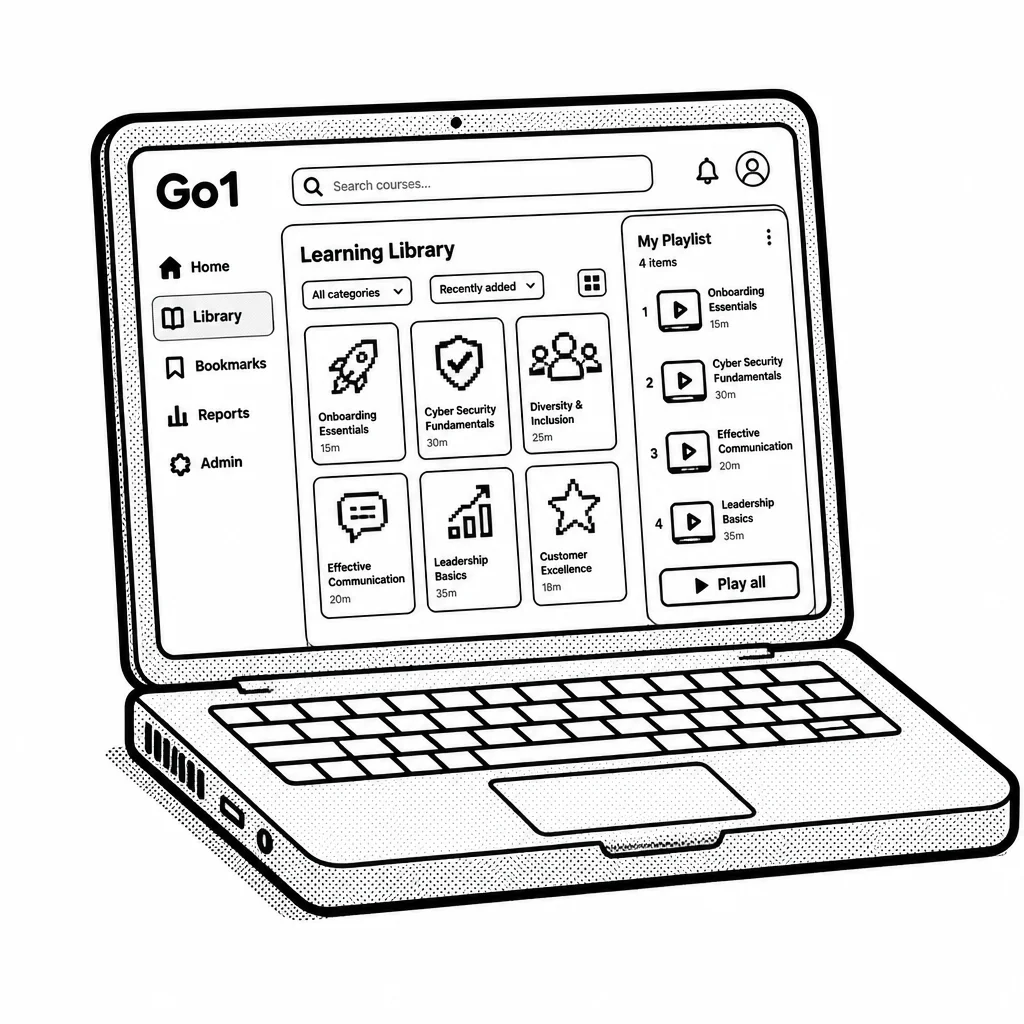
The way it makes money is through subscriptions. Go1 doesn't really teach the courses itself. It gathers content from hundreds of outside providers — big names and small specialists — and bundles it into one searchable catalog that customers pay to access. A single subscription gives an employee the run of the library, so a company avoids signing dozens of separate deals with dozens of course makers. That convenience is the whole pitch: one contract, one bill, one place to look. Go1 started in Brisbane, Australia, in 2015, born out of a simple frustration its founders had — that finding good corporate training was a fragmented mess. It grew fast by riding the boom in workplace learning software, and it now counts large employers and government agencies among its users. It raised a lot of venture money to expand, and it has made acquisitions along the way to widen its catalog and reach.
The hard part is that this is a crowded, competitive space. Course libraries, learning platforms, and the training arms of big software vendors all want the same budget. Go1's bet is that being the neutral middleman — the one that works with everyone's system rather than locking customers in — keeps it useful. Like many venture-backed software companies, it has focused on growth and scale more than on short-term profit, which makes the strength of its subscription base the thing to watch.
Saved answer · last researched 10 Nov 2026