Understand any stock in simple English
Enter a ticker to learn what the company does and how it makes money.
SEEK Limited
SEEK runs online job marketplaces and hiring tools that connect employers with jobseekers, mostly in Australia and Asia.
SEEK runs job websites and hiring tools. If you live in Australia and have looked for a job in the last couple of decades, there is a very good chance you used it. Employers post openings, jobseekers search and apply, and SEEK sits in the middle taking a fee from the employer. That is the core of the business: it sells job ads, not careers advice or recruitment services.
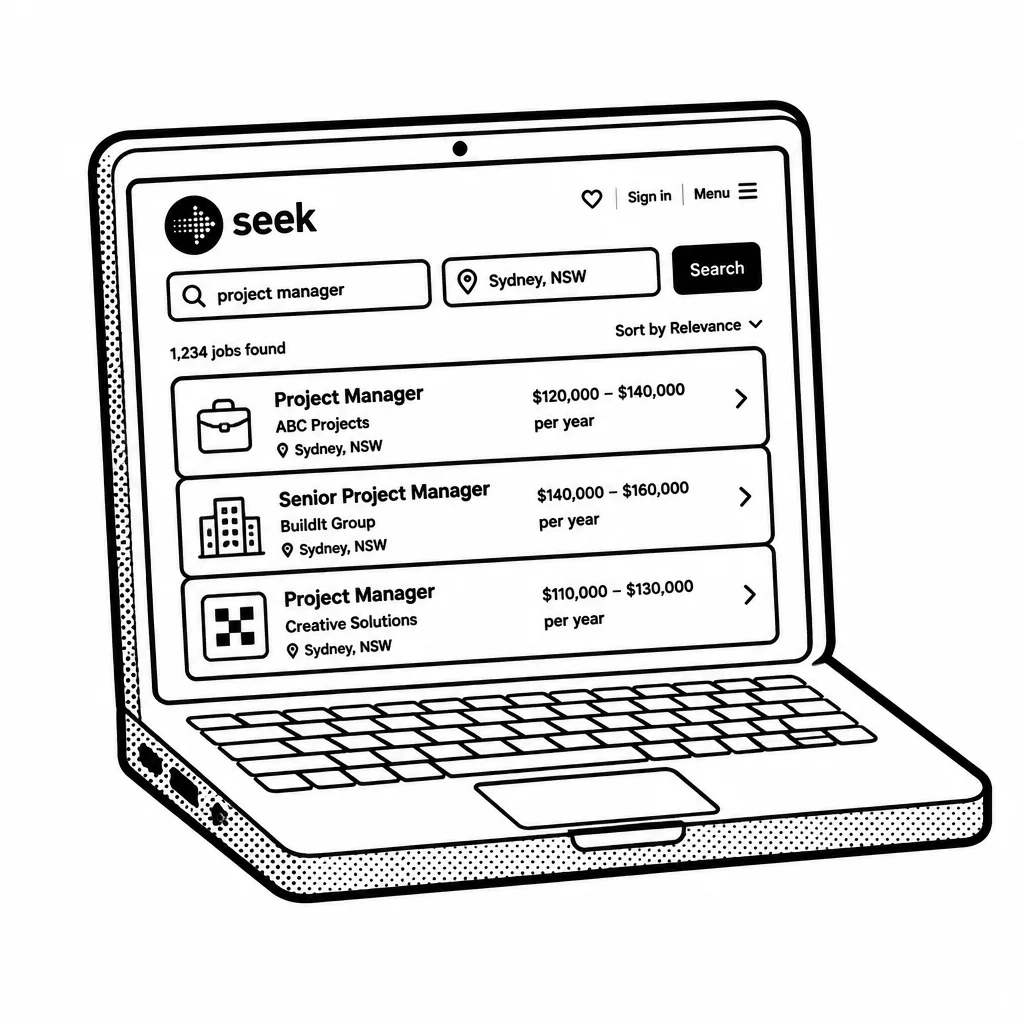
The main engine is the Australian marketplace, where SEEK is the dominant place to advertise a job. Its real power is the two-sided loop: because most jobseekers go there, employers feel they have to list there, and because most jobs are listed there, jobseekers keep coming back. Companies pay for a single ad or a subscription-style package, and recruitment agencies pay to fill many roles. On top of the ads, SEEK sells extra tools like deeper candidate search and data on salary trends, and it runs a training and education arm that helps people pick up new skills. Outside Australia, SEEK has expanded into Asia, with job marketplaces in places such as Hong Kong, Singapore, Malaysia, and Thailand, plus operations around the region. These markets are smaller individually but give SEEK growth beyond its mature home base. The biggest competitive threat is not a rival job board so much as the wider internet: Alphabet search and professional networks like LinkedIn (owned by Microsoft) are where people increasingly find work, and SEEK has to keep proving its listings are worth paying for. During strong labour markets, hiring rises and SEEK makes more money; when companies stop hiring, its revenue falls quickly.
SEEK also owns a big chunk of the online employment space in Australia through its stake in the employment and education businesses spun out of it, and it has invested in job-matching technology. The company pays dividends and has bought back shares over the years, returning cash to investors when the core business generates more than it needs to reinvest. The simple truth about SEEK: it is a toll booth on the road between a job and a person, and it earns its money only as long as both sides keep driving through.
Saved answer · last researched 12 Nov 2026
Timeline
Three Friends Start SEEK
In late 1997, Andrew Bassat, Paul Bassat and Matt Rockman looked at the thick newspaper sections full of job ads and saw something the papers did not: a way to put all of it online. They launched their website a few months later, and it caught on fast, becoming the leading place to find work in Australia and New Zealand. The idea was simple — make job hunting quicker and cheaper than ink on paper — and it worked.
SEEK Lists on the Stock Exchange
By 2005 the company was big enough to sell shares to the public, and it did so with a market value of nearly $600 million. The shares opened a little above their offer price and closed the first day even higher, a sign investors liked what they saw.
Two Divisions Replace One
In 2018 SEEK reorganized into two parts: one running its job marketplaces across Asia Pacific and the Americas, and another dedicated to buying and managing investments. The goal was to take what worked so well in Australia and New Zealand and use it to speed up the overseas businesses, while giving deals and stakes their own focused home.
Andrew Bassat Steps Back
After more than two decades running the company he co-founded, Andrew Bassat handed the CEO job to Ian Narev in 2021. Bassat moved to the chairman's seat, and the investing side of the business became its own separate entity — a clean split between running marketplaces and managing money.
SEEK Sells Its Latin American Job Boards
In 2024 SEEK sold its Mexican and Brazilian job boards to a buyer from Barcelona, walking away from tough markets in Latin America. The sale pulled the company back toward what it knew best: its marketplaces in Australia, New Zealand and Asia.
SEEK Buys Back Sidekicker
A year later SEEK brought the flexible-staffing business Sidekicker back into the fold. It was a small step beyond its core job boards — a reminder that the company was looking for new ways to grow next to its main marketplace.
The Growth Fund Gets a Second Phase
SEEK rewrote the rules of its Growth Fund for a second five-year stretch: managers would earn their share only by actually returning cash to investors, fees came down, and SEEK itself would stop putting in new money and slowly shrink its stake. The backdrop was grim — the shares had lost most of their value over the past year, and the fund had paid out little and earned only modest returns. It was a hard reset after a rough stretch.