Understand any stock in simple English
Enter a ticker to learn what the company does and how it makes money.
Cority Software Inc.
Cority sells cloud software that helps large companies track workplace safety, environmental compliance, and sustainability.
Cority makes the software that big companies use to keep their people safe and stay out of trouble with regulators. If a worker gets hurt at a factory, if a chemical spill needs reporting, or if a company has to prove to an inspector that it handled hazardous waste correctly, Cority's tools are where that gets logged, tracked, and turned into a report. Its customers are large organizations in heavily regulated industries — manufacturing, energy, mining, pharma, and the public sector — where a single compliance failure can mean fines, lawsuits, or worse.
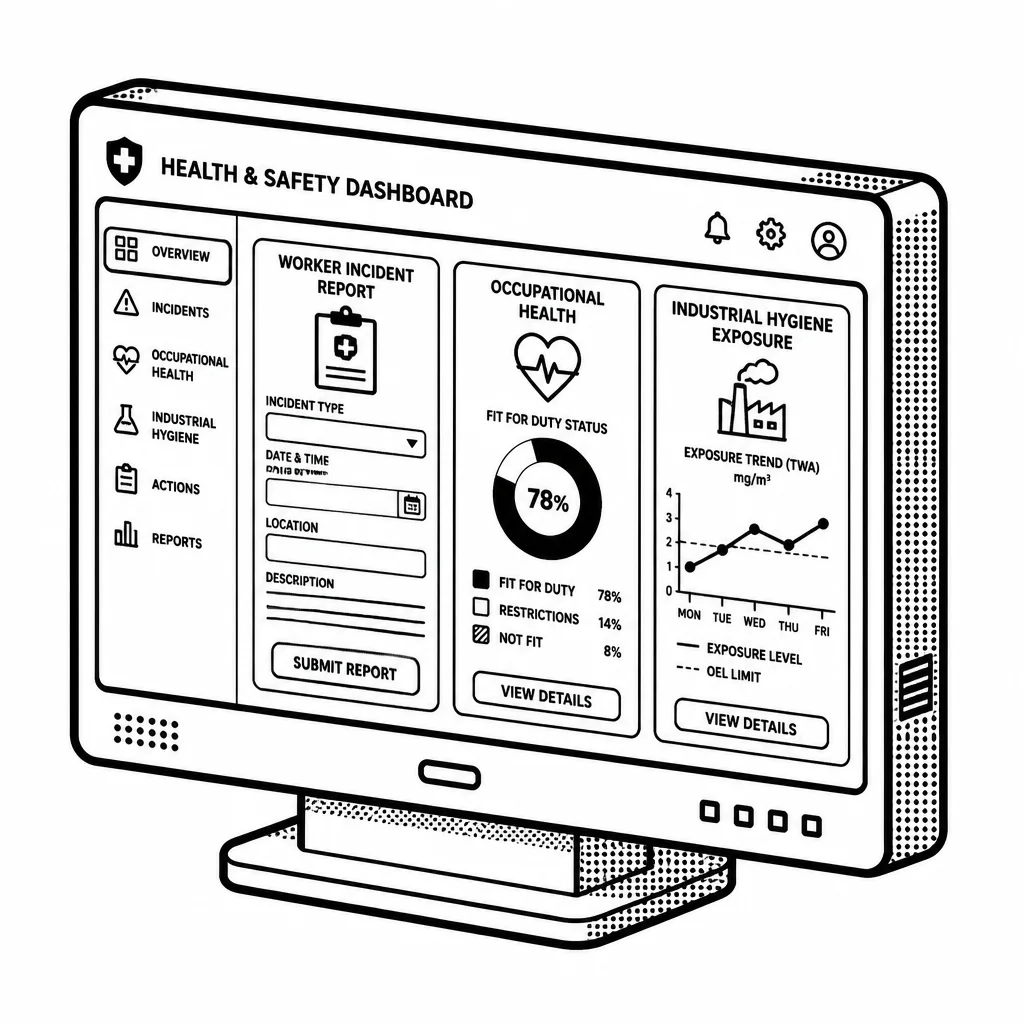
The business is what people call EHSQ software, which stands for environment, health, safety, and quality. Add sustainability to the mix and you have the full picture: Cority helps a company measure its carbon footprint, manage audits and inspections, track incidents and near-misses, and keep the paperwork that proves it followed the rules. It sells this as cloud software on subscription, so customers pay every year rather than buying a license once. That recurring model is the prize here — once a company's safety data and workflows live inside Cority, ripping it out is painful, so customers tend to stay a long time. Cority started life as Medgate, founded in Toronto in 1985, and rebranded as Cority in 2017. Private equity firm Thoma Bravo bought the company in 2020, and another investor, Battery Ventures, took a stake in 2024. The rebrand and the ownership changes reflect a company pushing to grow beyond its roots into a broader platform. It now competes with other safety and compliance software vendors, and with the even more common alternative: spreadsheets and paper forms, which is still how a surprising number of companies manage this stuff.
The appeal for investors is the same as for customers: safety and environmental compliance is not optional, and the rules keep getting tighter, especially around sustainability reporting. That gives Cority a steady, sticky base of recurring revenue in a niche where the software is boring but essential. The risk is equally simple — it is a crowded field, sales cycles to big enterprises are slow, and the company has to keep adding features to stay ahead of rivals and of generic tools that do a little of the same job.
Saved answer · last researched 15 Nov 2026
BIG PICTURE
The 11 biggest names in ESG reporting software hold about 70% of the market
- 70% Top 11 vendors, including Cority, Workiva and Sphera
- 30% Everyone else selling ESG reporting software
That is how much of the ESG reporting software market the named leaders take, according to MarketsandMarkets. Cority is on that list, which puts it among the handful of vendors big companies call when they need to publish environmental and social numbers. Its bigger business is safety and compliance software, so this is one more doorway into the same customers. Source: MarketsandMarkets, data from 2026
Timeline
Medgate Starts in Canada
In 1985, a Canadian company called Medgate set out to solve a narrow but real problem: keeping track of worker health. It built software that helped organizations across Canada manage occupational health, and for years that was the whole business.
Mark Wallace Takes Over
In 2003, Mark Wallace became president and CEO, and the company changed gears. Revenue, headcount and customers all grew fast, and the business made a profit every single quarter after he arrived — a rare streak that gave it room to think bigger.
Medgate Rebrands as Cority
By 2017 the name Medgate no longer fit. The company rebranded as Cority to signal it was moving beyond occupational health into something broader, and the new name came with a growth strategy to match.
Cority Buys IQS
That same year, Cority acquired IQS and pushed into quality management software. Health and safety was no longer the whole story: the deal made Cority a leader in EHSQ — environmental, health, safety and quality — all under one roof.
Thoma Bravo Takes Majority Stake
In 2019, private equity firm Thoma Bravo bought a majority stake, betting on Cority's next phase of growth. The previous majority investor, Norwest Venture Partners, stayed on and put more than half its proceeds back in — a strong vote of confidence in what was coming.
Cority Acquires Enviance
A year later, Cority bought Enviance, adding more than 400 clients plus environmental, chemical management, sustainability and ergonomics tools. It came right after the Axion Health deal and in the middle of record sales bookings, so the company was expanding on several fronts at once.
Cority Acquires Reporting21
In 2022, Cority bought Reporting21, a smaller move aimed at widening its partner ecosystem and the solutions it could offer customers.
Cority Acquires Greenstone
The buying continued in 2023 with Greenstone, which strengthened Cority's health, safety and sustainability offerings — the core of what the company now sold.
Ryan Magee Becomes CEO
In 2024, Ryan Magee took over as CEO, succeeding Mark Wallace, who retired after more than 20 years. Magee was no outsider: he had joined in 2012, served as CFO since 2017, and had led the acquisition strategy that turned a Canadian occupational health vendor into a full EHS and sustainability suite. Wallace's legacy was that expansion and the 2017 rebrand — and now someone else would run the next act.
Cority Pushes Into AI
By 2026, the payoff of the strategy was showing up in smaller customers: new additions among small and mid-sized businesses grew 119% year-over-year in 2025. Cority now pointed to its AI-enabled CorityOne platform and Cortex AI agents as the growth engine, and Magee described it as an inflection point toward converged, AI-ready EHS+ platforms.