Understand any stock in simple English
Enter a ticker to learn what the company does and how it makes money.
Wolters Kluwer N.V.
Wolters Kluwer sells specialized software and information to professionals like doctors, lawyers, accountants, and bankers.
Wolters Kluwer is a company that sells expertise in a box. If you are a nurse in a hospital, a tax accountant, a lawyer, or a bank risk officer, you need answers that are accurate right now and you cannot afford to guess. Wolters Kluwer packages that knowledge into software and digital tools so professionals can do their jobs without digging through piles of paper or outdated websites. It is not a household name, but it quietly sits inside the daily work of millions of professionals around the world.
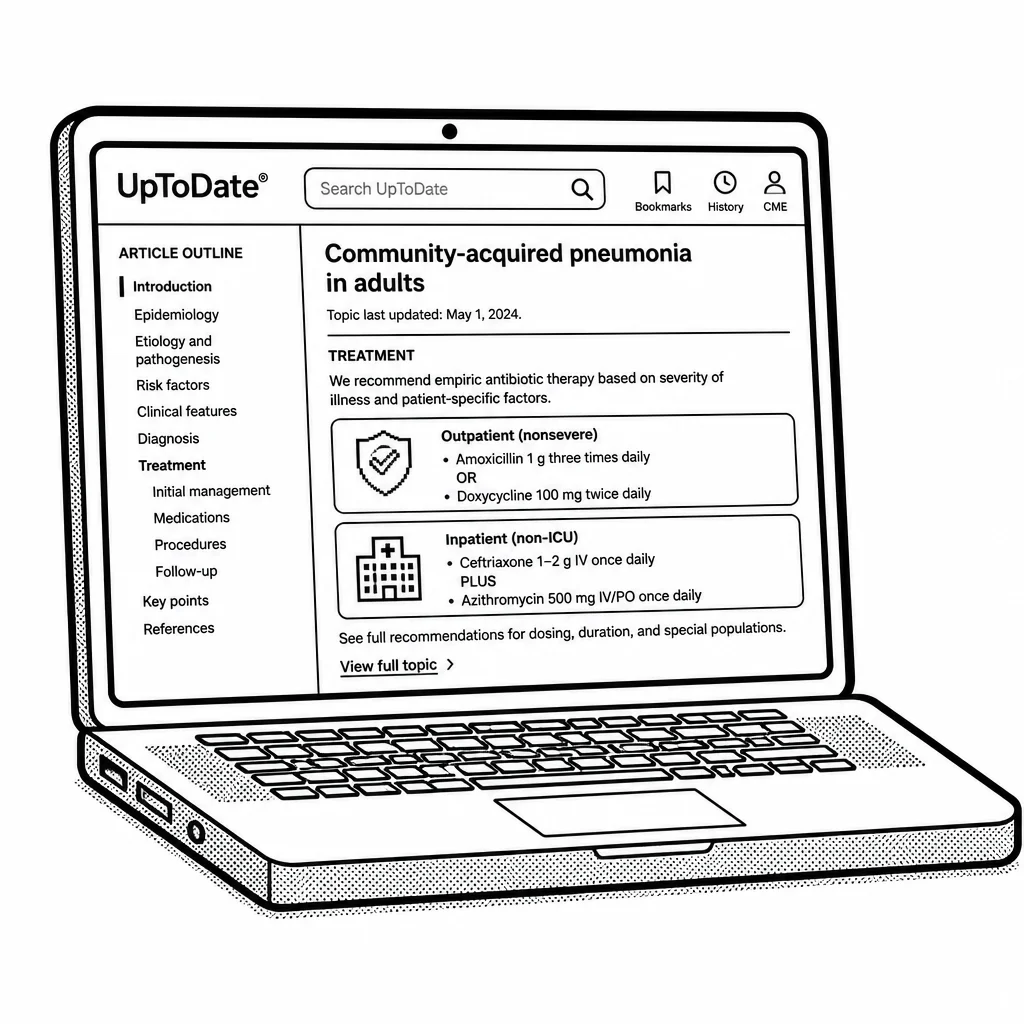
The company is built around a few big areas. In health, its products help hospitals and clinicians make decisions at the bedside, check drug interactions, and keep patient records straight. In tax and accounting, it sells the software that accounting firms use to prepare returns and manage their practice, plus the research tools that tell them what the rules actually say. In the legal and compliance world, it provides law firms and corporate legal teams with research, workflow, and regulatory tools. It also serves banks and insurers with software for risk, regulatory reporting, and compliance. The customer is usually an organization — a hospital, an accounting firm, a bank — that pays a subscription so its people can work faster and with fewer mistakes. The business works because the products are deeply woven into how customers do their jobs. Once a hospital or accounting firm builds its workflow around a Wolters Kluwer tool, switching is painful, and the company's content — the actual rules, cases, drug data, and analysis — has to be right and current. That combination of sticky software and trusted content produces a lot of recurring revenue. It is a steady, high-margin business rather than a flashy one, and that steadiness has made it a reliable dividend payer and cash generator for years.
Wolters Kluwer is headquartered in Alphen aan den Rijn in the Netherlands and has grown largely by buying specialized information businesses and then pushing them into digital, subscription-based products. Its main competitors are other big information and software groups, such as RELX and Thomson Reuters, which also sell professional information and tools. The risk is that customers tighten budgets in a slow economy, or that a cheaper cloud-native upstart nibbles at one niche. But for now, the company's pitch is simple: professionals pay to know the right answer, and Wolters Kluwer sells it to them every month.
Saved answer · last researched 9 Nov 2026
BIG PICTURE
Only 27% of consumers strongly trust software to flag drug interactions without a human
- 27% Consumers who strongly trust automated drug-interaction alerts
- 73% Consumers who do not strongly trust them
Wolters Kluwer sells drug and treatment information to hospitals, pharmacies and insurers, and a survey of more than 1,000 consumers found that just 27% strongly trust a computer to catch a dangerous drug mix on its own. Most want a person involved. The company's pitch is that its curated data, not raw AI, sits behind those automated warnings, so trust in the machine decides whether its customers keep paying. Source: Wolters Kluwer Health survey (CITE Research), data from 2026
Timeline
Four Family Publishers
Wolters Kluwer's story begins not with one founder but with four family-run Dutch publishing houses: Wolters, Noordhoff, Samsom and Kluwer. Wolters started printing schoolbooks in Groningen in 1836; Noordhoff followed in 1858. Over a century later, in 1968, Wolters and Noordhoff merged into Wolters-Noordhoff. From these small, practical beginnings came a company built on selling information people needed to do their jobs.
A Stock Exchange Listing
In 1973 the company, then operating under the name ICU, listed its shares on what is now Euronext Amsterdam. That listing began five decades of public trading and gave the business a way to raise money and grow.
ICU Becomes Wolters Samsom
A decade after listing, ICU was renamed Wolters Samsom Groep. The new name made clear which publishing families the business had grown out of.
Elsevier's Takeover Bid
Then came a shock: Elsevier, the biggest Dutch publisher, announced it wanted to buy Kluwer's stock. Kluwer fought back by merging with Wolters-Samsom, and the combined company became Wolters Kluwer. The move worked: it blocked the takeover, made the new group the second-largest publisher in the Netherlands, and ended Kluwer's separate listing. A rivalry with Elsevier would shape both companies for decades.
Buying CCH
In 1996 Wolters Kluwer bought CCH, an American publisher of tax and business materials, for about $1.9 billion. The deal did more than add tax guides: CCH also brought offices in Australia, New Zealand, Japan, Singapore and Hong Kong, pushing the company into Asia.
Nancy McKinstry Takes Over
When Nancy McKinstry became CEO in 2003, Wolters Kluwer was still a traditional print publisher. She set out to change that completely, reshaping the business model and the organization. Under her, the company made over a hundred acquisitions and divestments and pushed hard toward digital-first operations.
UpToDate Joins the Group
In 2008 the company bought UpToDate, an electronic resource that gives doctors evidence-based clinical information. It became a core product for clinical decision support and was rolled out across the UK, Western Europe and Latin America.
The Digital Shift Pays Off
By 2010, more than 70% of revenues came from digital and software offerings. The old print business had dragged on returns for a long time, but the transition finally paid off.
Enablon and Risk Software
In 2016 Wolters Kluwer bought Enablon, which makes software for environmental, health, safety and sustainability management and for operational risk. It became part of the company's governance, risk and compliance tools and later its Corporate Performance and ESG offerings.
Stacey Caywood Becomes CEO
In 2026 Stacey Caywood took over as CEO, succeeding Nancy McKinstry and coming from inside the company. She had led the Legal & Regulatory and Health divisions and was credited with returning them to growth through digitalization. Her priorities are speeding up AI-driven innovation, expanding partnerships and strengthening commercial capabilities, alongside a €500 million share buyback for the year.
AI Fears Hit the Share Price
Then investors got scared. The share price roughly halved, from about €138 to around €67, on fears that generative AI could erode demand for paid professional information. But profit did not collapse: adjusted earnings per share grew 14% in the first half at constant currencies. The company responded by raising investment in product development to 12–13% of revenue, including generative and agentic AI.