Understand any stock in simple English
Enter a ticker to learn what the company does and how it makes money.
Hexagon AB (publ)
Hexagon sells sensors, measuring devices, software, and services that help heavy industry, manufacturing, construction, mining, and agriculture work more precisely and efficiently.
Hexagon is a Swedish industrial technology company that sells the eyes, ears, and brains for the physical world. Its sensors and measuring devices capture what is actually happening on a factory floor, at a construction site, or deep in a mine, and its software turns those measurements into decisions. Customers are mostly businesses in manufacturing, construction, mining, and agriculture — places where being a millimeter off or a day late costs real money.
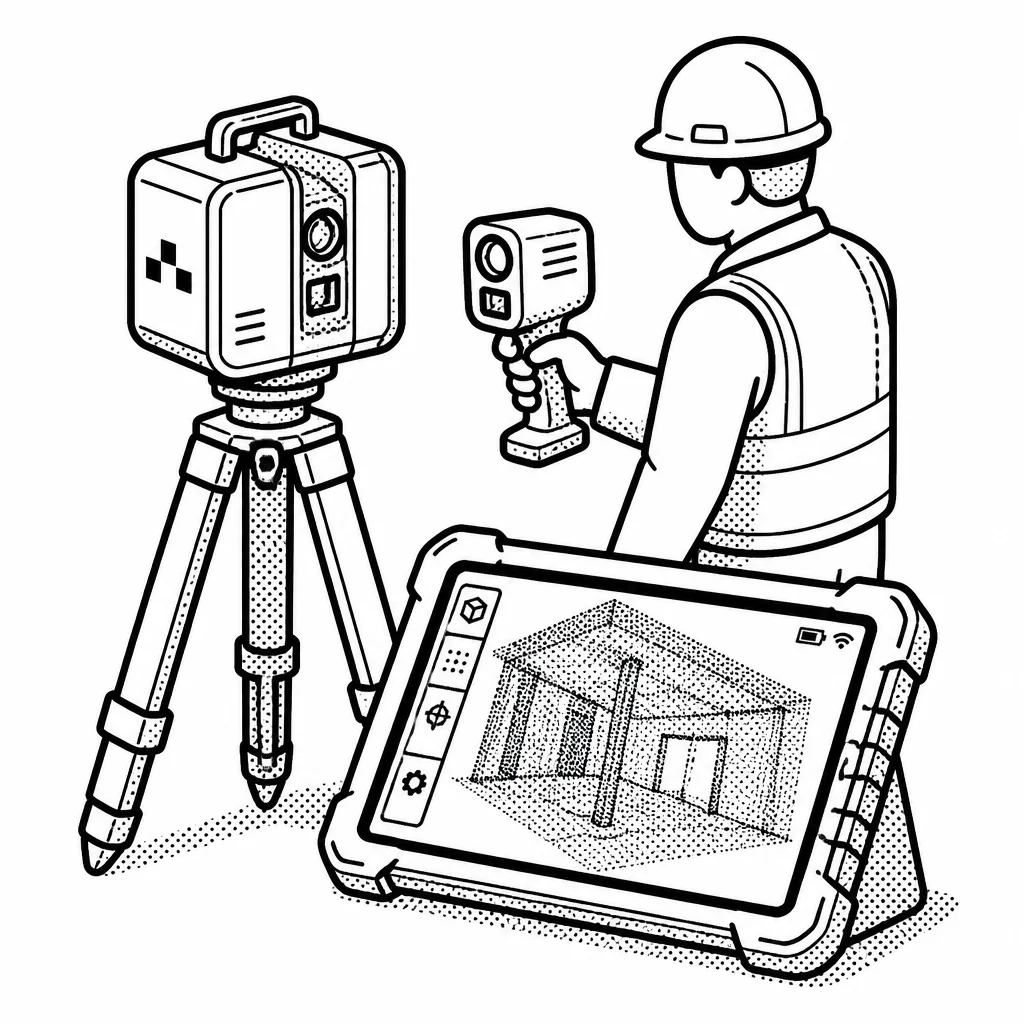
The business has two broad halves. The smaller half sells physical hardware: laser scanners, coordinate measuring machines that check whether a manufactured part matches its design, and precision sensors used in surveying and machine control. The larger half is software — design tools, quality inspection programs, and systems that let a construction crew or factory track work in real time. The hardware gets Hexagon in the door, and the software is what customers keep paying for year after year. That recurring software revenue is the strategic prize. Once a customer's measurements and workflows live inside Hexagon's system, switching is painful, so renewal rates tend to be high and revenue is steadier than a pure equipment business. Hexagon has spent years buying software companies to build this out, and now positions itself as a "digital reality" company: capture the physical world as data, then help customers act on it. The main risk is that this is a cyclical business — when construction and manufacturing slow down, customers delay big equipment purchases, and the hardware side feels it first. Competitors include Trimble in surveying and construction technology, FARO Technologies in 3D measurement, and Zebra Technologies in industrial sensing and tracking.
The company is headquartered in Stockholm and has been controlled for decades by the Wallenberg family's investment sphere, a quiet but powerful force in Swedish business. It pays a dividend and has used acquisitions as a core growth engine rather than relying only on inventing things in-house. For a company selling precision, its own strategy has been less about one big bet and more about steadily assembling the pieces of an industrial measurement and software empire.
Saved answer · last researched 12 Nov 2026