Understand any stock in simple English
Enter a ticker to learn what the company does and how it makes money.
Ant Group Co., Ltd.
Ant Group runs Alipay, China's giant payment app, and sells financial services like loans, savings products, and insurance through it.
Ant Group is the company behind Alipay, the green app that hundreds of millions of Chinese people use every day to pay for groceries, split a restaurant bill, book a train ticket, or scan a QR code at a street stall. Alipay started in 2004 as a way to make online shopping feel safe: it held a buyer's money until the goods arrived, then released it to the seller. That trust-building trick turned into a habit, and the habit turned into one of the two dominant payment networks in China, alongside Tencent's WeChat Pay.
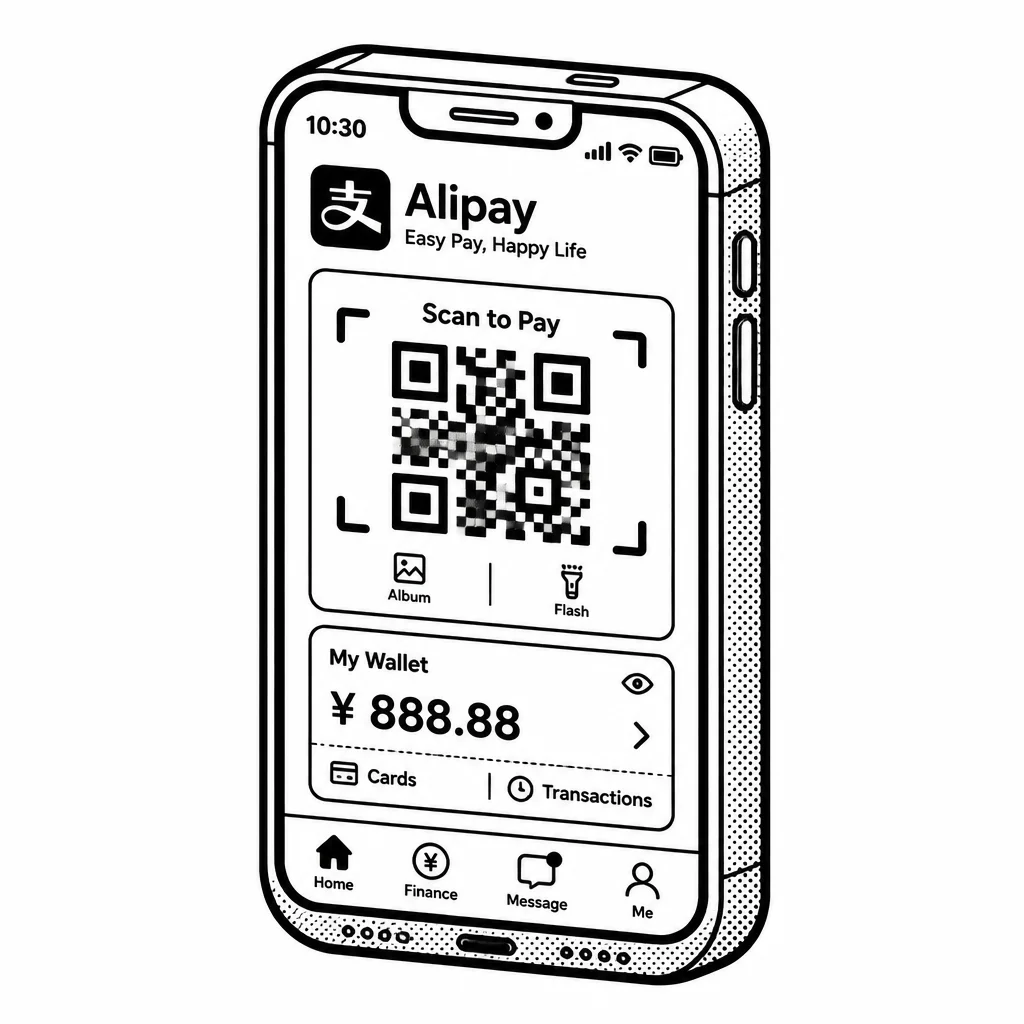
Payments themselves are close to a public utility now, so Ant makes most of its money elsewhere: it earns fees from the financial products it places in front of Alipay users. It arranges small consumer loans through a partner bank, sells money-market funds, and distributes insurance policies, taking a slice of each. Its Yu'e Bao savings product, launched in 2013, let people park spare cash in a fund that paid better than a bank deposit and could be tapped instantly from the phone — a simple idea that pulled in enormous sums and made Ant a serious player in asset management. Here is the part that matters most. Ant mostly does not lend its own money; it connects borrowers to banks and other lenders and helps judge who is creditworthy, using shopping and payment data. That makes it a middleman with software-like economics, but it also means regulators can treat it like a financial institution, not a tech platform. In late 2020, Beijing halted Ant's planned blockbuster IPO just days before it was set to list in Shanghai and Hong Kong. That pulled the plug on what would have been one of the largest listings in history, and the company has spent years since restructuring under regulatory pressure.
Ant is private, and its fate is tightly bound to founder Jack Ma and to Beijing's mood toward big tech. The 2020 crackdown hurt its growth, but its payment network remains embedded in daily life, giving it a durable moat few companies can match. The tension is simple: the more Ant acts like a bank, the more it gets regulated like one, and its future value depends on how smoothly it can keep being both a tech company and a financial one.
Saved answer · last researched 10 Nov 2026
BIG PICTURE
蚂蚁保拿走了中国长期线上人身险中介市场近一半的份额
- 45.5% Ant Insurance's share of China's online long-term life-insurance brokerage market
- 54.5% Other brokers and channels
Most people know Alipay as a way to pay for things, yet Ant also sells insurance through it. In China's online market for long-term life-insurance policies bought through a broker, Ant Insurance held 45.5% of premiums in 2023. That business sits alongside the loans and savings products that supply most of Ant's profit, turning a payment app into a place where households buy cover. Source: Huatai Securities, data from 2023
Timeline
Alipay Starts as a Trust Machine
In 2004, hardly anyone in China had a credit card, so shopping online felt like mailing cash to a stranger. Jack Ma's fix was simple: Alipay held the buyer's money until the goods showed up and the buyer said they were fine, then paid the seller. That little escrow step turned strangers into trading partners and made Taobao's market work.
Alipay Leaves Home
Later that same year, Alipay was cut loose from Taobao and set up as its own company. It stopped being a handy feature inside one shopping site and became a payments platform any online store could use.
Bigger Than PayPal
By 2013, Alipay had passed PayPal to become the largest mobile payment platform in the world. What began as a trust trick for one marketplace now moved money at a scale no one else matched.
Yu'e Bao Puts Spare Change to Work
That year Alipay also launched Yu'e Bao, which let users earn a return on cash sitting idle in their wallets, starting with as little as one yuan. Banks had required a small fortune to open similar products, so savers rushed in: within six months it had tens of millions of users and hundreds of billions of yuan. A payments app had quietly become a place to keep savings, and banks noticed.
Ant Financial Is Born
In 2014, the Alipay business was wrapped into a new company called Ant Financial, later renamed Ant Group. Its shape was now clear: payments, digital finance, and technology services — three legs holding up one very large stool.
The Lending Empire Grows
Ant's two microloan companies, behind products like Huabei and Jiebei, bundled their loans into securities and sold them on, letting them lend far more than before. Issuance jumped from tens of billions of yuan to hundreds of billions in a single year. The loan book was becoming the engine of Ant's profits — and the thing regulators would later stare at hardest.
The IPO That Vanished
In 2020, Ant stood days away from the biggest stock market listing the world had ever seen, in both Shanghai and Hong Kong. Then Jack Ma publicly criticized regulators, Ant's executives were summoned to a meeting with them, and the Shanghai exchange suspended the listing over what it called major issues and a changed regulatory environment. The Hong Kong listing died too. Bankers and investors were stunned, and Jack Ma stepped back from public view.
Ant Becomes a Financial Company
Under pressure from regulators, Ant agreed in 2021 to reshape itself. Its consumer finance arm would be regulated like a financial institution, not valued like a tech startup, and Ant applied to become a financial holding company, separating Huabei and Jiebei lending from the rest of Alipay's offerings. The CEO, Hu Xiaoming, resigned that March, and chairman Eric Jing took over the job.
A New CEO for the AI Era
On Ant's twentieth anniversary in 2024, Eric Jing announced that president Cyril Han would become CEO in March 2025, with Jing staying on as chairman. The handover came after the restructuring and a fine the year before, and the plan was now built around AI, the Alipay flywheel, and going global.
One Alipay Business Group
In September 2026, Ant folded its Digital Payment, Alipay, and Zhima Credit units into a single Alipay Business Group, cutting its top-level groups from five to four. The aim was to line up its core plumbing with agentic commerce — AI agents that shop and pay on your behalf. CEO Cyril Han admitted that rollout had been slower than hoped, with buyers and sellers still waiting on each other to show up.