Understand any stock in simple English
Enter a ticker to learn what the company does and how it makes money.
Razorpay Software Limited
Razorpay is an Indian payments company that helps businesses accept money online and manage their finances.
Razorpay is the plumbing that lets Indian businesses get paid online. When you buy something from an online store, pay a subscription, or check out through an app, Razorpay's software sits in the background, connecting the business to banks and payment networks so the money can move. It handles cards, UPI, net banking, and wallets, all through one integration that a developer can plug in quickly. That ease is the whole pitch: instead of stitching together dozens of bank relationships, a business signs up with Razorpay and starts collecting payments.
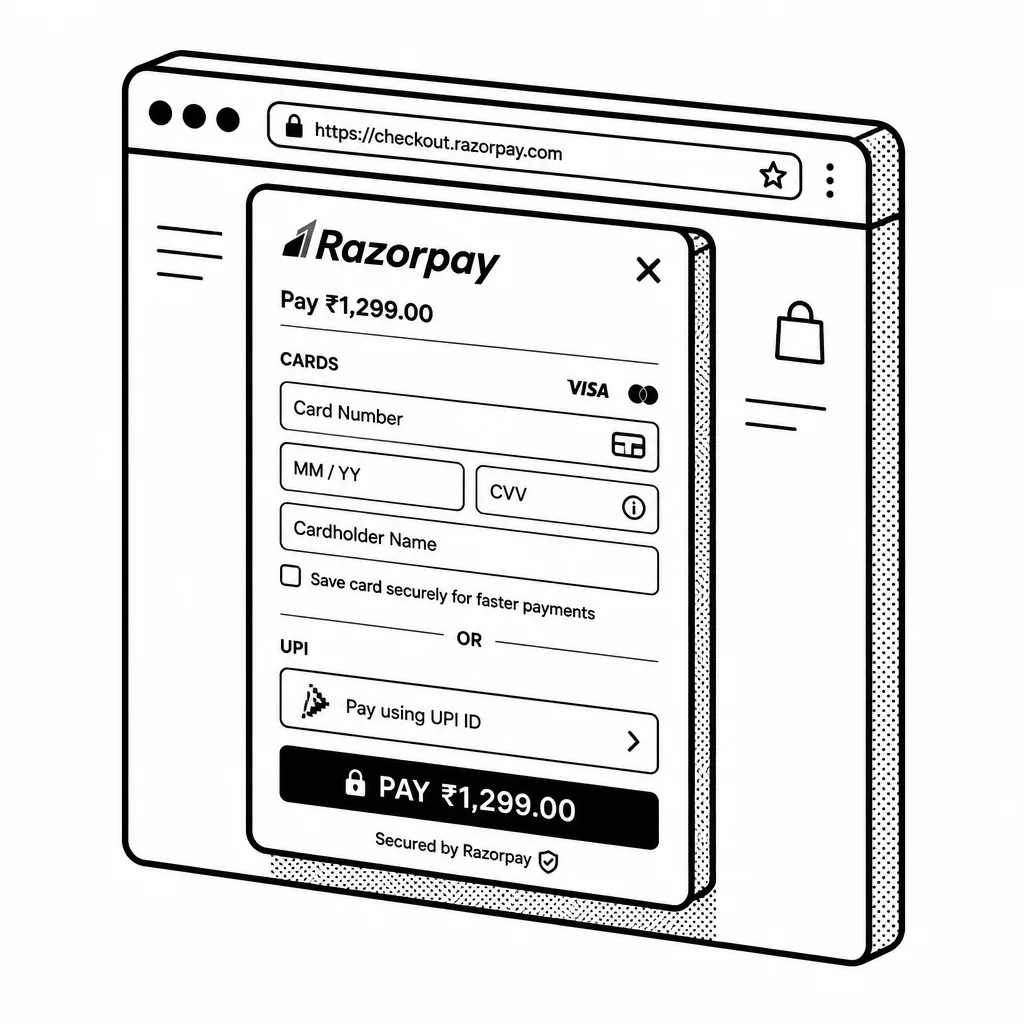
The company makes money mainly by charging businesses a small fee on each payment it processes. It started in 2014, founded by Harshil Mathur and Shashank Kumar, who had struggled to accept payments for their own projects and built the tool they wished existed. Their timing was lucky and smart: India's digital payments exploded, especially after the government pushed UPI, and Razorpay rode that wave to become one of the country's biggest payment gateways. Backing came from heavyweight investors including Sequoia Capital and Tiger Global, and the company reached a valuation of roughly $7.5 billion in 2021. Razorpay did not stop at payments. It expanded into a bundle of tools that a small business needs to run its money: a business banking account, short-term loans, payroll, and invoicing. The idea is to become the financial operating system for a company, not just the checkout button. That breadth is a strength but also a risk, since it puts Razorpay in competition with banks, fintech rivals like Paytm, and global players such as Stripe and Adyen eyeing India's market.
The regulatory ground in India is tricky. Payment companies face tightening rules from the Reserve Bank of India on how they handle customer data and store money, and those rules can reshape how the business operates. Razorpay remains privately held and unprofitable on a net basis as it pours money into growth, which is common for fintechs chasing scale. The core bet is simple: as more Indians transact online, whoever owns the payment rails and the surrounding tools can earn a small toll on an enormous and growing flow of money.
Saved answer · last researched 10 Nov 2026