Understand any stock in simple English
Enter a ticker to learn what the company does and how it makes money.
Air India Limited
Air India is an airline that flies passengers to destinations in India and around the world.
Air India is India's flagship airline, the one with the maharaja mascot and the long history. It flies people between India's big cities, and it also flies them to places like London, New York, Dubai, and Singapore. For a huge number of Indian workers abroad, it is one of the few ways to get home without a long layover somewhere else.
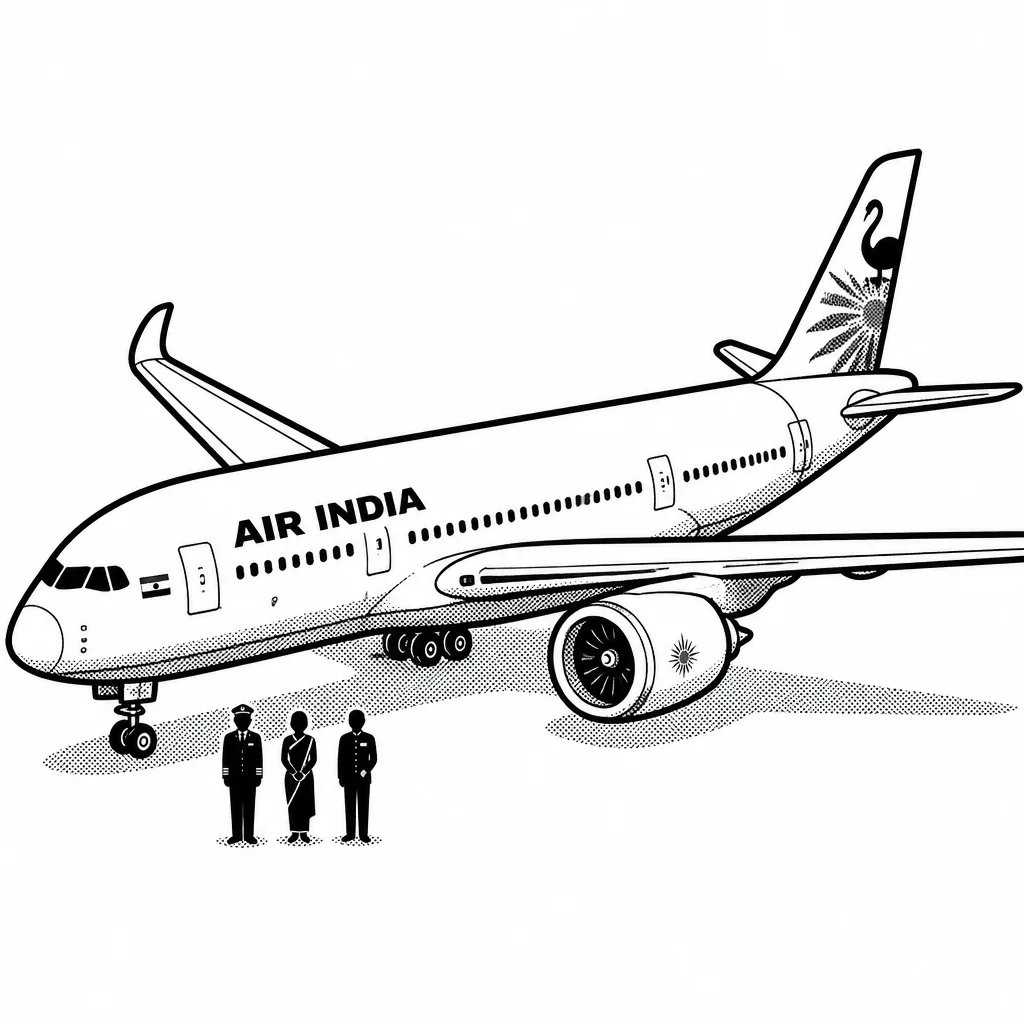
Airlines make money by selling seats. Passengers pay for tickets, and business travelers pay more for the flat beds up front. The plane also carries cargo in its belly, which adds a little extra. The tricky part of the business is that the costs are brutal and mostly fixed: fuel, airport fees, maintenance, and paying the crew all show up whether the plane is full or nearly empty. So the difference between a good year and a terrible one comes down to filling seats and running tight. Air India's story is unusual because it spent decades as a state-owned company that lost money, and now it is owned by a private giant, the Tata Group conglomerate, which bought it back in 2022. Tata founded the airline in 1932, so the takeover was basically a homecoming. Since then the new owners have been pouring money into new planes, a refreshed brand, and a huge order for hundreds of aircraft from Boeing and Airbus. The plan is to fix the old reputation for delays and worn-out cabins.
The competition is fierce. Domestically it fights IndiGo, the low-cost carrier that dominates India's skies, and internationally it competes with Gulf carriers like Emirates that funnel travelers through their hubs. Air India's edge is its network and its brand, but its biggest challenge is execution: merging its low-cost subsidiaries, getting planes delivered on time, and convincing passengers that the new Air India is actually better than the old one. It is a turnaround story still very much in progress.
Saved answer · last researched 9 Nov 2026
BIG PICTURE
Two in three Air India passengers say the airline struggles to run on time
- 66% Passengers reporting timeliness issues
- 34% Passengers reporting no timeliness issues
A LocalCircles survey of 18,483 Air India passengers found 66% had problems with the airline's timeliness in the past year, up from 48% in 2025. For an airline selling seats on schedules, that unreliability is a direct risk: flyers who miss connections or sit through delays may book IndiGo next time, and Air India needs loyal domestic passengers to close the gap on its larger rival. Source: LocalCircles, data from 2026
Timeline
JRD Tata Launches India's First Airline
In 1932, JRD Tata started India's first airline. He was also the country's first commercial pilot, and his love of flying pushed the young company to try things nobody in India had done before.
Air India Becomes a Public Company
By 1946, the little airline had grown enough to become a public limited company, and it took the name Air India.
The Government Takes Over
In 1953, the government passed a law to buy a majority stake from Tata Sons, turning the airline into a state-owned flag carrier called Air India International while domestic flights moved to Indian Airlines. JRD Tata stayed on as chairman for decades, giving the airline a founder's hand even under state ownership.
The Merger That Backfired
In 2007, the government merged Air India with the profitable domestic carrier Indian Airlines to get big enough to fight low-cost rivals. But the two payrolls and two fleets were combined on paper without truly being integrated, and a huge order for new planes, paid for mostly with borrowed money, piled on debt the merged airline could not carry. It has not posted a full-year profit since.
No One Wants to Buy Air India
By 2018, the government wanted to sell the airline, but the sale drew no bidders. Investors feared government interference and looked at yearly losses in the thousands of crores plus a debt load of over Rs 33,000 crore, and decided to stay away.
The Tatas Buy Back Their Airline
The government finally found a buyer in the Tata Group, the very company that had founded the airline. It accepted a bid worth about ₹18,000 crore, and in early 2022 ownership passed to Tata, ending 69 years of state control.
Campbell Wilson Takes the Controls
Less than four months after buying the airline, Tata hired Campbell Wilson from Scoot, Singapore Airlines' low-cost arm. He launched Vihaan.AI, a five-year plan to turn the airline around.
The Ahmedabad Crash
In June 2025, an Air India flight from Ahmedabad to London crashed shortly after takeoff, killing all but one of the 230 passengers and 12 crew. The disaster brought intense scrutiny, inspections and the temporary grounding of several aircraft.
A New CEO from Ethiopian Airlines
In 2026, Air India appointed Tewolde Gebremariam, the former head of Ethiopian Airlines, as its new CEO and Managing Director, replacing Campbell Wilson. He took over while the airline was still losing money and facing closer regulatory scrutiny than ever.
A Longer Road to Recovery
Tata Sons chairman N. Chandrasekaran reframed the turnaround as a five- to ten-year journey, stretching past Vihaan.AI. The numbers stayed painful, with Air India and Air India Express together losing over ₹22,000 crore in FY26, more than double the year before. Yet there were real signs of progress: customer sentiment climbed from deeply negative to solidly positive, and all the domestic narrow-body planes had been refurbished.