Understand any stock in simple English
Enter a ticker to learn what the company does and how it makes money.
InterGlobe Aviation Limited
IndiGo is India's largest airline, selling low-cost flights to passengers across India and to international destinations.
IndiGo is India's biggest airline, and it runs on one simple idea: fly people around cheaply and on time. It sells seats on short flights — mostly inside India, plus a growing list of nearby international routes — and it packs planes with passengers to keep costs low. It flies mostly Airbus narrow-body jets, and it does so in a single, standardized way that keeps maintenance and training simple.
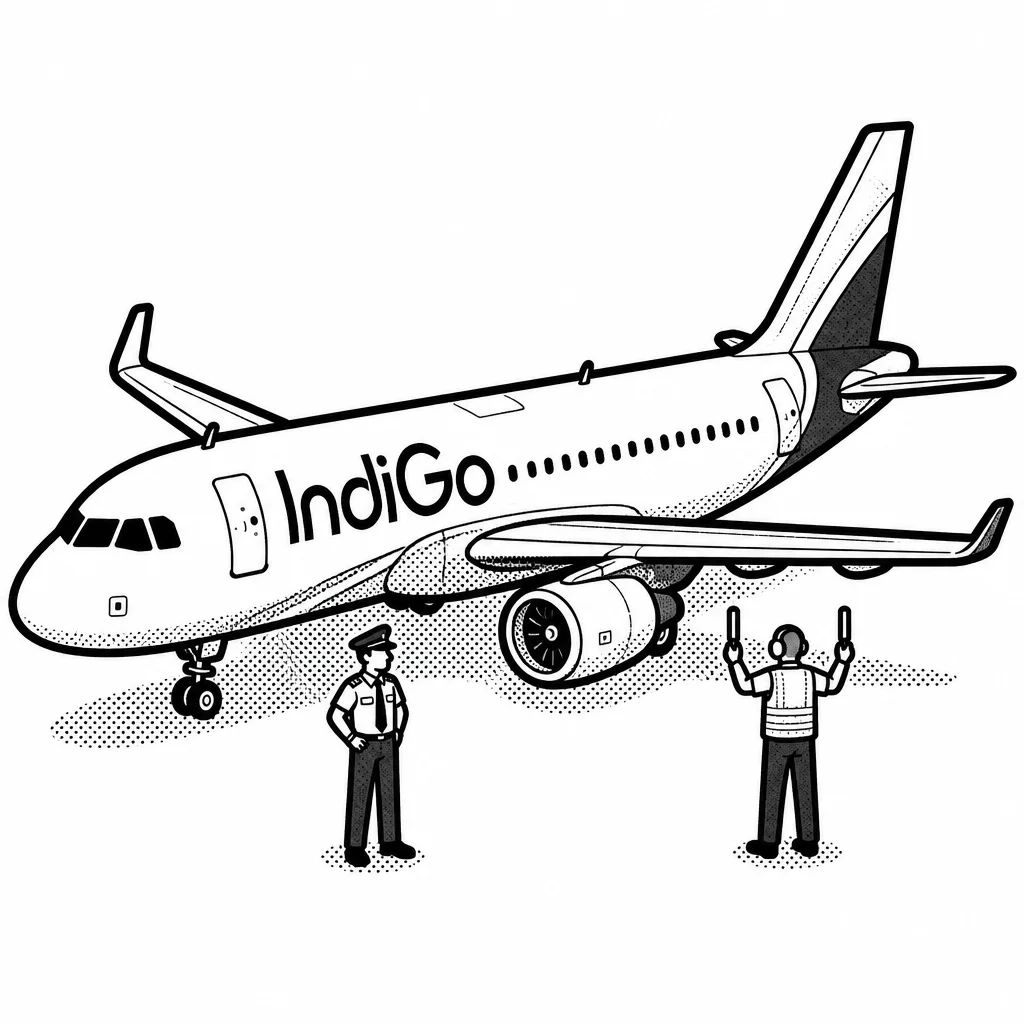
The airline's customers are ordinary travelers: people visiting family, students, workers commuting between cities, and small-business travelers who care more about price and punctuality than frills. It keeps costs down by flying one main aircraft type, packing more seats into each plane, and turning aircraft around fast on the ground. That thrift lets it undercut full-service carriers on price, which matters enormously in a country where most flyers are price-sensitive. IndiGo earns money from ticket sales, but also from add-ons: checked bags, seat selection, and food on board. It also has a loyalty program and a cargo business. In recent years it has grown aggressively on international routes and placed huge orders for new planes to fuel that expansion. Founder Rahul Bhatia's InterGlobe group and co-founder Rakesh Gangwal built the airline from a 2006 startup into a market leader; a later public feud between the two founders made headlines before Gangwal began selling down his stake.
The airline flies in a brutally competitive market. Full-service rivals like Air India and low-cost competitors such as SpiceJet battle for the same passengers, and fuel prices and the rupee's value hit costs hard. IndiGo's scale and cost discipline are its shield, but it is also vulnerable to price wars, engine troubles on some of its planes, and the fact that airlines are a tough business that can lose money fast when costs spike.
Saved answer · last researched 9 Nov 2026
BIG PICTURE
IndiGo carried 65 out of every 100 domestic flyers in India in September 2026
- 65.4% IndiGo's share of India's domestic air market
- 34.6% Every other airline combined
In September 2026, IndiGo flew 77.3 lakh passengers, which came to 65.4% of India's domestic air market. Put another way, roughly two of every three people who boarded a domestic flight in India that month flew with this one airline. Its low fares and sprawling network across Indian cities are the engine of its business, and rivals split the remaining third. Source: MoneyWorks4me, data from 2026
Timeline
Two Founders Start InterGlobe Aviation
In 2004, Rahul Bhatia, who ran a travel business, and Rakesh Gangwal, an Indian-American who had spent years in the airline industry, teamed up to start an airline in Lucknow. India's skies were opening up, but flying was still a costly and unreliable affair for most people. Their idea was simple: run a tight, no-frills airline that gets people where they need to go on time, for less.
The 100-Plane Bet
In 2005, before it had even flown a single passenger, the new airline ordered 100 Airbus A320 planes at the Paris Air Show. It was the biggest order any Indian airline had placed, and buying in bulk locked in deep discounts, which is exactly how you build a low-cost airline: the cheap plane is what makes the cheap ticket possible.
The Company Goes Public
In 2006 the firm turned itself into a public company, InterGlobe Aviation Limited, a formal step that set up the structure for everything that came next.
The First Flight Takes Off
IndiGo's first flight left Delhi for Imphal via Guwahati in August 2006. Punctuality became its first calling card, and by the end of that year it was flying six planes, with passengers noticing the airline that actually left on time.
Bigger Orders, New Shores
By 2011 the airline ordered another 180 planes from Airbus, a newer and more fuel-efficient model. It also started flying internationally and became the largest domestic carrier by market share, settling into the position that would define it for years.
Kingfisher Collapses and Rivals Vanish
When Kingfisher Airlines fell apart after failing to pay its staff and lenders, Indian passengers suddenly had fewer choices. IndiGo was the obvious winner: its share of the domestic market climbed from roughly 6 percent to about 27 percent in just a few years. A rival's failure can be a gift, and this one reshaped the entire industry.
The Airline Lists on the Stock Market
In 2015 InterGlobe Aviation listed on Indian stock exchanges, turning the airline into a company ordinary people could own a piece of.
An Order Even Airbus Had Never Seen
Later in 2015, just as it listed, IndiGo placed the largest single order in Airbus's history: 250 A320neo aircraft. Committing to that many planes locked in years of growth, and it was already becoming clear that Indian aviation would be a contest between two big players.
The Pilot Shortage Grounds the Fleet
The engine of IndiGo's success had always been order and timing, and in 2025 the airline did not prepare properly for new rules limiting how long pilots can fly. With too few pilots to cover its schedule, it cancelled thousands of flights between December 2 and 12, stranding over a million passengers. Investors punished the stock, which fell sharply and erased tens of thousands of crores of market value in days, a real dent in the reputation for reliability the airline had spent nearly two decades building.
William Walsh Takes the Controls
In 2026, after its chief executive left, IndiGo hired William Walsh, who had spent decades running British Airways and the group that owns it, known for cutting costs and merging airlines. The hire was a clear signal: the company was no longer just defending its home turf.
From Local Champion to Global Airline
The next act is a deliberate one: less chasing domestic share and more becoming an airline the world knows. IndiGo is adding premium options, including a business-class-style offering, and leasing bigger planes ahead of its own A350s. The push comes after a loss-making 2026, showing that growth now has to come from selling more than just cheap seats.