Understand any stock in simple English
Enter a ticker to learn what the company does and how it makes money.
Valaris Limited
Valaris owns and operates offshore drilling rigs that oil and gas companies rent to drill wells at sea.
Valaris is one of the world's largest offshore drilling contractors. It does not hunt for oil itself and it does not own the oil it finds. Instead, it owns a fleet of drilling rigs — giant floating platforms and jack-up rigs that stand on the seafloor — and rents them, along with the crews that run them, to oil and gas companies that need to drill wells offshore.
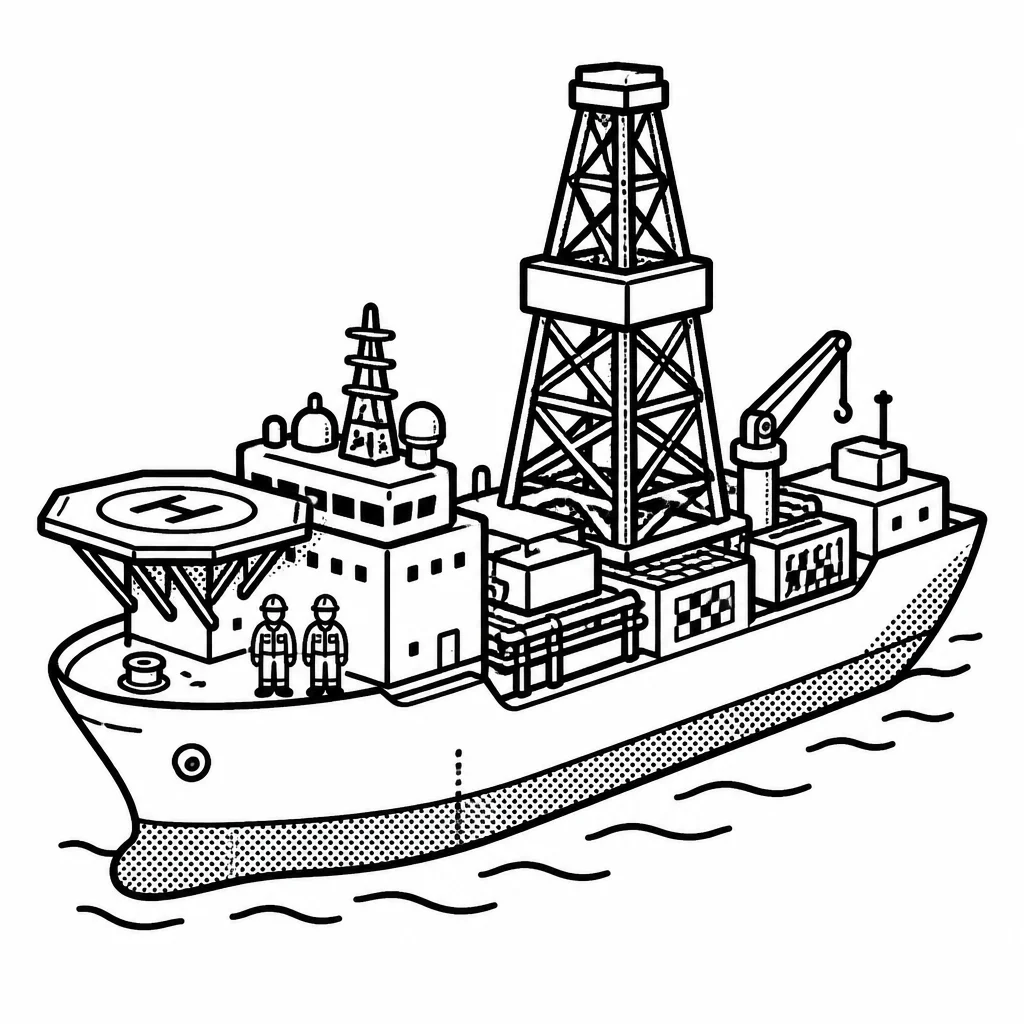
The business is simple in outline and brutal in practice. An oil company like Shell or BP decides it wants to drill in, say, the North Sea or the Gulf of Mexico. It signs a contract with Valaris, often for months or years, and pays a day rate — the rig, the crew, and the technical know-how come as a package. Valaris earns money from those day rates, and its profit depends on whether the rate it charges covers the cost of keeping a very expensive piece of machinery staffed and running. When oil prices are high and drilling is busy, day rates climb and the rigs earn well. When oil prices collapse, contracts dry up and rigs sit idle, still costing money to maintain. The company's history is a tale of booms, busts, and a big reset. It was formerly known as Ensco Rowan before rebranding as Valaris in 2019, following the merger of Ensco and Rowan. Then the pandemic-era oil crash hit: in 2021 the company filed for Chapter 11 bankruptcy, wiped out most of its old debt and equity, and emerged leaner with a cleaned-up balance sheet. That reset matters because it explains why Valaris today is a company focused on paying down debt and returning cash to shareholders rather than expanding its fleet aggressively.
The fleet is the heart of the story. Valaris runs both floaters (rigs that float and are held in position, used for deepwater wells) and jack-ups (rigs with legs that stand on the seabed, used in shallower water). Competition comes from other offshore drillers such as Transocean and Noble. What makes Valaris attractive to customers is the quality and age of its fleet and its global reach — it can move rigs to wherever the drilling action is, whether that is the Gulf of Mexico, Brazil, West Africa, or the Middle East. The risk is the same as it has always been: this is a cyclical, capital-hungry business that lives and dies by oil prices and the willingness of major energy companies to spend on offshore exploration.
Saved answer · last researched 10 Nov 2026
BIG PICTURE
Five oil companies paid for nearly half of Valaris's drilling work in 2025
- 49% Top five customers
- 51% All other customers
Offshore drilling is a business built on a handful of giant customers, not a crowd. In 2025, Valaris's five biggest clients paid for 49% of its combined revenue, and three of them, Petrobras, BP and Azule Energy, supplied 35%. Lose one of those contracts and a large slice of the rent money disappears. It also explains why the pending merger with Transocean, which would create a company with a stated backlog of roughly $10 billion, matters so much: scale gives a driller more leverage when negotiating with the few oil giants that hire rigs. Source: MoneyDJ, data from 2025
Timeline
Blocker Buys a Drilling Company
After the 1973 oil crisis sent the world scrambling for energy, John R. Blocker bought a small contract drilling company in Alice, Texas, and renamed it Blocker Energy. That six-rig land-drilling business became the root from which Ensco, and later Valaris, grew.
Blocker Energy Goes Public
Blocker Energy became a public company through an initial public offering. Going public gave the young driller access to capital markets it would later use for aggressive expansion.
A Near-Collapse Shaped the Company
Blocker Energy had borrowed heavily to expand its fleet to 54 rigs, then oil prices plunged in late 1982. To avoid bankruptcy it restructured, giving 64% of the company to its banks in exchange for $240 million in debt forgiveness. By 1983 it operated only 6 rigs, a near-collapse that shaped the company's later caution and deal-driven growth.
Rainwater and Thorne Remake the Company
After Richard Rainwater's BEC Ventures invested in 1986 and installed Carl F. Thorne to run the company, it was renamed Energy Service Company, or Ensco. The new name and leadership marked the company's reinvention as a modern offshore contractor.
Ensco Acquires Penrod
In a transaction orchestrated by Rainwater, who owned 21% of the company, Ensco acquired Penrod, previously controlled by Ray Lee Hunt. The deal added 19 rigs to its fleet, expanding Ensco's scale as a drilling contractor.
Ensco Acquires Pride International
Ensco acquired Pride International, another major offshore driller, significantly enlarging its offshore fleet and global footprint. The company closed its Dallas office and consolidated it into its Houston office.
Ensco Acquires Atwood Oceanics
Ensco acquired Atwood Oceanics for $860 million. The deal made Ensco the largest owner of jackup fleets worldwide.
Ensco Merges with Rowan and Becomes Valaris
Ensco merged with Rowan Companies and changed its name to Valaris plc. The combination created the world's largest offshore drilling contractor by fleet size at the time, spanning floaters and jackups.
Valaris Files for Bankruptcy
Valaris filed for a prearranged bankruptcy in August 2020 amid the oil-price collapse, canceled drilling programs and heavy debt. It emerged from bankruptcy in May 2021 with a much leaner balance sheet, positioning the company for the later upcycle.
Anton Dibowitz Takes Over
Tom Burke stepped down as president and CEO in September 2021 shortly after the bankruptcy exit. Board member Anton Dibowitz became interim CEO and then led the company through the post-bankruptcy recovery. The leadership change marked a new phase focused on rebuilding after restructuring.
Transocean Agrees to Acquire Valaris
Transocean Ltd. signed a definitive agreement to acquire Valaris for about $5.7 billion in an all-stock deal in February 2026. The combined company would be a dominant offshore drilling powerhouse, with Transocean shareholders owning about 53%. The deal, expected to close around December 2026, is the latest chapter in Valaris's history and defines where the company stands today.