Understand any stock in simple English
Enter a ticker to learn what the company does and how it makes money.
Schroders plc
Schroders manages investments and savings for institutions, wealthy families, charities, and individuals around the world.
Schroders is one of Britain's oldest money managers, and its job is simple to describe: it looks after other people's money. Pension funds, insurance companies, charities, wealthy families, and ordinary individuals hand it their savings, and Schroders decides where to invest that money — in stocks, bonds, property, and other assets — with the goal of growing it over time. It earns a fee based on the assets it manages, so the more money it looks after and the better it performs, the more it makes.
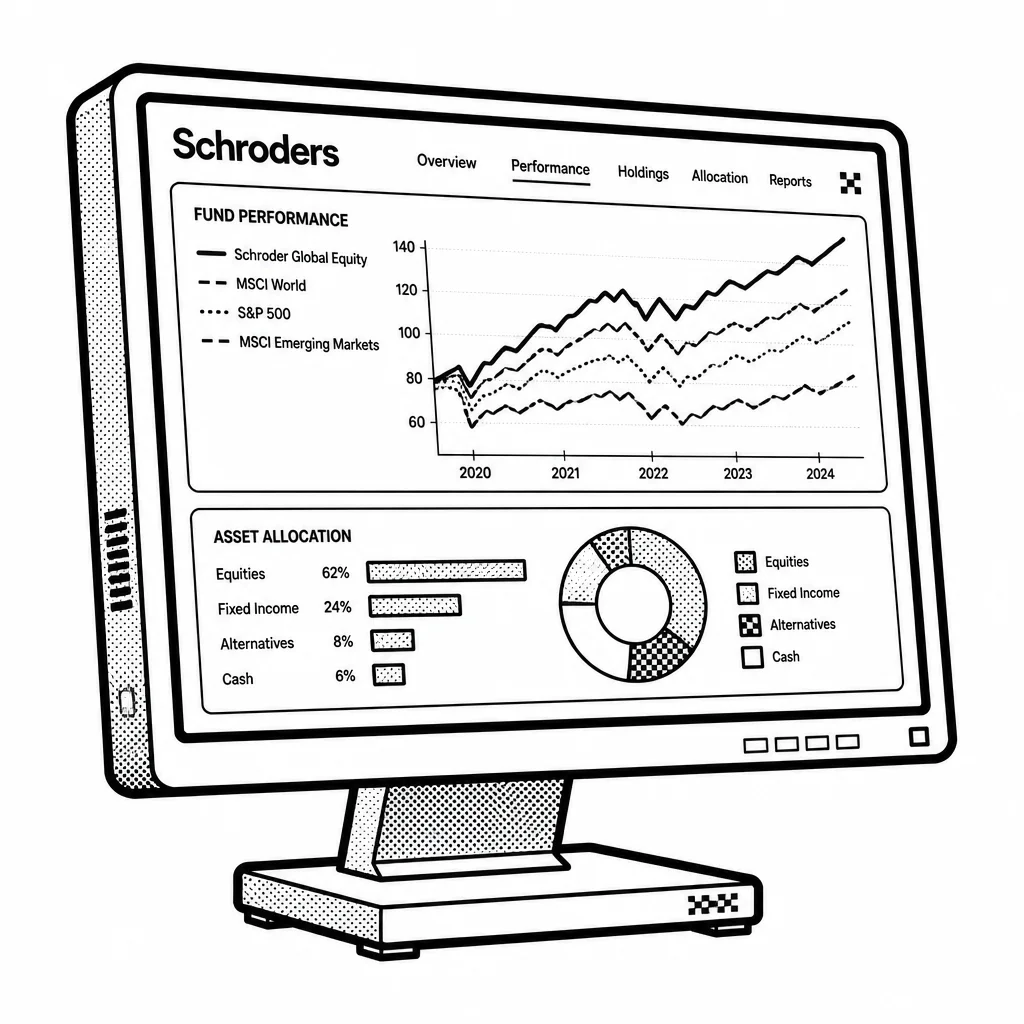
The firm runs two big engines. Asset management is the larger one: it builds and runs investment funds and portfolios for big institutions like pension schemes, and it also sells funds directly to retail savers, often through financial advisers and banks. Wealth management is the other: it gives richer clients, charities, and families personal advice and manages their money more directly, including financial planning and tax work. Owning both means Schroders can serve a pension fund with billions and a doctor with a savings pot, and it keeps clients as their needs grow. The business lives on scale. Investment management has high fixed costs — research, trading systems, compliance, star fund managers — but each extra pound managed costs almost nothing to add, so big players earn fat margins. That is why Schroders competes hard with giants like BlackRock and Vanguard-style index providers, plus peers such as Amundi and the asset arms of big banks. A lot of the industry has shifted toward cheap passive funds that simply track an index, which pressures active managers like Schroders to justify their fees with real outperformance. The 2020s have been tough: clients pulled money from some active strategies, and the firm has been cutting costs and restructuring to protect profits.
Schroders stays independent and family-influenced — the founding Schroders family has long held a big stake — and that stability is part of its pitch. It pays a steady dividend and has bought back shares to support the stock. Its fortunes now hinge on whether it can grow fee-earning assets in a world where cheap index funds keep winning, and on making its wealth and private-markets businesses carry more of the load.
Saved answer · last researched 14 Nov 2026