Understand any stock in simple English
Enter a ticker to learn what the company does and how it makes money.
Noble Corporation plc
Noble owns and operates offshore drilling rigs that oil and gas companies rent to drill wells at sea.
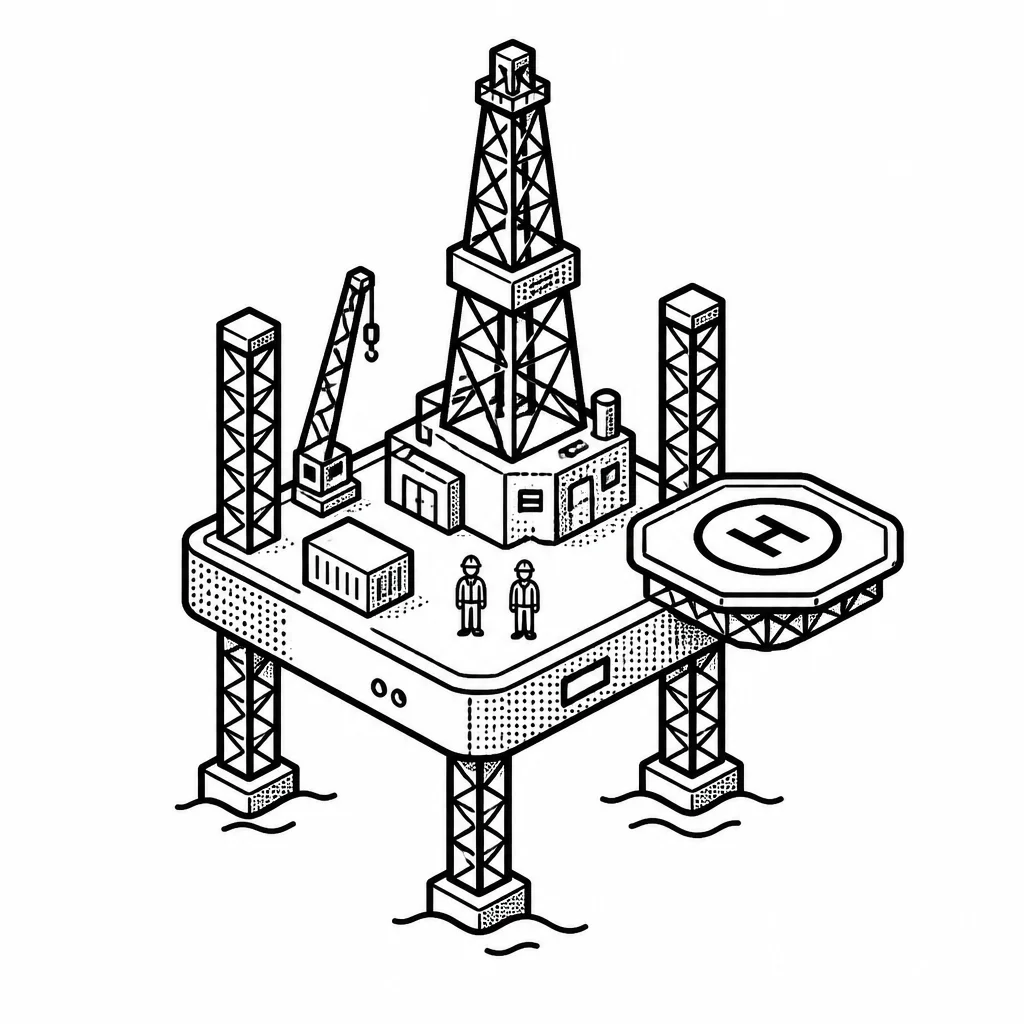
Noble is an offshore drilling contractor. It doesn't hunt for oil or own the oil it finds. Instead, it owns a fleet of drilling rigs — mostly jack-up rigs that stand on the sea floor in shallow water and drillships that float in deeper water — and rents them, along with the crews that run them, to oil and gas companies that need to drill wells offshore.
The customer pays a day rate: a fixed fee for every day the rig is on hire, whether the well flows or comes up dry. That is the whole economic engine. When oil prices are high and companies are racing to develop offshore fields, rigs get scarce and day rates climb, and Noble's profits can swell fast because much of its cost base is fixed. When prices fall, customers cancel or delay work, rigs sit idle, and the day rates collapse. It is a deeply cyclical business, and Noble has been through bankruptcy once already, in 2021, after a brutal stretch of low oil prices and too much rig capacity chasing too few jobs. Noble's main rivals are other offshore drilling contractors: Transocean, Valaris, and Seadrill. What separates the winners here is fleet quality and contract coverage — modern, high-spec rigs that can drill harder wells in deeper water command better rates, and a fat backlog of signed contracts gives earnings visibility through the downturns. Noble has been consolidating to get bigger: it bought Denmark's Maersk Drilling in 2022 and, more recently, agreed to acquire Seadrill in a deal valued at roughly $2.5 billion, which would make it one of the largest offshore drillers in the world.
Offshore drilling is a bet on the long game. Oil companies increasingly favor big, expensive offshore projects because they produce for years and often have lower carbon intensity per barrel than some onshore alternatives. Noble's rigs are the picks and shovels for that work. The risk is straightforward: if oil prices stay weak, the day rates fall and the rigs go quiet.
Saved answer · last researched 10 Nov 2026
BIG PICTURE
Nearly all of the world's ultra-deepwater rigs are already booked
- 99% Ultra-deepwater rigs under contract worldwide
- 1% Rigs still available for hire
Noble's managers told investors that 99% of ultra-deepwater rigs around the world are already under contract. For a company whose income comes from renting these rigs to oil companies, that is a tight market: drillers hunting for a rig have few spare ones to call. High-end day rates have climbed back to the mid-$400,000 to $500,000 range. Source: StockStory (Noble Q3 2026 earnings coverage), data from 2026
Timeline
Noble Drilling Spins Off
Noble started life as a piece of a bigger company. In 1985, Noble Affiliates spun off its drilling business as its own public company, Noble Drilling Corporation. That spun-off business is the direct ancestor of the Noble Corporation we know today.
A New Parent in the Cayman Islands
By 2002, the company wanted a cleaner corporate structure, so it reorganized and set up Noble Corporation as a new parent holding company based in the Cayman Islands.
Buying Frontier Drilling
In 2010, Noble made a big bet on growth by buying Frontier Drilling for about $2.16 billion in cash. It was a large, all-cash deal that expanded the fleet.
Moving to the United Kingdom
A few years later, the company changed its home base again, moving its domicile to the United Kingdom in 2013.
Bankruptcy and a Fresh Start
The offshore drilling business is brutally cyclical, and a deep downturn hit the company hard. In July 2020, Noble filed for bankruptcy with $3.4 billion in debt. It came out the other side in February 2021, lighter and ready to deal.
Merger with Maersk Drilling
Fresh from bankruptcy, Noble pulled off a transformational merger with Maersk Drilling in October 2022. The combined company kept the Noble name and was valued at about £2.6 billion, making it one of the world's largest offshore drilling contractors.
Acquiring Diamond Offshore
Noble kept growing. In 2024, it announced it would buy Diamond Offshore Drilling for $1.6 billion in cash and stock, pushing its fleet to more than 35 rigs and about 5,300 employees.
Selling Off Jackup Rigs
Noble then decided to get leaner. In 2025, it signed deals to sell six jackup rigs, including five to Borr Drilling for $360 million. The plan was to become a pure-play deepwater and ultra-harsh environment jackup operator, with a stronger balance sheet.
Borr Deal Closes
The big divestment wrapped up in January 2026, when Noble completed the sale of five jackup rigs to Borr Drilling. The deal brought in roughly $210 million in cash plus $150 million in seller notes, sharpening the company's focus on deepwater and ultra-harsh jackup work.