Understand any stock in simple English
Enter a ticker to learn what the company does and how it makes money.
Palfinger AG
Palfinger makes hydraulic lifting equipment like cranes and aerial work platforms for trucks, construction, forestry, and offshore industries.
Palfinger makes the cranes and lifting gear that turn ordinary trucks into working machines. Its best-known product is the loader crane: a folding hydraulic arm that mounts behind a truck cab and lets one driver lift heavy loads on and off the bed without a forklift or a second crew. Beyond that, it builds aerial work platforms that raise workers up to power lines and building facades, tail lifts for delivery trucks, and specialized handling systems for forestry, recycling, and offshore wind. Customers are businesses that move heavy things for a living — haulers, construction firms, utilities, ports, and rental fleets.
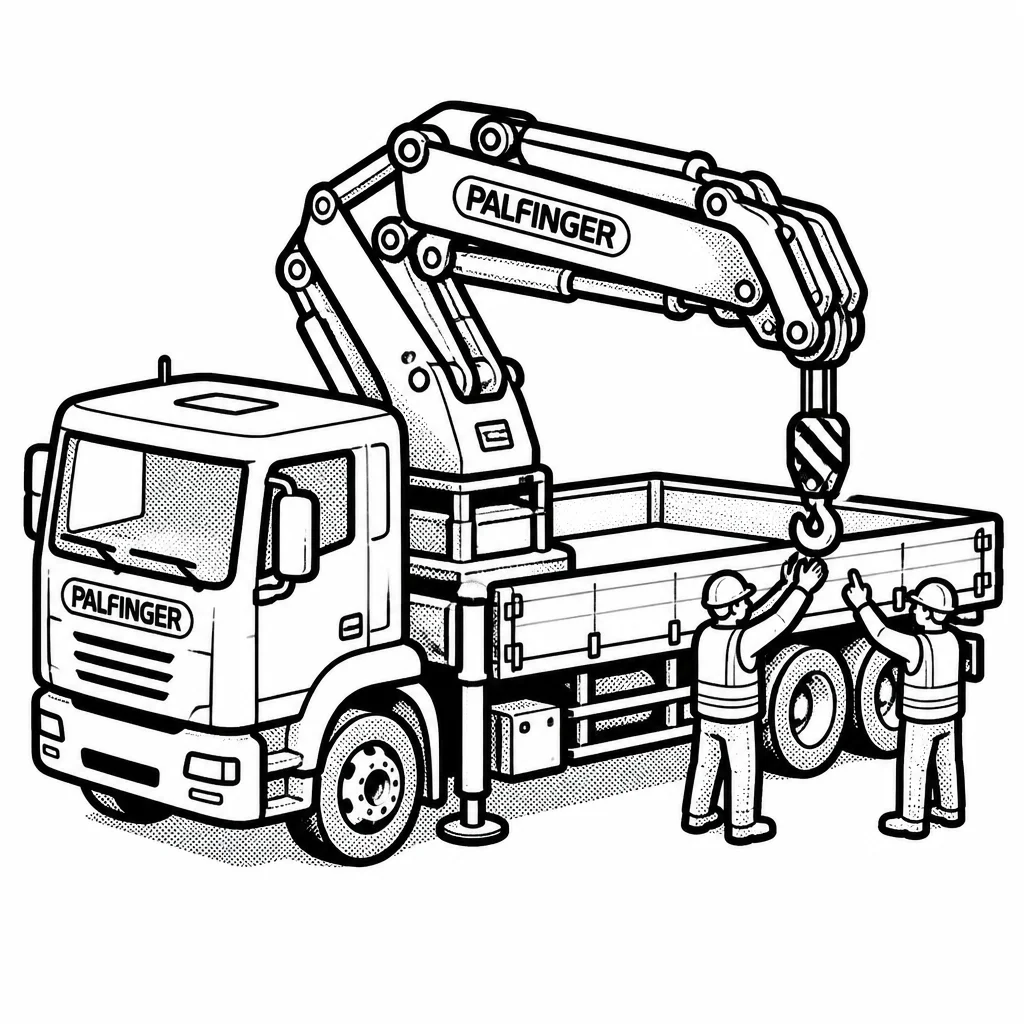
The company is based in Salzburg, Austria, and it sells through a wide dealer network rather than directly to most end users. That dealer model matters: local dealers install, service, and repair equipment, and Palfinger leans on them to reach small and mid-sized customers across Europe and beyond. Its main rivals in loader cranes and lifting gear include Hiab's parent Cargotec and Tadano, plus a long tail of regional manufacturers. Palfinger's edge is breadth — it offers a huge catalog of crane models and attachments, so a dealer can fit almost any truck — and a service business that keeps customers coming back for parts and maintenance long after the sale. The business is cyclical, and that is its central weakness. When construction and freight activity slows, customers postpone buying new trucks and cranes, and Palfinger's sales fall with them. The company has pushed into higher-margin areas like offshore and wind-energy handling equipment and has grown through acquisitions, which broadens its lineup but also adds debt and complexity. It pays a dividend and invests in its factories and product development; the cash flow story is less about buybacks and more about funding growth and keeping its balance sheet steady through downturns.
In short, Palfinger sells the muscle that sits on the back of a truck. It earns money when customers buy equipment and again when they service it, and its fortunes rise and fall with how much the world is building, hauling, and repairing.
Saved answer · last researched 14 Nov 2026
BIG PICTURE
Palfinger makes about one in five of the world's truck-mounted loader cranes
- 22% Palfinger
- 18% Hiab
- 60% Fassi, HMF, Tadano and others
Truck-mounted loader cranes are the arms that fold behind a truck cab and lift cargo on and off the bed, and Palfinger sold 22 percent of the world's supply in 2025. Its nearest rival, Hiab, held 18 percent. The five biggest makers together took 62 percent, so this is a market run by a handful of names. Palfinger's Austrian factories sit at the center of it. Source: Global Market Insights, data from 2025
Timeline
A Small Workshop in Schärding
In 1932, Richard Palfinger opened a small workshop in Schärding, a town in Upper Austria, building agricultural trailers, tippers and vehicle bodies. It was a modest start with no hint of what was coming. But that little workshop planted the seed for a company that, decades later, would become a global player in lifting technology.
Hubert Palfinger Bets on Hydraulics
Richard's son Hubert took the family business in a new direction in 1964 by introducing hydraulic truck-mounted loader cranes. This was the moment the company found its calling. The crane became the product, and the company entered what it would later call its crane era.
Cranes Roll Off the Line
By 1968, the first crane built in serial production came off the line, and the company was already shipping to Switzerland and France. Making cranes in volume, not one at a time, and selling them abroad laid the foundation for an international crane business.
EPSILON Joins the Family
In 1988, a company called EPSILON Timber & Recycling, founded eight years earlier, became part of PALFINGER. It brought high-tech, innovative products into the fold and widened what the company could offer its customers.
Going Public and Buying Guima
In June 1999, PALFINGER listed on the stock exchange, giving it access to international capital to grow faster. That same year it took over Guima S.A. of France, the world's second-largest maker of hookloaders. The company was now using both the stock market and acquisitions to expand.
A Joint Venture with SANY
In 2012, PALFINGER formed a joint venture with SANY, the leading Chinese construction machine manufacturer. Partnering with a Chinese giant helped secure PALFINGER's position on the world market. That partnership would shape the company for the next decade, in ways both good and complicated.
A Big Bet on the Sea
In 2016, PALFINGER made the largest acquisition in its history, buying Harding, a leading supplier of lifesaving equipment and lifecycle services for ships and maritime installations. The deal nearly doubled the size of its marine business. It was so big that the company split its reporting into two segments, LAND and SEA.
Andreas Klauser Takes the Wheel
At the beginning of June 2018, Andreas Klauser was appointed the new CEO, completing the management team. He inherited a company that had grown strongly through acquisitions. The job now was to integrate and restructure what had been bought.
One Organization, and a Digital Bridge
In January 2019, PALFINGER put the GLOBAL PALFINGER ORGANIZATION in place to help all its units work together and share internal synergies. That same year it founded STRUCINSPECT, a joint venture for digital bridge inspection, pushing into inspection technology.
The Biggest Investment Package Yet
In 2021, PALFINGER spent around 120 million euros, the largest investment package in its history, mainly on research and development centers and on training. It also agreed with SANY HEAVY INDUSTRIES to unwind their cross-shareholding, which substantially increased PALFINGER's strategic room to move. The year ended with record revenue and earnings.
Ninety Years and a Vision
In 2022, PALFINGER celebrated its 90th birthday and launched Vision & Strategy 2030 to point the company at the future. It presented eDRIVE technology, which lets loader cranes run energy-efficient and emission-free. Revenue reached another record, at 2.23 billion euros.
Back in the ATX
In 2025, PALFINGER returned to Austria's ATX lead index for the first time since 2010, after its stock rose around 70% that year. The founder family still held more than half the shares. For a moment, the market loved the company again.
A Write-Off on Russia
The same year brought a hard hit: PALFINGER wrote off 135 million euros on its Russia business, and the stock fell almost 10% again. From a twelve-month high above 40 euros, the share dropped by about a third to below 28 euros. The proud return to the index did not protect it from trouble.
Selling the Tail Lift Business
In 2026, PALFINGER signed a binding preliminary agreement to sell its low-margin tail lift business, with the deal expected to close late that year or early the next. The point was to shift focus to the higher-margin service business, spare parts and maintenance, which is more stable and profitable than simply selling cranes.