Understand any stock in simple English
Enter a ticker to learn what the company does and how it makes money.
The Manitowoc Company, Inc.
Manitowoc builds the big cranes that construction crews use to lift heavy steel and concrete into the air.
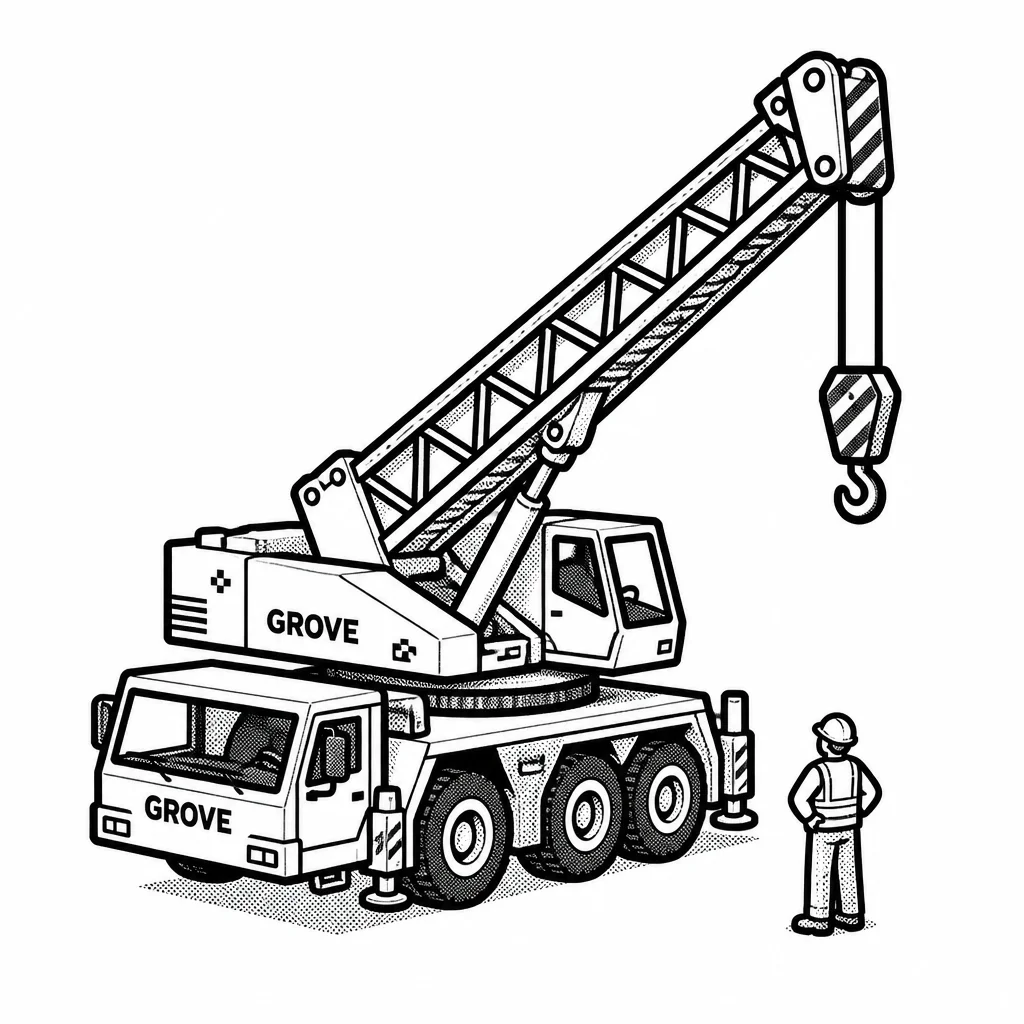
Manitowoc is a crane maker. It builds the tall tower cranes you see on city construction sites, the crawler cranes that lumber across job sites on tank-like tracks, and the mobile telescopic cranes that drive on public roads and then extend a long boom to lift things. It also makes boom trucks, which are essentially a crane mounted on a truck bed. The customers are the people who actually do the lifting: equipment rental companies, general contractors, and dealers who resell the machines.
The business is cyclical and lumpy. Cranes are expensive capital goods, so when construction is booming and interest rates are low, rental fleets expand and orders pile up. When building slows down, customers stop buying and Manitowoc's revenue falls hard. The company has lived through several of these swings, and it has also spent years digging out from a heavy debt load taken on during a big acquisition. It sold off its foodservice equipment business in 2016 to focus purely on cranes, which simplified the story but also removed a steadier cash generator. What makes Manitowoc strong is its brand and its installed base. Customers care about uptime and resale value, so a well-known crane with a deep parts and service network is easier to sell than a cheaper unknown one. Its main competitors are global players like Terex and Caterpillar, along with European and Chinese crane makers. Manitowoc's edge is reputation and dealer relationships; its vulnerability is that it sells big-ticket machines into a market that can turn quickly.
The company is headquartered in Milwaukee, Wisconsin, a city with a long manufacturing history. It spends on product development and manufacturing capacity, and it has worked to pay down debt and keep its balance sheet healthy through downturns. For investors, Manitowoc is essentially a bet on the construction cycle and on management's ability to manage through the bad years without running into trouble.
Saved answer · last researched 16 Nov 2026