Understand any stock in simple English
Enter a ticker to learn what the company does and how it makes money.
NFI Group Inc.
NFI Group builds buses and coaches — and sells the parts to keep them running — for transit agencies and bus operators across North America, the UK, Europe, and Asia Pacific.
NFI Group is a bus maker. If you ride a city bus in North America or the UK, there's a decent chance it was built by one of NFI's brands — New Flyer and MCI in North America, Alexander Dennis and Plaxton in the UK and Europe, and a growing presence in Asia Pacific. Transit agencies and private operators buy its buses, but the quiet profit engine is the aftermarket: NFI sells replacement parts and services for a fleet that's already on the road. A bus needs parts for decades after the original sale, so NFI keeps earning from vehicles it sold years ago. That steady parts stream is what makes the business more durable than a plain manufacturer.
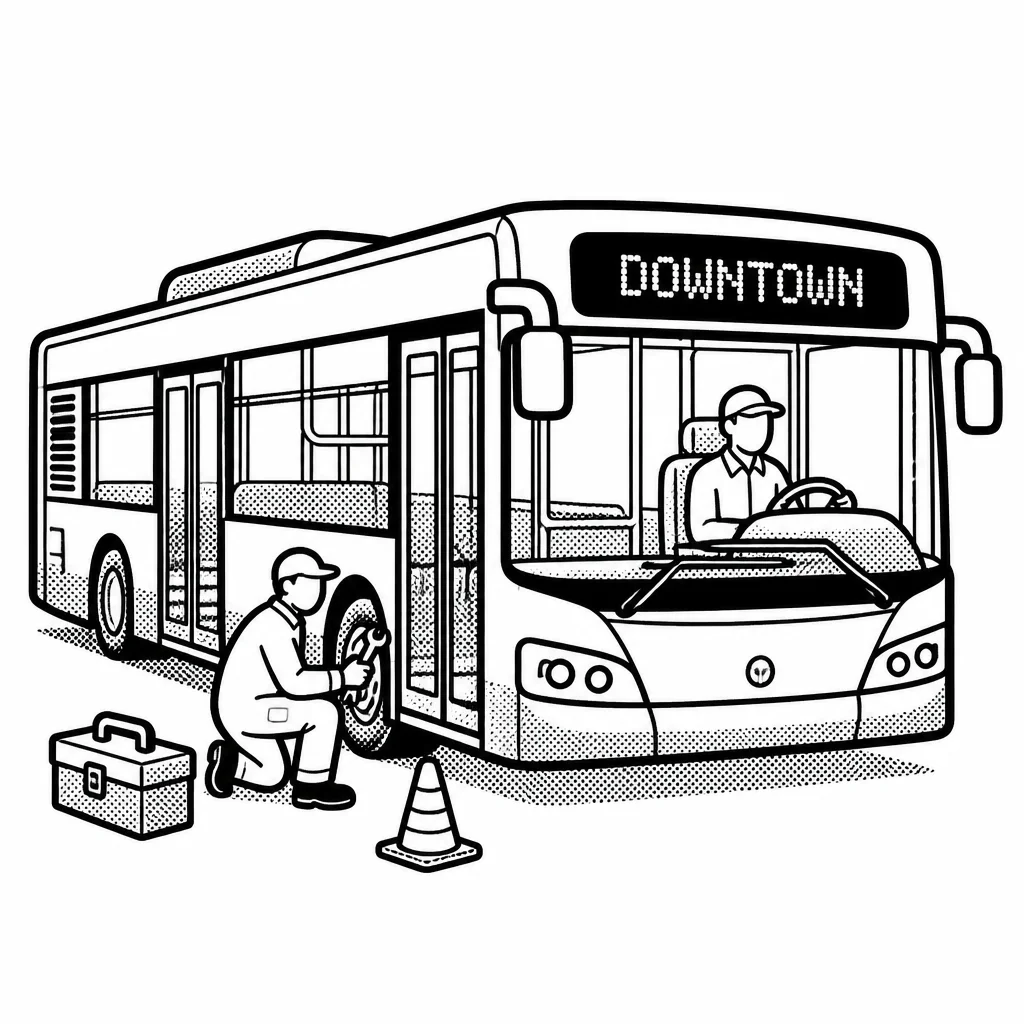
The bus business itself is lumpy and slow. Cities order buses in big batches through long, bureaucratic procurement processes, and when budgets tighten or a transit agency delays a fleet replacement, orders dry up. Building the actual bus is also thin-margin work — steel, batteries, and labor are expensive, and public buyers push hard on price. NFI's real competitive edge is scale and incumbency: once a city standardizes on New Flyer buses, it tends to keep buying that model and those parts for the life of the fleet. Rivals like Motor Coach Industries-style competitors, Daimler Truck and Volvo try to win the same urban contracts, so the pitch comes down to total cost over the bus's life, not sticker price. The big shift in the industry is electrification. City buses are one of the easiest vehicles to electrify — they run fixed routes and come home to a depot to charge — and transit agencies are under political pressure to go zero-emission. NFI has bet heavily on battery-electric and hydrogen fuel-cell buses, and its electric models are a growing share of deliveries. That shift is a genuine opportunity: a new electric bus comes with charging infrastructure, training, and more complex service contracts. But it's also a risk, because battery costs, supply-chain snags, and the drag of retooling factories have hit the company's finances hard in recent years.
NFI is a case study in why the boring part of a business matters. The company has carried a lot of debt from acquisitions — New Flyer, then Alexander Dennis, then a parts business — and when supply-chain disruptions and order delays hit, the debt became a heavy weight. NFI had to fix its balance sheet; it pulled back, raised money, and worked through losses. Its strategy is straightforward: keep building the buses cities want, keep selling parts to the fleets it created, and let the aftermarket's steady cash help pay down what it owes. The bet is that electrification grows the pie, and that scale keeps NFI near the front of it.
Saved answer · last researched 14 Nov 2026
BIG PICTURE
Only 17.6% of the buses NFI delivered last quarter were zero-emission
- 17.6% Zero-emission vehicles
- 82.4% Diesel, natural gas and hybrid vehicles
Electric buses get the headlines, but most of what NFI actually ships still runs on diesel, natural gas or a hybrid setup. Zero-emission models made up 17.6% of the 1,113 buses delivered in the third quarter of 2026. Transit agencies, the customers that pay NFI, are choosing conventional engines for now, which keeps orders coming but ties the company's electric future to how fast those fleets switch. Source: Yahoo Finance (NFI Q3 2026 earnings call), data from 2026
Timeline
A Small Winnipeg Bus Maker
In Winnipeg, Canada, a little company called Western Auto and Truck Body Works started building and selling buses, mostly in Western Canada. It later took the name Western Flyer Coach. That modest bus builder is the ancestor of the company we know today as NFI Group.
The Dutch Owner Who Gave the Name
After decades on its own, the company was bought by Den Oudsten, a bus maker from the Netherlands. The new owner renamed it New Flyer Industries, and that name stuck as the flagship brand for city buses.
NFI Group Goes Public
To sell shares to the public on the Toronto Stock Exchange, the owners created a parent company called NFI Group to hold New Flyer Industries. That is the moment NFI Group itself was born as a public company.
Buying the Rivals' Leftovers
When rival bus maker Orion quit the North American market, New Flyer bought its spare-parts business rather than let that steady income slip away. It also reached a deal to buy another competitor, NABI, and turned NABI's Alabama factory into a fourth place to build its Xcelsior buses. In plain terms, when competitors stumbled, New Flyer picked up their customers and their factories.
New Flyer Buys Motor Coach Industries
New Flyer struck a deal to buy Motor Coach Industries, a maker of motorcoaches, for about $459 million, and the deal closed that December. This pushed the company beyond city transit buses into the world of long-distance coaches.
NFI Buys Alexander Dennis
NFI Group then bought Alexander Dennis, a British bus and coach maker that also owned Plaxton, from Souter Investments. Suddenly NFI was a global manufacturer with leading positions in the UK market, not just a North American transit bus company.
New Flyer and MCI Become One
COVID-19 and global supply chain troubles hit the business hard, and demand for motorcoaches fell especially sharply. NFI responded by folding New Flyer and MCI into a single operating unit to streamline the company and strengthen engineering, supply and product development.
The Worst Year
The company's 2022 financial year was its worst ever, with a net loss of about $276 million and a negative operating margin. To shore up its balance sheet, it nearly doubled its shares outstanding. Put simply, it sold a lot of new ownership stakes to raise cash and survive.
A New CEO Takes Over
Longtime CEO Paul Soubry retired on New Year's Day, and former Eaton aerospace executive John Sapp took the job the same day. Soubry had led NFI for 16 years, overseeing deals like MCI and the push into battery-electric buses, and he left behind a $13 billion backlog of orders.
Record Results and a Battery Settlement
NFI reported record fourth-quarter and full-year 2025 results, with return on invested capital jumping to about 11% from roughly 6% a year earlier, helped by a $114.5 million net battery settlement recovery. Management guided 2026 revenue of $3.9 to $4.2 billion and adjusted EBITDA of $370 to $410 million, expecting revenue, profit, free cash flow and returns to keep improving.
MCI Stands on Its Own Again
NFI split MCI back out as its own dedicated business, appointing Rob Marion as President of MCI. MCI had recovered strongly, with new vehicle models, harmonized production lines and an expanded service offering. The full circle was complete: the coach brand folded into New Flyer in 2020 was now standing on its own again.