Understand any stock in simple English
Enter a ticker to learn what the company does and how it makes money.
Construcciones y Auxiliar de Ferrocarriles, S.A.
CAF builds trains, trams, buses, and railway equipment and systems for transit operators around the world.
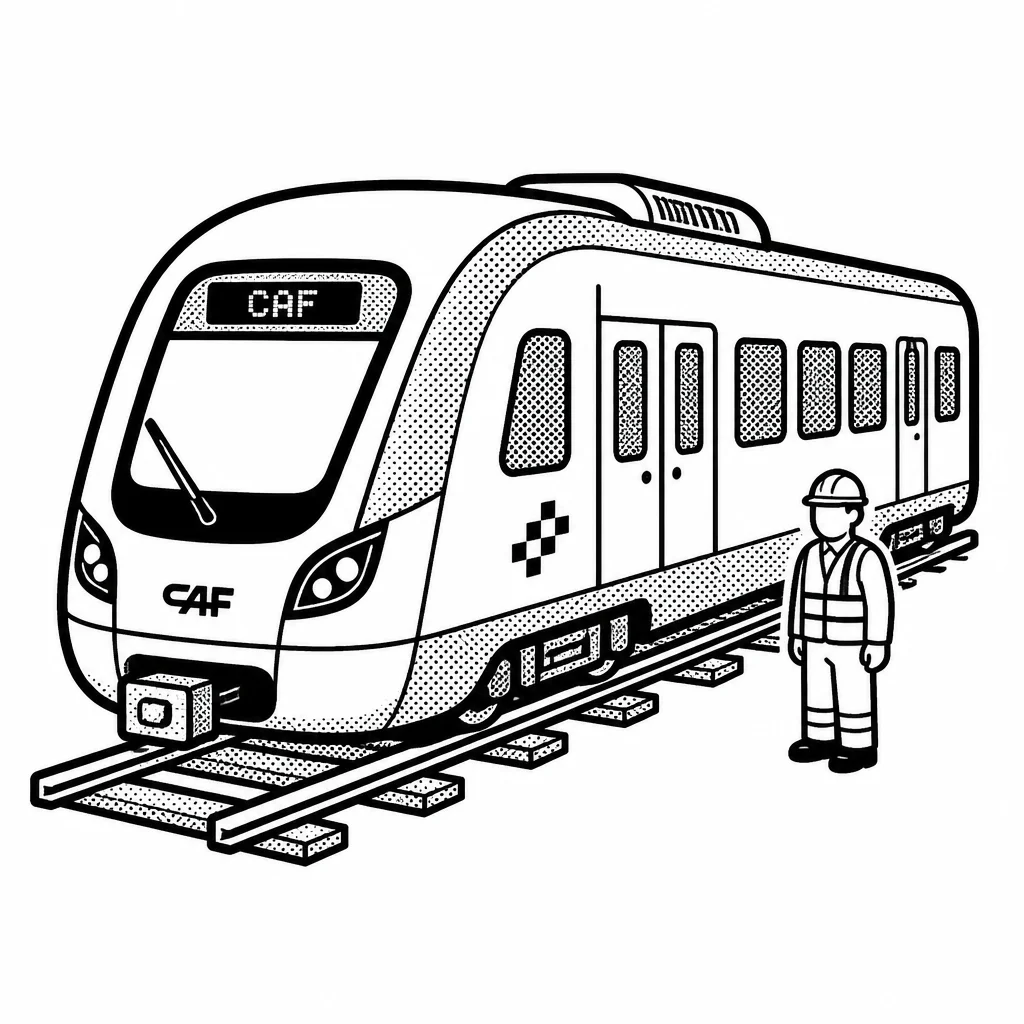
CAF makes the trains and trams that move people around cities and countries. It is a Spanish industrial company that designs and builds railway vehicles — metro cars, light rail trams, regional and long-distance trains, and locomotives — along with the signaling, onboard electronics, and equipment that keep them running. It also builds buses through its Solaris brand. Its customers are transit authorities, national railways, and private operators who need rolling stock and the systems around it.
The money comes from winning contracts, often through competitive public tenders, to supply vehicles and then to maintain them over many years. A single order can run into hundreds of millions of euros and be delivered over several years, which makes the business lumpy: revenue depends on which big contracts are being built and delivered in a given period. That long-term maintenance and service work is valuable because it produces steadier, recurring income after the initial sale. CAF competes with global giants like Alstom and Siemens, and with CRRC on price, so its edge tends to come from engineering, reliability, and local manufacturing commitments rather than being the cheapest bidder. CAF is headquartered in Beasain, in Spain's Basque Country, a region with a long industrial and railway heritage, and it is listed on the Madrid Stock Exchange. It has expanded internationally, winning contracts across Europe, the Americas, and beyond, and its Solaris bus unit gave it a broader foothold in public transport. The company is partly owned by a foundation tied to the Basque region, which helps keep decision-making anchored locally.
The business is capital-intensive and cyclical. Factory capacity, engineering talent, and the timing of deliveries all shape profits, and a delayed or cancelled contract can hurt. Still, the long order backlog gives visibility into future revenue, and the shift toward cleaner public transport in many cities is a tailwind. For investors, CAF is a bet on global spending on rail and urban transit — a steadier industrial story than a fast-growth tech stock, with the swings that come from big, slow-moving infrastructure contracts.
Saved answer · last researched 15 Nov 2026