Understand any stock in simple English
Enter a ticker to learn what the company does and how it makes money.
Adaptimmune Therapeutics plc
Adaptimmune develops engineered T-cell therapies that train a patient's own immune cells to attack solid tumors.
Adaptimmune is a clinical-stage biotech company that engineers a patient's own T cells — the immune system's hunter-killer cells — so they can recognize and attack solid tumors. Its lead technology, called TCR T-cell therapy, takes a patient's T cells, reprograms them in the lab to spot a specific marker on cancer cells, and infuses them back. The company's most advanced program, afamitresgene autoleucel (branded Tecelra), targets a protein called MAGE-A4 found on certain solid tumors, and it won FDA approval in 2024 for synovial sarcoma, a rare cancer of the soft tissue.
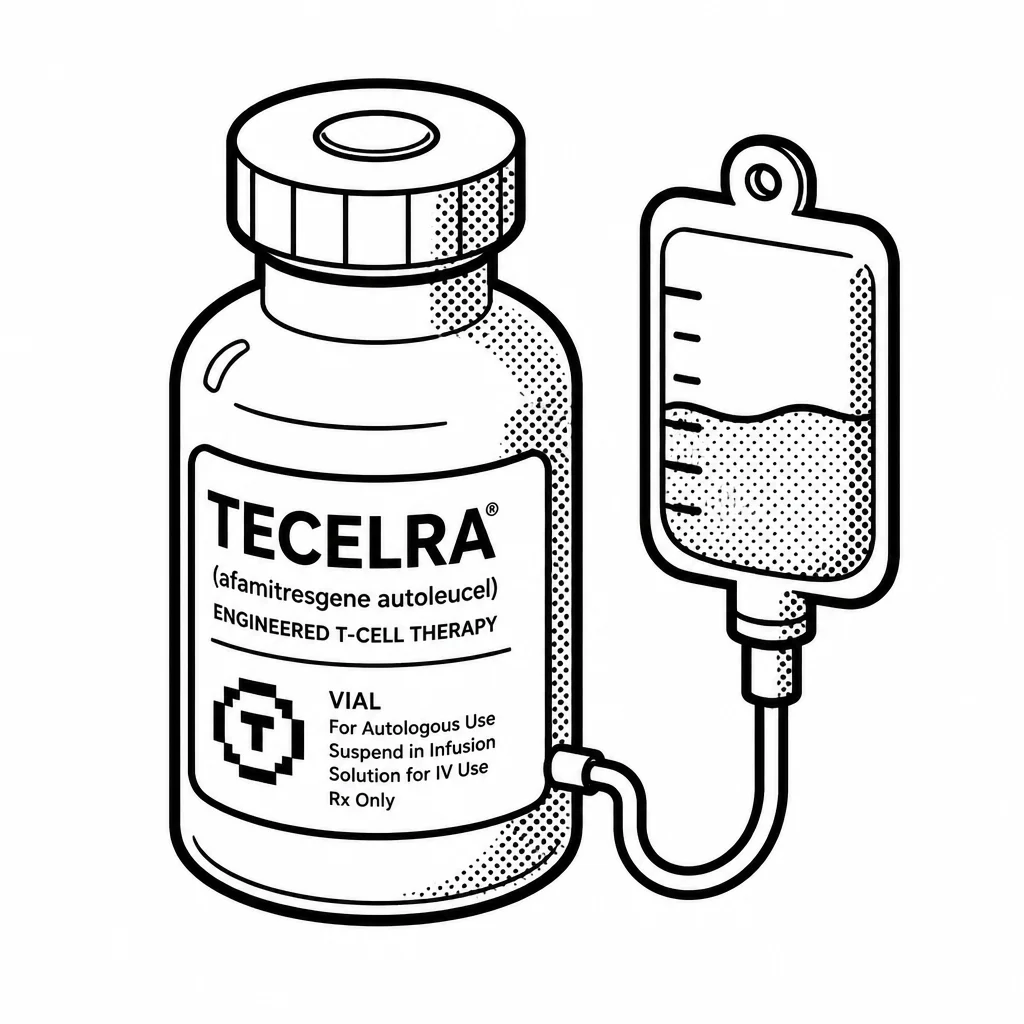
That approval matters because it made Tecelra the first engineered T-cell therapy approved for a solid tumor — a big deal, since CAR-T therapies (the better-known engineered T-cell approach, sold by companies like Novartis and Gilead) have mostly conquered blood cancers, not solid tumors. Adaptimmune earns money today mainly by selling Tecelra in the US, plus milestone and collaboration payments from partners. It has a long-standing alliance with Astellas on other TCR programs, and it has also been developing a pipeline aimed at cancers driven by the NY-ESO and other cancer-testis antigens. The business is expensive and risky. Engineering a custom therapy for each patient means complex manufacturing, and Adaptimmune has burned through cash for years while building that capability. In 2023 it acquired TCR² Therapeutics to bulk up its pipeline, and it has repeatedly restructured and cut costs to stretch its runway. The core bet is that a handful of approved solid-tumor cell therapies can eventually pay for the years of research it took to get there.
Its edge is deep expertise in T-cell receptor engineering and a manufacturing footprint built for it; its vulnerability is that it competes against much larger players with deeper pockets, and commercial uptake of a niche sarcoma therapy alone won't cover its costs. Investors are essentially wagering on whether Adaptimmune's pipeline can produce more approvals before the money runs out — a classic high-risk, high-reward biotech story.
Saved answer · last researched 15 Nov 2026
BIG PICTURE
Adaptimmune's stock swings 23.6% in an average week, more than twice the biotech norm
- 23.6% Adaptimmune average weekly price swing
- 76.4% Biotech industry average weekly swing
Adaptimmune's share price moves about 23.6% in a typical week, compared with 9.6% for biotech stocks generally. For a small company whose main product, a cell therapy for a rare sarcoma, was sold to US WorldMeds, the wild swings reflect how little separates hope from doubt when a few trial results decide the story. Source: Simply Wall Street, data from 2026
Timeline
Oxford Spin-Out Starts Adaptimmune
Adaptimmune began as a spin-out of MediGene's UK research arm, rooted in science from the University of Oxford, and set up shop in Oxfordshire with operations in Philadelphia. James Noble co-founded the company and led it as CEO for more than a decade. Its big idea was a platform called SPEAR: take a patient's own T-cells, the immune system's fighters, and engineer them to go after solid tumors. That was the mission, and it was a hard one.
Adaptimmune Goes Public on Nasdaq
After reorganizing into a holding company called Adaptimmune Therapeutics plc, the company listed on Nasdaq and raised a large sum to push its pipeline forward. Going public handed it the kind of money that biotech dreams are built on, and investors were happy to supply it.
GSK Buys Into the NY-ESO Program
GSK, one of the biggest drugmakers in the world, paid extra for exclusive rights to develop and promote Adaptimmune's NY-ESO program across several cancers, from synovial sarcoma to multiple myeloma. A major pharma partner putting real money behind the science made Adaptimmune look like a star.
Afami-cel Timeline Slips
The company told investors its lead therapy, afami-cel, would be filed and then approved on a tight schedule. It wasn't. Disappointing results on how well it worked and how tolerable its side effects were wore down patience, and the stock collapsed from over $20 a share to under $2.
Partners Walk Away
Then the validation disappeared. GSK handed back the rights to the NY-ESO program and a preclinical program. Astellas ended its collaboration, and Genentech exited its deal too. Three partners leaving in one stretch left Adaptimmune short on outside backing and money.
Tecelra Wins FDA Approval
In August, the FDA granted accelerated approval to Tecelra, also known as afami-cel, for synovial sarcoma. It became the first engineered T-cell therapy ever approved for a solid tumor, and the first new treatment for this sarcoma in over a decade, with 43% of patients responding. The science that had been doubted had reached the finish line.
Adaptimmune Sells Tecelra
Approval did not fix the balance sheet. Adaptimmune agreed to sell Tecelra, lete-cel, afami-cel and uza-cel to US WorldMeds for $55 million in cash plus up to $30 million more if milestones were met. The point was to address the company's finances and keep patients able to get Tecelra. The stock fell 71%, and the company planned to cut about 62% of its workforce.
A Smaller Adaptimmune Delists
Christopher Hill took over as CEO and CFO, succeeding Adrian Rawcliffe, as part of the restructuring. Six directors resigned, shrinking the board to three, with Lawrence Alleva as Chairman. The company voluntarily delisted from Nasdaq and moved to the OTC Pink market, leaving it focused on its PRAME and CD70 programs. The star biotech had become a much smaller company betting on what came next.