Understand any stock in simple English
Enter a ticker to learn what the company does and how it makes money.
Fate Therapeutics, Inc.
Fate Therapeutics develops engineered cell therapies that use natural killer cells and T cells to fight cancer and immune disorders.
Fate Therapeutics is a clinical-stage biotech company that engineers a patient's own immune cells — or, more ambitiously, off-the-shelf versions made from donor cells — into living drugs for cancer and immune disorders. Its focus is on natural killer (NK) cells and T cells, two types of white blood cells that normally hunt down infected or cancerous cells. Fate takes cells, reprograms them with genetic tweaks, and turns them into therapies designed to recognize and attack disease.
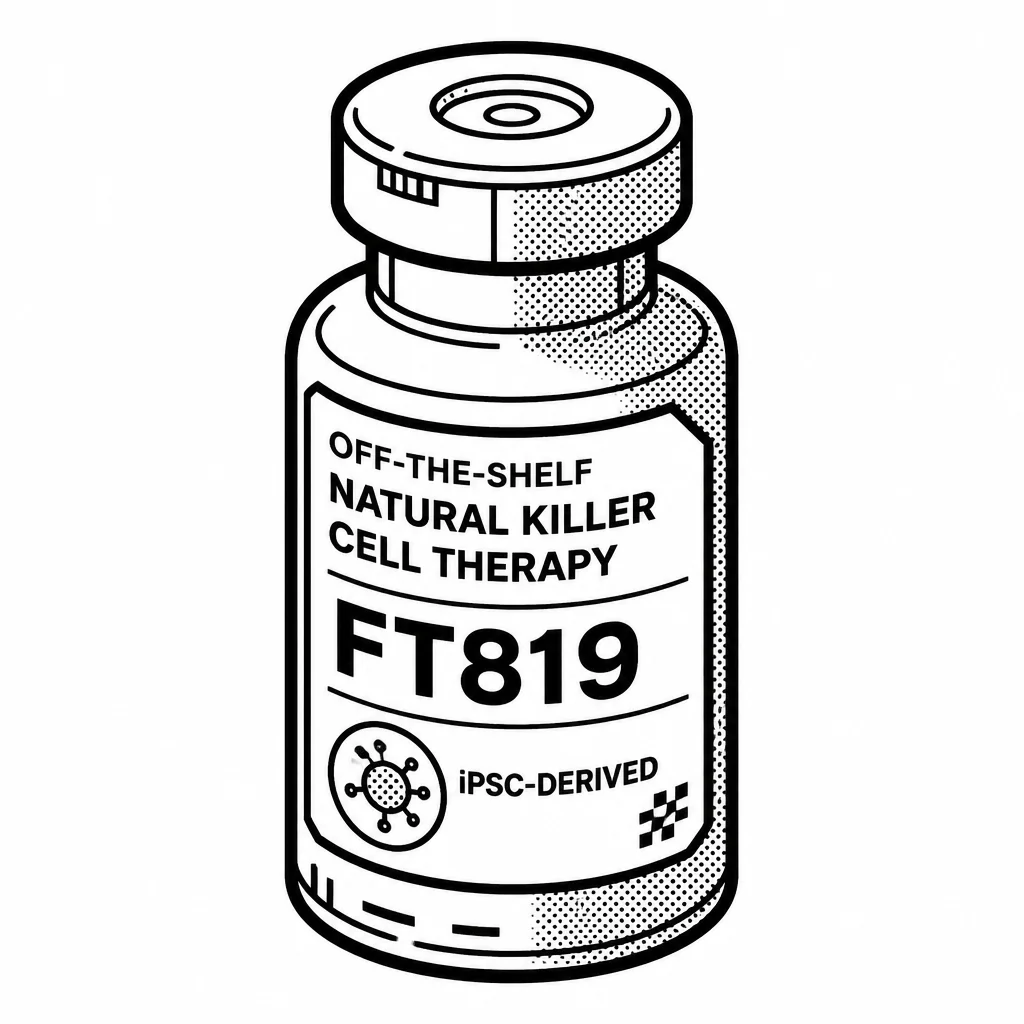
The core idea is what the industry calls "off-the-shelf" cell therapy. Today's approved engineered-cell treatments, like CAR-T therapies, are made from each patient's own cells — an expensive, slow, one-patient-at-a-time process. Fate's platform instead starts from engineered master cell lines, which it expands into many doses from a single source. If that works, patients could get treatment faster and at lower cost, more like a normal drug than a custom-built one. Fate's pipeline includes programs built on its induced pluripotent stem cell (iPSC) platform, which lets it produce NK cells and T cells at scale. Its most advanced efforts have been in oncology, with earlier-stage work in immune and autoimmune conditions. The company has partnered with larger drugmakers — including Janssen (Johnson & Johnson's pharmaceutical arm) and Ono Pharmaceutical — to help fund and advance parts of its pipeline, a common way for cash-hungry biotechs to share risk.
Fate is not yet a commercial company: it has no approved products and earns money mainly through partnerships and collaboration revenue rather than product sales. That makes it a high-risk, high-reward bet — the kind of story where a single clinical trial result can move the stock dramatically. Its competition comes from other cell-therapy players and from the established autologous CAR-T makers, and its biggest challenge is proving that off-the-shelf cells work safely and reliably in people.
Saved answer · last researched 16 Nov 2026