Understand any stock in simple English
Enter a ticker to learn what the company does and how it makes money.
Sun Kwang Co., Ltd.
Sun Kwang runs port terminals and warehouses in South Korea, loading and unloading ships and moving cargo for importers and exporters.
Sun Kwang is a South Korean port services company. When a huge cargo ship arrives at a port, someone has to get the containers and bulk grain off the ship quickly and move them onto trucks or into storage. Sun Kwang does that work, and it also runs the terminals and warehouses where the cargo waits.
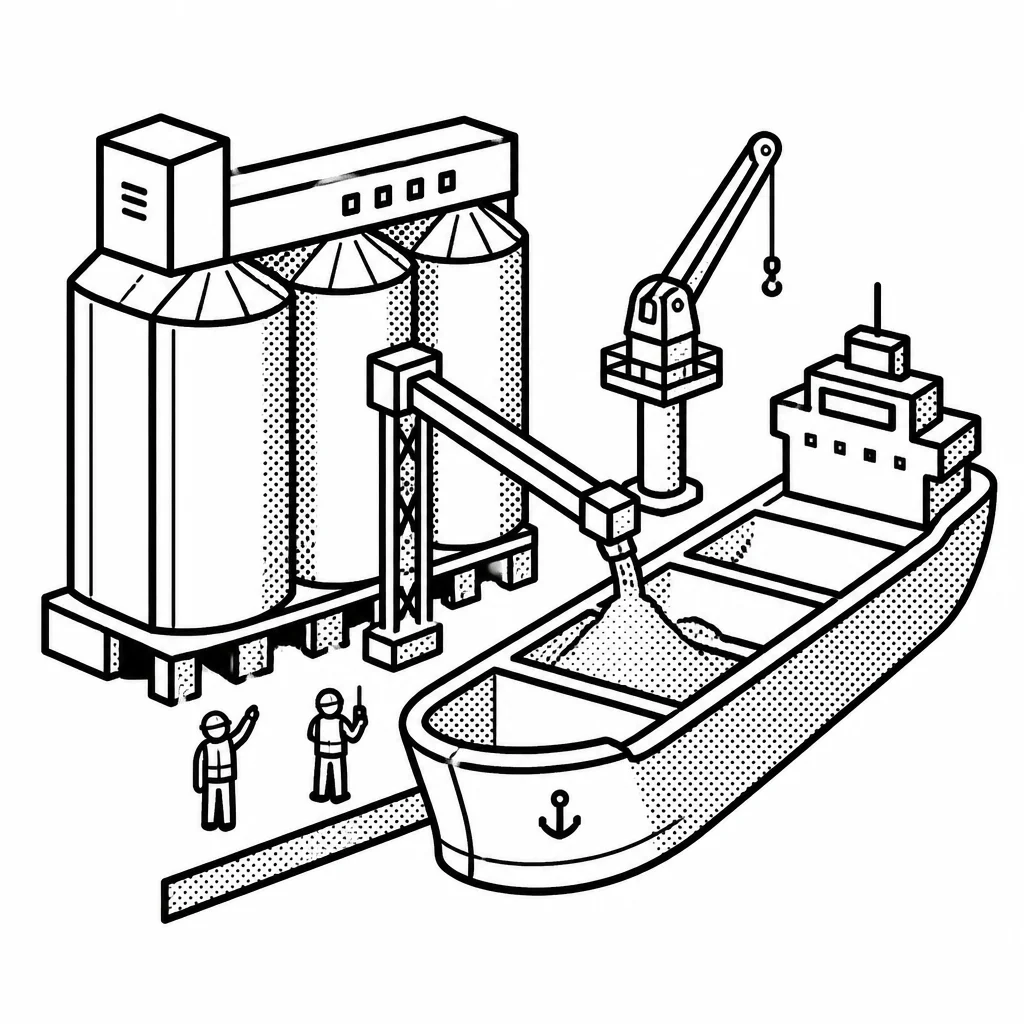
The company's main jobs are stevedoring (the loading and unloading of ships), running container and grain terminals, operating warehouses, and trucking cargo inland. Its customers are the shipping lines, trading firms and manufacturers that need Korean ports to work smoothly. They choose a terminal operator based on location, speed and reliability, because a ship sitting idle at the dock burns money every hour. Its terminals sit in South Korea's busy port areas, and the name "Sun Kwang" has been part of Korean shipping and port work for decades. Port handling is a tough, capital-heavy business. You pay for cranes, berths and land, and then you earn fees per box or per ton moved. That makes revenue sensitive to shipping volumes and global trade, and the business is fairly steady in good years but not a growth rocket. Grain terminals add some diversification, since food imports keep moving even when other trade slows.
The main thing to understand is that Sun Kwang is infrastructure hired by other businesses — a toll booth for cargo rather than a brand consumers know. Investors should watch Korean trade volumes and port competition, because those drive how much cargo flows through its docks each year.
Saved answer · last researched 14 Nov 2026
Timeline
A Port Business Is Born in Incheon
In 1948, a new company opened for business at Incheon port in South Korea, and its job was simple: move cargo on and off ships. That work is called stevedoring, and it is unglamorous, physical, and absolutely essential to trade. The company was built around this single service, and it is still the core of what it does today.
Sun Kwang Goes Public
Fifty years later, the company listed its shares on the KOSDAQ exchange, which meant outside investors could now own a piece of it and the company could raise money from the public. That public-market capital gave it fuel to grow beyond its home port.
Gunsan Port and a Quality Stamp
Soon after, Sun Kwang took on a big new job: running a pier at Gunsan Port, which pushed its operations beyond Incheon for the first time. It also earned an international quality certification, a signal to customers that its work met a recognized standard.
Grain and Containers
Sun Kwang opened a grain terminal at Gunsan with huge storage silos, meaning it could hold bulk grain for customers, not just move it. That same year it opened a container terminal at Incheon South Port, adding a whole new kind of cargo to its business.
More Capacity, More Piers
The company kept expanding: it opened a general cargo pier at Incheon North Port and doubled the storage at its Gunsan grain terminal. Each addition made it harder for competitors to match its grip on the region's port traffic.
A New Terminal, and a Big Move
Sun Kwang opened a new container terminal at Incheon's Songdo New Port through a subsidiary. Then it did something bold: it shut down its older container and general cargo operations and shifted everything to the new terminal. The move consolidated its business in one modern place, but it also meant giving up familiar ground.
Two CEOs Share the Chair
The company changed how it was run, naming two joint chief executives to lead it together. Sharing the top job can bring different strengths to the table, but it also means two people have to agree on the direction.
A Stock Crash Hits Sun Kwang
In 2023, Sun Kwang's shares were caught in a market crisis tied to forced selling at a securities firm, and the stock hit repeated lower limits, the daily floor. The company itself had not done anything wrong, but its share price was dragged down with a handful of others. It was a harsh reminder that being public cuts both ways.
A New Largest Shareholder
Two years later, a new investor named Hui Hong-yuan and related parties became the company's largest shareholder after putting fresh money in through a rights issue. The investment was framed as management participation, meaning the new backer intended to help steer the business, not just own a slice.
A Change at the Top
Around the same time, one of the co-CEOs stepped down and a new chief executive, Sang-Pil Lee, took the job. Leadership changes often follow a shift in ownership, and this one came as the company's new backer settled in.
Buying Into Incheon Global Container Terminal
Late that year, Sun Kwang agreed to buy a stake in Incheon Global Container Terminal, deepening its interests at the port that has been its home since the beginning. The deal was a bet that container handling at Incheon would keep paying off.
The Founding Family Regroups
The founding family reorganized its stake into a holding company, keeping control in-house rather than selling out. And the numbers were turning: profit in just the last four quarters jumped past what the company made in all of the prior year, while its debt load fell. After decades of building piers and terminals, the business was finally paying off in a big way.