Understand any stock in simple English
Enter a ticker to learn what the company does and how it makes money.
COSCO SHIPPING Ports Limited
COSCO SHIPPING Ports operates container terminals in China and around the world, loading and unloading ships for shipping lines that pay it fees.
COSCO SHIPPING Ports runs the docks where the world's goods come ashore. When a giant container ship pulls into port, somebody has to lift thousands of steel boxes off that ship and onto trucks or trains, and then load new boxes back on. That somebody is a port operator, and this company does it at terminals across China and in places as far apart as Greece, Spain, Peru, and Abu Dhabi.
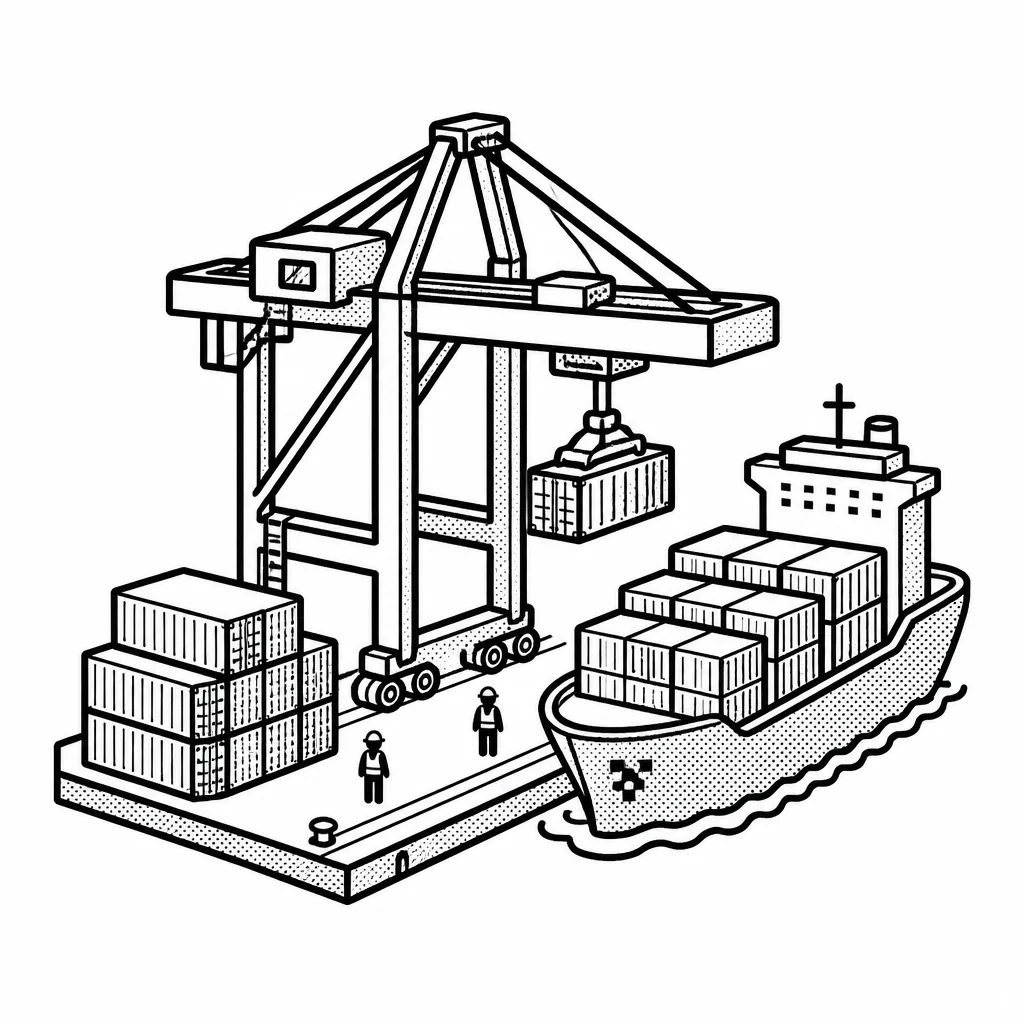
Its main customers are container shipping lines, including its own parent, China's COSCO Shipping group, and the big global carriers like Maersk and CMA CGM. Those carriers pay the port for each box it moves, plus fees for docking, storage, and other services. A port is a bit like a toll booth for global trade: whoever controls the best locations collects a small fee on an enormous flow of goods, and the fees stack up fast because the boxes never stop coming. The business has two engines. One is terminals the company fully controls and runs itself. The other is stakes in terminals run by other people, which is why it owns pieces of ports from Singapore to Rotterdam without operating them day to day. Shipping is a boom-and-bust industry, but ports tend to be steadier and more profitable, because a terminal in a good harbor is expensive to build and hard to replace, so competition is limited. One big question hangs over the company: it is controlled by COSCO Shipping, a Chinese state-owned giant, and it also does business in the United States through terminals there. That mix of Chinese ownership and American operations has drawn political scrutiny, and it is the kind of risk that can matter more than any single new terminal. The company pays a steady dividend and has been buying and building terminals to grow. Boxes move, fees get collected, and cash comes in — that is the whole machine.
This is a business to watch because it sits at the crossroads of everything: when trade grows, more boxes flow, and the company collects more fees. When trade slows or tariffs bite, the docks get quieter. It is a straightforward, toll-collecting business with a very political edge.
Saved answer · last researched 15 Nov 2026