Understand any stock in simple English
Enter a ticker to learn what the company does and how it makes money.
HMM Co., Ltd.
HMM is a shipping company that moves containers and bulk cargo across the world's oceans on huge ships.
HMM is one of the world's big ocean shipping companies. It owns and operates giant vessels that carry the stuff of global trade — mostly steel boxes packed with electronics, clothes, car parts and frozen food — between ports in Asia, Europe and the Americas. Shippers pay HMM a freight rate for each container it moves, and that rate is the heart of the business.
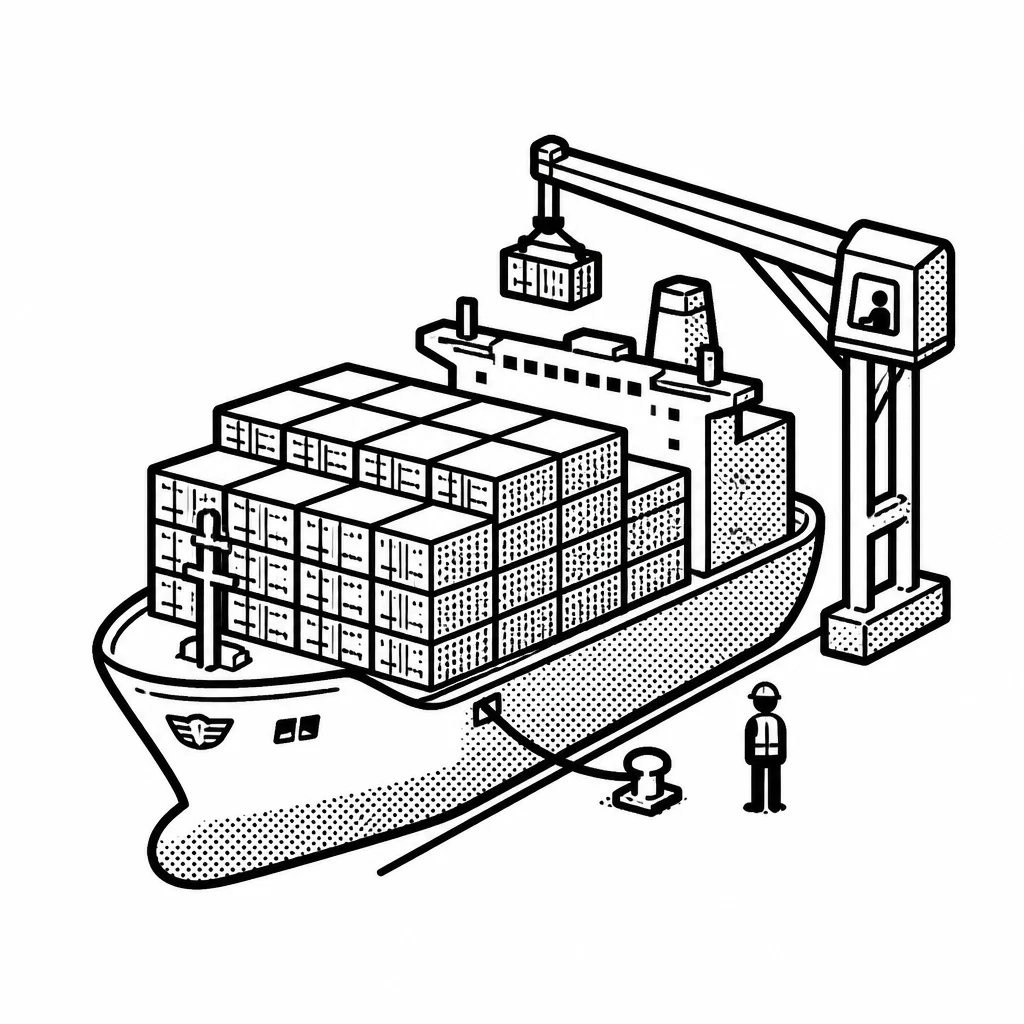
The company runs two main kinds of ships. Its container line is the famous part: enormous box boats that plug into a network of routes, like buses on a schedule, calling at the same ports week after week. Alongside that, HMM operates bulk carriers that haul coal, iron ore and grain, plus tankers and gas carriers for oil, LNG and LPG. It also runs terminal operations, loading and unloading at the docks, which helps it control the whole journey. Shipping is a brutally cyclical business, and HMM's story shows it. Freight rates spiked during the pandemic as the world scrambled for goods, and HMM's profits exploded; then rates collapsed back toward normal and the boom faded. The company also spent years under creditor-led restructuring after nearly going bankrupt, and it was renamed HMM from Hyundai Merchant Marine in 2020. Its biggest shareholders have been state-linked banks, and the long-running question hanging over the stock is who will eventually buy that stake.
What makes HMM strong is scale and a modern fleet — big ships lower the cost per container — plus membership in the global alliances that let carriers share space on each other's vessels. What makes it vulnerable is that it sells a nearly identical product to rivals like Maersk, COSCO and Evergreen, so it has almost no pricing power; the market sets the rate. Add fuel costs and fuel rules, port congestion, and the constant threat of oversupply when everyone orders too many ships at once, and you get a business that can swing from huge profits to losses depending on the tide.
Saved answer · last researched 12 Nov 2026