Understand any stock in simple English
Enter a ticker to learn what the company does and how it makes money.
Zepz Group
Zepz runs money-transfer apps that let people working abroad send cash home to family in other countries.
Zepz is a money-transfer business built for the people who leave home to work and then send money back. Its two main apps are WorldRemit and Sendwave, and together they let someone in London, Toronto, or Washington zap cash to a relative in Nairobi, Manila, or Accra in minutes instead of waiting days at a bank counter. Customers pay a small fee plus whatever exchange-rate margin the company builds in, and Zepz makes its money on both.
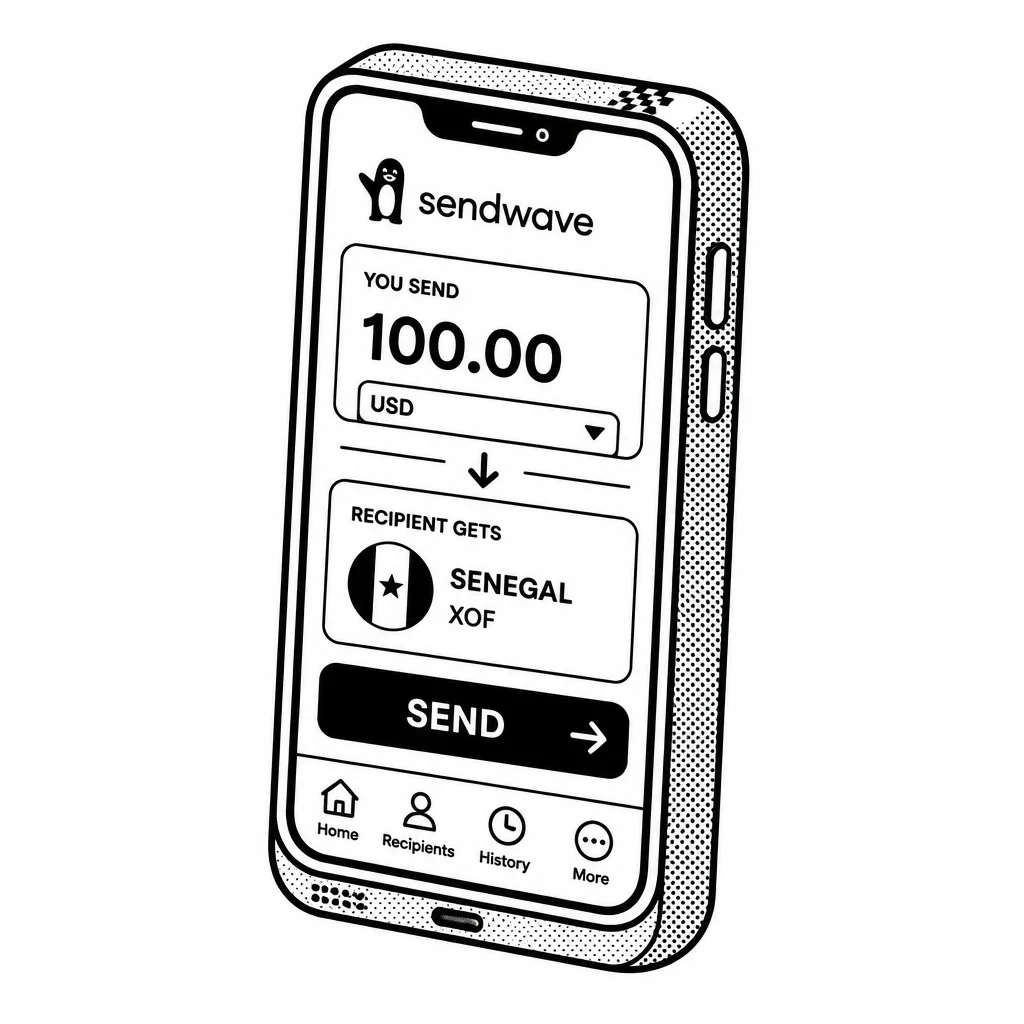
The mechanics are simple once you strip it down. Zepz doesn't move physical cash across borders itself; it runs the software and the network of local partners that make the handoff happen. On one end, a customer pays in by card, bank transfer, or mobile money. On the other end, the recipient collects through a bank deposit, a mobile wallet like M-Pesa, or a local cash pickup agent. Zepz stitches those two halves together and keeps a slice of every transfer — a tenth of a cent per dollar is roughly how thin the margin gets once volume piles up. Multiply it by millions of migrant workers sending small amounts every month and you get a real business: the company reported revenue north of $600 million in 2023, growing fast. What makes it tough to beat is the plumbing. Each country has its own licences, banking rules, and payout partners, and wiring that up takes years. Zepz built it corridor by corridor, starting with WorldRemit in 2010 and then bolting on Sendwave in 2020 to cover the busy Africa-to-America routes. Its biggest rivals are the old guard — Western Union and MoneyGram — plus newer digital challengers like Remitly and Wise, all fighting over the same diaspora dollar.
The real vulnerability is that remittance pricing is getting squeezed. Wise and others have pushed fees down and made exchange rates transparent, so customers shop around more than they used to. Zepz has leaned into scale and speed to defend its turf, but it is also a private, venture-backed company that has raised a lot of money and needs to prove it can turn rapid growth into steady profit. For now it is one of the biggest pure-play remittance firms in the world, handling billions of dollars a year for people whose livelihoods depend on getting cash home quickly and cheaply.
Saved answer · last researched 10 Nov 2026
BIG PICTURE
Nearly half of Zepz transfers are under $50
- 45.3% Transfers under $50
- 54.7% Transfers of $50 or more
Most of what Zepz moves is pocket money by global banking standards. Almost half of all transfers on its WorldRemit and Sendwave apps are below $50, according to its own review of 5.5 million senders. These are small, regular payments for food, school fees or a phone top-up, not one-off rescues. Zepz earns a fee on each of those tiny transfers, so its business depends on volume and on keeping costs low. Source: Zepz, More Than a Transfer report (via PR Newswire), data from 2026
Timeline
A Refugee Builds a Cheaper Way to Send Money
Ismail Ahmed knew from personal experience how much it cost to send money home to East Africa, and the fees frustrated him. So in London he started WorldRemit with Catherine Wines and Richard Igoe, a digital alternative to the old-fashioned money transfer agents. The idea was simple: move money online, charge less, and make life easier for people sending small amounts to family far away.
WorldRemit Becomes Zepz
After buying Sendwave, the company renamed itself Zepz, keeping WorldRemit and Sendwave as separate brands under one roof. It was a way of saying the business was now bigger than a single app.
Zepz Buys Sendwave
WorldRemit paid $500 million for Sendwave, a Boston-based platform for cross-border payments. The deal added a second popular brand and set the stage for the group's new name a year later.
A $5 Billion Valuation
Zepz raised $292 million from investors at a valuation of $5 billion, a huge vote of confidence. With that money and momentum, the company set its sights on going public.
The IPO Is Called Off
Zepz had hoped to list at a valuation as high as $6 billion, but the plan fell apart amid accounting problems and senior staff leaving. Instead of chasing the stock market, the company turned to what it could control: reaching profitability for the first time.
Cuts Despite Profitability
Even after claiming it was fully profitable, Zepz laid off more than a quarter of its staff in early 2023, and more cuts followed later that year. The message was uncomfortable: being profitable on paper did not mean the company could stop shrinking.
Fresh Money to Grow Beyond Africa
With the IPO on hold, Zepz raised $267 million led by Accel to push into markets beyond Africa. The money gave it room to grow again after a painful stretch of cuts.
A Wallet Built on Solana
Zepz launched the Sendwave Wallet in more than 100 countries, built on the Solana blockchain and using USDC stablecoins. Customers could now store, send, spend and save money, not just fire off a one-time transfer. It was the first real step past remittances.
Zepz Buys Pomelo
Zepz acquired Pomelo International, a San Francisco fintech offering credit cards for remittances, focused on the Philippines. The deal showed the company wanted to be more than a money-transfer app: it wanted to sell cards and credit to cross-border communities too.
The CEO Steps Down
CEO Mark Lenhard stepped down, with CFO Barrie Morris taking over as interim chief while the board looked for a permanent replacement. The change came after a strong 2025, with over $17 billion transferred and cash-flow profitability, as the company tried to shift from tidying itself up to speeding ahead.