Understand any stock in simple English
Enter a ticker to learn what the company does and how it makes money.
YKK Corporation
YKK makes zippers, buttons, and other fastening products that hold clothing and gear together, and it also sells windows and building materials.
YKK makes the small thing you almost never think about: the zipper. If you check the pull tab on your jacket, jeans, or backpack, there's a decent chance it says YKK. The company is one of the world's biggest makers of zippers and other fastening products — buttons, snaps, and plastic buckles — and it sells them to clothing brands, luggage makers, and outdoor gear companies rather than to you directly.
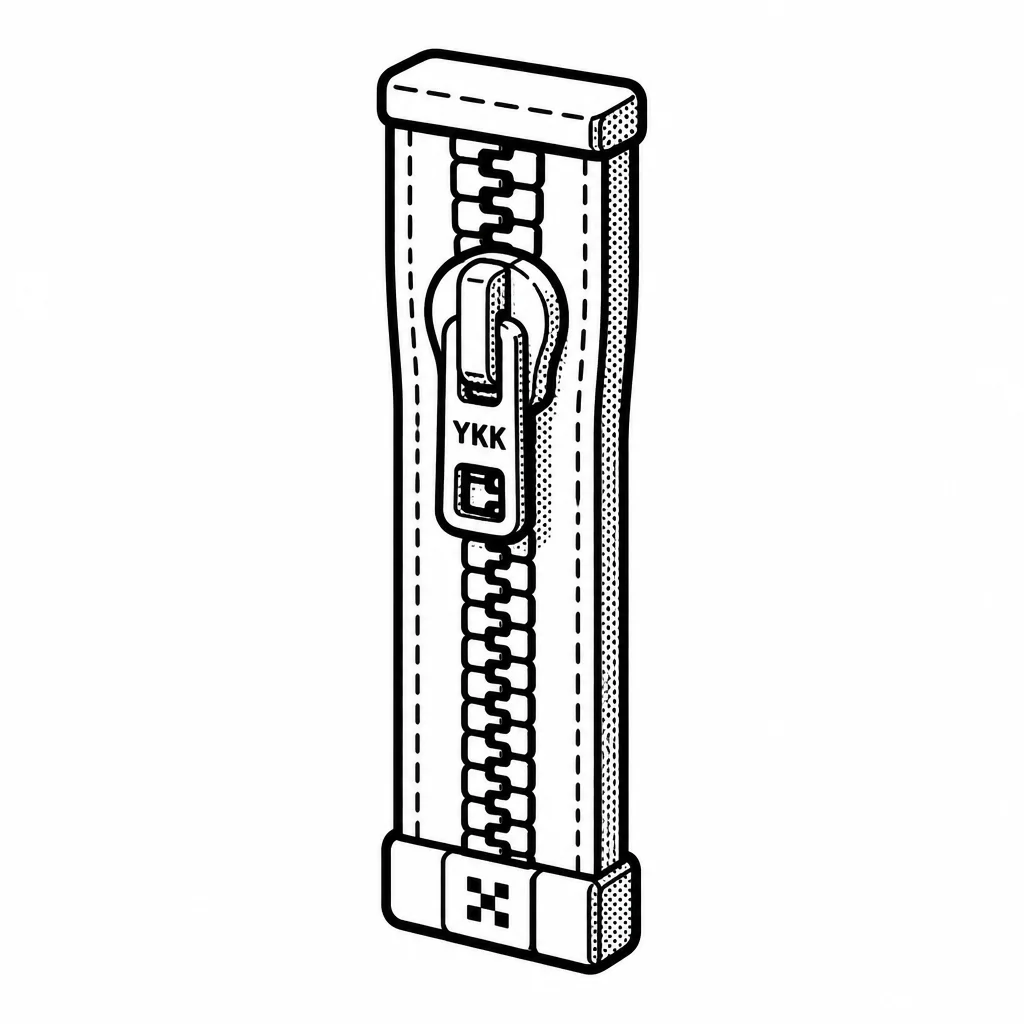
The zipper business is a quiet, steady one. YKK wins by being everywhere at once: it runs factories in dozens of countries so a garment factory in Vietnam or Bangladesh can get zippers fast, in the right color, and at a reliable quality. Brands stick with it because a broken zipper ruins a jacket, and switching suppliers means retooling and risking defects. That reliability, built over decades, is the real moat — YKK has been the default zipper for so long that many shoppers treat the letters on the pull tab as a sign of quality. There's a second, less famous half of YKK. The company also makes architectural products — aluminum window frames, doors, and building materials — sold mainly in Japan through its APW division. So the same company that fastens your coat also helps hold up apartment buildings and office towers. The group is privately held and run with a long-term, almost old-fashioned philosophy: its famous "Cycle of Goodness" says no one prospers without rendering benefit to others, and it treats quality and employee stability as ends in themselves rather than just profit levers.
YKK is a reminder that enormous businesses can hide in plain sight. It doesn't advertise to consumers and you'll never see a YKK store, but billions of zippers a year flow through a supply chain most people never notice. The risks are real — apparel production shifts between countries, and cheaper rivals chase the same customers — but the pull tab on your jacket tells you the company has stayed on top for a very long time.
Saved answer · last researched 10 Nov 2026
BIG PICTURE
More than half of the zippers YKK sells worldwide are now made from recycled material
- 56% Recycled Natulon zippers
- 44% Other zippers
In its FY2025 report, YKK said 56 percent of the zippers it sells around the world by volume come from its Natulon line, which uses recycled polyester tape often made from plastic bottles. In FY2019 that line was 3 percent. Zippers are the core of the business, so the material behind most of them has quietly changed. Source: WWD, citing YKK FY2025 report, data from 2025
Timeline
A Zipper That Actually Worked
In Tokyo, Tadao Yoshida started a small company called San-S Shokai and began making fastening products. He chose a tough product to start with: zippers back then were famously unreliable, sticking or breaking when people needed them most. That gave him a clear problem to solve, and it set the direction for everything that followed.
Rebuilt in Toyama
The company's Komatsugawa plant burned down in the Great Tokyo Air Raids, and the business was temporarily dissolved. Yoshida went back to his hometown in Toyama, bought a company there and reorganized it as Yoshida Kogyo K.K. to start again. The fire wiped out what he had built, but not the reason he built it.
Buying a Chain Machine from America
YKK had been making zippers by hand, and the result showed: foreign zippers made by machines were simply better. So the company bought a chain machine from the U.S. that automated zipper making, a big jump in how the product was made. Then it went further and started building its own machines instead of depending on outsiders. That decision mattered, because when you make your own tools, nobody can slow you down.
Making Everything In-House
Building on those machines, YKK put together an integrated production system: it made the materials, the equipment and the final products itself. That single idea became the heart of how the company was run. It was also why YKK could compete: control every step, and you control cost, speed and quality.
Taking the Zipper Abroad
With its production system working, YKK began exporting itself: it sent a fastener manufacturing plant to India and set up its first overseas subsidiary in New Zealand. What looked like two separate moves was really the start of one long push. From there, the company spread manufacturing into dozens of countries, so the zipper could be made near where it was needed.
A Brand Becomes the Name
Yoshida Kogyo K.K. was renamed YKK Corporation to put its well-known brand on the whole company. The initials came from the old name, Yoshida Kogyo Kabushikigaisha. After decades of being known by its zippers, the company finally took the name everyone already knew.
A Vision for 2050
YKK set out its Sustainability Vision 2050, with climate neutrality as the goal. Sustainability moved from good intention to a central pillar of management and long-term strategy. For a company that makes billions of small parts, that meant the whole production machine would have to change.
New Leadership, One YKK
Koichi Matsushima became President and Representative Director, beginning a new management structure. Under him, YKK launched its 7th Medium-Term Management Plan, built around a simple idea: ONE YKK. After all those decades of global expansion, the challenge now is pulling a worldwide company together and pointing it in a single direction.