Understand any stock in simple English
Enter a ticker to learn what the company does and how it makes money.
Fujian SBS Zipper Science & Technology Co., Ltd.
SBS makes zippers — nylon, plastic, and metal — and the small parts that go with them, and sells them to clothing, luggage, and bag makers in China and around the world.
SBS Zipper makes the tiny thing you never think about until it breaks. It produces nylon, plastic, and metal zippers, plus the sliders and pulls that go with them, and sells them to factories that sew them into jackets, jeans, backpacks, and luggage. The company is based in Fujian, China, and ships to customers in roughly 90 countries.
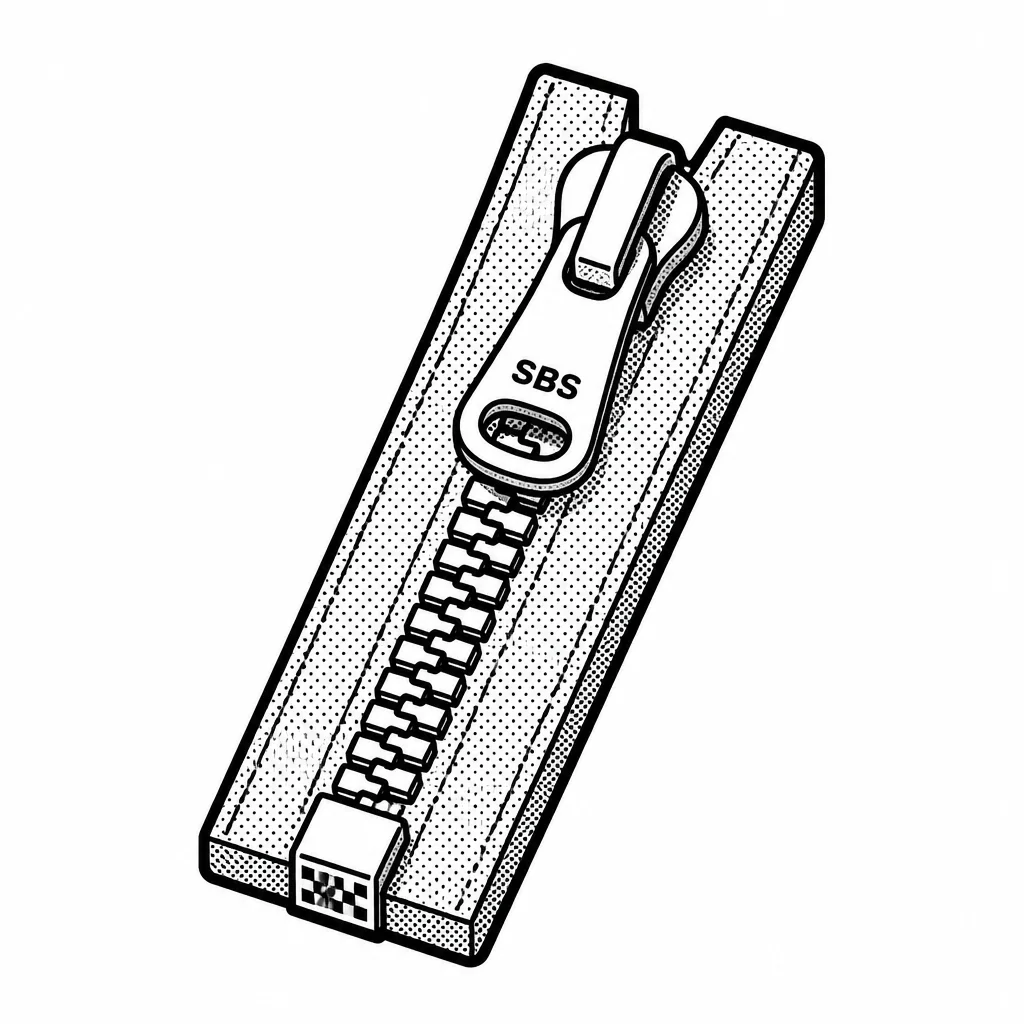
The business is simple to describe but hard to do well. A zipper looks like a trivial strip of teeth, yet it has to survive thousands of open-and-shut cycles, harsh washing, and rough handling without jamming. Clothing brands care about two things: price and reliability. A broken zipper ruins an expensive jacket, so buyers stick with suppliers they trust. SBS competes on volume, speed, and quality, and it makes its money by selling enormous numbers of zippers at small margins — a few cents of profit per piece, multiplied by millions. That makes SBS a classic "picks and shovels" supplier: it doesn't sell fashion, it sells the fastener that fashion needs. Its customers are garment and bag factories, many of them in China, which then supply global brands. The business rises and falls with apparel and luggage demand, so a weak consumer economy or a shift in where clothes get made hits orders quickly.
The zipper industry has one giant: YKK of Japan, which dominates the global market and is the default choice for premium brands. SBS has built its position as a large Chinese challenger — cheaper than YKK, close to the factories, and good enough for mass-market production. Its future depends on holding quality high while keeping costs low, and on whether Chinese apparel makers keep winning work around the world.
Saved answer · last researched 16 Nov 2026